AI Phone Answering for New York City Restaurants (2026)
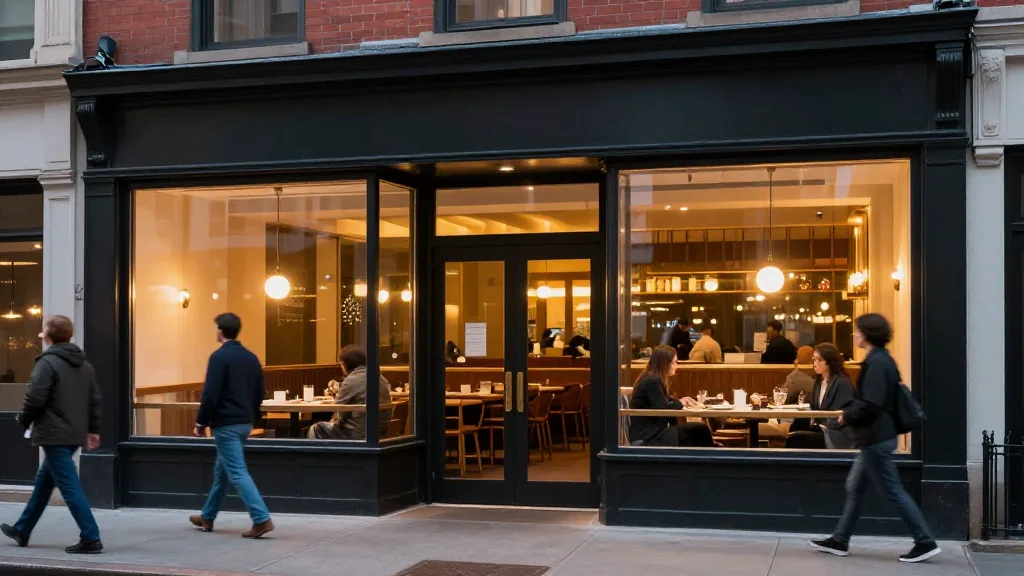
It's 7:40 on a Friday in Midtown. The kitchen is a six-foot galley, both line cooks are buried, the one person who could grab the phone is running a tray, and the line just lit up for the fifth time in ten minutes. In a city where the dinner rush hits like a wall and there is physically no one free to pick up, the phone doesn't ring out because nobody cares—it rings out because nobody can. Every one of those calls is a takeout order, a reservation, or a regular who shrugs and dials the place next door. In New York City, where the place next door is always thirty seconds away, that's the most expensive sound in the room.
This is the problem AI phone answering was built for, and NYC is close to a worst case for it: relentless volume, kitchens too small to spare a host, more spoken languages than any other restaurant market in the country, and the constant background roar of the room itself. Here's how an AI front desk actually holds up under those conditions—and where the honest limits are.
Why the New York phone problem is its own beast
Missed calls hurt every restaurant. They hurt more in New York for reasons that are specific to the city, not generic "big market" talk.
The rush doesn't queue—it stacks
In a lot of towns the calls trickle. In NYC they arrive in walls: the pre-theater wave, the post-work delivery surge, the late-night order rush. A human answers one call at a time, so the second and third caller in a stack get a busy tone or voicemail. The math is brutal—the calls you lose aren't the slow ones, they're the ones that pile up exactly when business is best.
Tiny kitchens, no one free to answer
A Manhattan or Brooklyn kitchen often runs in a space the size of a closet. There is no dedicated host, no spare phone person at the pass—just cooks who can't stop and a counter that's three deep. The phone isn't ignored out of choice; there is simply no hand to spare for it during service.
More languages than anywhere
New York's blocks change language corner to corner. A caller might open in English, Spanish, or Chinese—and a host who can only field one of those is turning away orders that were ready to place. Few independent restaurants can staff every shift to cover that range. This is where AI has a real, honest edge.
Delivery density and the noise of the room
Takeout and delivery are the lifeblood of huge swaths of NYC dining, which means the phone is a primary sales channel, not an afterthought. And it all happens over the clatter of a packed dining room—a condition that breaks cheap voicebots and is exactly what a serious system has to survive.
What AI phone answering actually does for a NYC restaurant
KwickPhone is an AI front desk that answers your phone, talks with the caller like a host would, and—this is the part that matters—completes the task instead of just writing it down. For a New York operator, the relevant capabilities are concrete:
- Answers every call, 24/7, never busy. No hold music, no line that rings out during the rush.
- Handles concurrent calls. When the Friday stack hits, every caller gets a host at once instead of overflowing to voicemail.
- Completes the order or reservation in the POS. The ticket fires to the kitchen and the booking lands in the floor plan—no one re-keys anything.
- Speaks English, Spanish, and Chinese (among others), detecting the caller's language and switching automatically.
- Shrugs off prank and abuse calls, declining to send ten fake pickups to a kitchen that's already slammed.
- Transfers to a human on caller request, for large or catering orders, for a known VIP, or for anything genuinely unusual.
The rush, side by side
The clearest way to see the difference is to watch what happens to the same Friday-night calls.
| The 7:40 Friday call | Phone with no one free | KwickPhone front desk |
|---|---|---|
| "Pickup order for four" | Rings out; caller dials the next place | Placed in the POS, fired to the kitchen, pickup time confirmed |
| Three calls stacked at once | One answered, two lost to voicemail | All three answered simultaneously |
| "¿Hacen entrega?" / caller starts in Spanish | English-only host, order slips away | Switches to Spanish automatically |
| Caller starts in Chinese | No one on shift can field it | Switches to Chinese, takes the order |
| "Table for six at eight" | No response until someone checks the machine | Booked into the floor plan, confirmed by text |
| Large catering request | Half-taken on a sticky note | Recognized and transferred to a manager |
The recovered revenue in a high-volume New York kitchen rarely hides in any single call. It hides in the second, third, and fourth caller of a stack—the ones that used to overflow because one person can't be in two conversations at once.
Multilingual service, the way New York actually calls
Of everything on this page, this is the feature most tuned to NYC. KwickPhone serves multiple languages—commonly English, Spanish, and Chinese among others—and detects the caller's language within the first sentence, then switches without anyone pressing a key. Crucially, the same menu and modifier grounding applies in every language, so a Spanish-speaking caller's order and an English-speaking caller's order map to the identical kitchen ticket. You get the reach of a multilingual front desk on every shift without trying to hire one for every shift—a near-impossible ask in this market.
Does it really place the order, or just take a message?
This is the question that separates a useful front desk from a fancy answering machine, and it matters more in New York than almost anywhere—because a message someone has to re-key assumes there's someone free to re-key it. In a closet kitchen at peak, there isn't. KwickPhone places takeout orders and books reservations inside the system that runs your restaurant and fires the ticket straight to the line. Nothing waits on a transcript. If a vendor's answer to "what happens after the caller hangs up?" is "we send your staff a note," that's manual re-entry in a smarter coat—and it's the work you were trying to get rid of.
You stay in control
An AI front desk in a New York restaurant has to bend to how your place runs, not the other way around. KwickPhone gives the owner the controls:
- 20+ voices and personas so the host fits your brand—warm corner spot or crisp upscale room.
- Per-merchant Playbooks that encode your rules: never promise under 30 minutes on a Friday, always offer pickup over a long delivery wait, transfer catering to the manager, push the loyalty signup.
- Voice control of the basics—update hours, flip a sold-out item, or pause ordering by spoken command when you're on the line, not at a laptop.
Setup: keep your number and your carrier
You don't change your phone number, and you don't switch providers. You keep your existing line and forward calls to the AI. On a traditional landline that's usually a call-forwarding code—commonly *72 followed by the forwarding number to turn it on—though the exact codes vary by carrier, so check with yours. On VoIP, you point the number to the AI line in your provider's dashboard. It works with any NYC-area carrier or VoIP service. Forward all calls, only the ones your staff can't pick up, or only calls outside business hours—so the AI becomes your after-hours and overflow host while your team runs the floor during service.
Works with the POS you already run
KwickPhone is native to the KwickOS platform, where the order, the kitchen ticket, and the reservation all live in one system. If you already run something else, it bolts onto the ordering systems many New York restaurants use—Square, Clover, Loyverse, Epos Now, or Revel—so the order lands where your line cooks already look. Either way, the point is the same: the AI doesn't just talk, it completes the work.
Hear it before you decide
A slide deck can't survive a New York phone line. A real call can. KwickPhone runs live demo lines that any NYC owner can call right now—real lines, not recordings—so you can hear how it handles a natural order, a language switch, and a request to reach a human. Try the live demos at /#try, then judge it on what it actually does on a call.
Stop losing the Friday rush in New York City
KwickPhone answers every call 24/7, handles the stack without hold music, speaks English, Spanish and Chinese, and places the order natively into your POS—or bolts onto Square, Clover, Loyverse, Epos Now, or Revel. Hear it live at /#try.
Book a demoFrequently asked questions
Can AI phone answering handle the NYC rush?
Yes. Unlike a person, the AI answers several calls at once, so the third and fourth caller during a Friday stack get a host instead of a busy signal or voicemail. No hold music, no line that rings out—the exact pressure point in a high-volume New York kitchen.
Does it speak Spanish and Chinese for NYC callers?
Yes. KwickPhone handles multiple languages—commonly English, Spanish, and Chinese among others—and detects the caller's language in the first sentence and switches automatically, so every caller gets a fluent host without staffing each shift for it.
Will it work with my NYC carrier or VoIP provider?
Yes. You keep your existing number and forward calls to the AI line—usually a code like *72 on a landline (codes vary by carrier) or a setting in your VoIP dashboard. It works with any NYC-area carrier or VoIP service.
Does it actually place the order, or just take a message?
It completes the task—placing takeout orders and reservations directly in the POS and firing the ticket to the kitchen, so your staff never re-keys anything. A bot that only leaves a note still leaves the work for a kitchen with no one free to do it.
Can I keep a human in the loop for big or VIP orders?
Yes. The AI transfers to a person whenever the caller asks, for large or catering orders, for a known VIP, or for anything outside what it can safely handle. It catches the routine, high-volume calls so your team can focus on the ones that need a human.
Related: AI phone answering for Los Angeles restaurants and the 2026 guide to AI phone answering for restaurants.