Restaurant Answering Service vs AI: Which Should You Use?
When the phone won't stop ringing and your staff are already buried, you have two ways to make sure callers get answered: hire a human answering service (an off-site call center that picks up on your behalf) or deploy an AI phone agent that answers and handles the call itself. Both promise that no call goes unanswered. They are very different in what happens next.
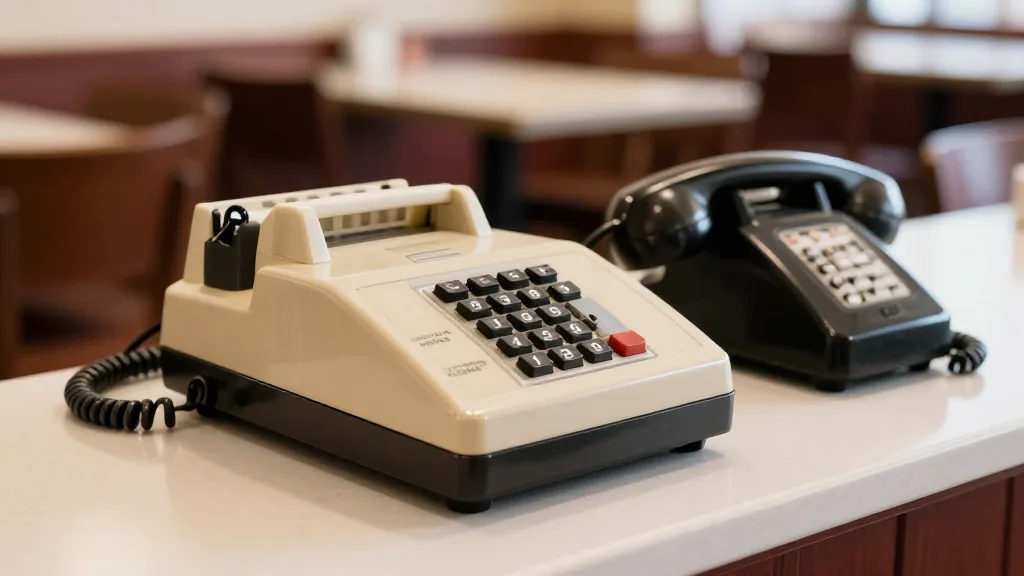
This is a category comparison—answering service vs AI—not a brand fight. Here's how the two stack up on the things that actually move revenue in a restaurant.
What each one actually does
A human answering service routes your overflow or after-hours calls to remote agents. They greet the caller, take a message or an order, and pass it back to your team—usually by text, email, or a portal your staff then has to read and act on. An AI phone agent answers the call directly, talks with the caller in natural language, and completes the task on the spot: taking the order, booking the table, or answering the question.
Side-by-side comparison
| Factor | Human answering service | AI phone agent |
|---|---|---|
| Availability | Often limited to set hours or overflow windows; subject to staffing | 24/7, every day—no nights, weekends, or holidays off |
| Cost | Typically billed per minute or per call, so cost rises with call volume | Flat software pricing that doesn't spike on your busiest nights |
| Order entry into POS | Usually takes a message your staff must re-key into the POS | Lands the order natively in the POS—no manual re-entry |
| Languages | Depends on which agents are on shift | Multilingual on every call—English, Spanish, Chinese and more |
| Consistency | Varies by agent, training, and how busy the center is | Same gracious, accurate script on call one and call one thousand |
| Scale | One agent per caller; a rush means hold times or missed calls | Never busy—handles several calls at once during the Friday peak |
The difference that matters most: does the order land in your POS?
The deciding factor isn't who answers—it's what happens after. A human service that texts your team a list of takeout orders still leaves someone re-keying every one into the point-of-sale during the dinner rush, which is exactly when there's no one free to do it. That re-entry step is where mistakes and delays creep in.
Rule of thumb: if the order doesn't end up in your POS automatically, you haven't removed the work—you've just moved it to a worse time of night.
This is where an AI phone agent built around the restaurant system pulls ahead. KwickPhone answers every call and places the order natively into the POS—no notepad, no re-typing. It runs natively on KwickOS and also bolts onto the ordering system you already use, including Square, Clover, Loyverse, Epos Now, and Revel.
When a human service still makes sense
Human answering services aren't going away, and there are real cases for them: highly nuanced concierge conversations, sensitive complaint handling, or a personal touch for a fine-dining clientele. If your call volume is low and largely about subtle judgment calls, a person on the line can be worth the per-minute cost.
When AI is the clear win
For most restaurants the math favors AI. The bulk of inbound calls are repetitive—hours, takeout orders, reservations, directions—and they cluster exactly when staff are slammed. An AI agent that never goes on break, never puts a guest on hold, speaks the caller's language, and drops the order straight into the POS turns missed calls into captured revenue without growing your payroll.
Hear the AI answer a real call
KwickPhone answers 24/7, never gets a busy signal, and places orders natively into your POS—or bolts onto the system you already run. Call the live demo now at (346) 273-2935.
Book a demoRelated: the 2026 guide to AI phone answering for restaurants and how to stop missing restaurant phone calls.