AI Phone Answering for Bubble Tea & Boba Shops
It's 3:20 on a weekday and the line is out the door. Two staff are sealing cups as fast as the machine spins, a third is scooping pearls, and somewhere under the shaker noise the shop phone is ringing—again. Nobody can reach it. The caller wanted six drinks for an office down the street, each with its own sugar level and toppings. They hang up after four rings and order from the shop across the plaza. That call was worth more than the next three walk-ins, and no one in the building will ever know it happened.
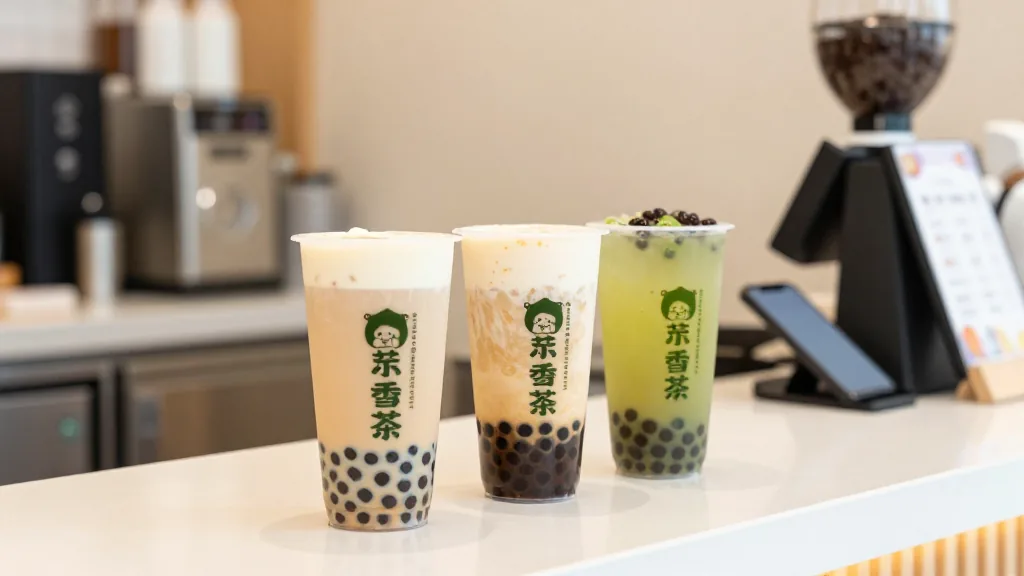
Boba is uniquely hard on the phone. A single drink can carry five or six decisions—size, sweetness, ice, base, toppings, hot or cold—and a group order multiplies that into a small spreadsheet. That's exactly the kind of call that's painful for a busy human and perfect for the right AI. This guide explains how AI phone answering for bubble tea shops actually works, what it can and can't do, and the one feature that separates a useful front desk from a fancy answering machine.
Why the boba phone is its own problem
Most quick-service phone orders are simple: a sandwich, a side, a drink. A boba order is a stack of modifiers on every single item. "A large taro milk tea, 50% sugar, less ice, with extra boba and pudding" is six choices in one breath—and the caller may rattle off four more drinks just like it. Miss one modifier and you've made the wrong drink, which on a thin-margin item means remaking it and eating the cost.
On top of that, demand clusters hard. The after-school wave, the late-night dessert run, the weekend group order—these are precisely the moments your team has no free hands. The phone becomes a liability exactly when each call is worth the most.
How the technology actually works
Behind a smooth call are a few steps happening in well under a second each. Knowing them helps you tell a real system from a demo that falls apart the moment a customer says "actually, make that oat milk."
1. Understanding messy, layered speech
The system answers instantly, converts speech to text in real time, and interprets meaning—including the rapid, stacked way people order boba. It tracks context across the call, so when the caller says "same thing but make it large and swap the pearls for lychee jelly," it knows what "same thing" refers to and edits only what changed.
2. Grounding on your real menu and modifiers
This is the step cheap bots skip. The assistant is grounded against your actual menu, sizes, sweetness levels, ice levels, bases, and toppings—not a generic script. "Half sugar, light ice, brown sugar milk tea with extra pearls" maps to the exact item and the exact modifiers your make line uses, and the system knows whether a topping is even available. Grounding is what stops the AI from inventing drinks or quoting prices that don't exist.
3. Completing the order in the POS
The final step is the one that creates value: the system acts. It places the order with every modifier intact and fires it to your make station—directly inside the system that runs your shop. Everything before this is conversation; this is the work.
The one question that matters: does it complete the order?
Many phone bots can hold a conversation. Far fewer can place the order into your point-of-sale and fire it to the make line—because most live outside the system that runs your shop. When the bot can't reach your POS, your staff still has to re-key every sugar level and topping it wrote down. That re-entry is slow, it's exactly where boba mistakes happen, and it defeats the purpose: you've automated the talking but not the work.
Rule of thumb: a phone bot that can't reach your POS is a fancy answering machine. The value is a complete drink on the make line—every modifier intact—not a note on a screen.
When you evaluate vendors, ask exactly what happens after the caller hangs up. If the answer is "it sends your staff a transcript" or "it creates a ticket someone confirms," that's manual re-entry wearing a smarter coat. KwickPhone is native to KwickOS, so the order lands where your make line already looks—and it also bolts onto the ordering systems you may already run, including Square, Clover, Loyverse, Epos Now, and Revel, as an open service.
Handling the customizations that break other bots
The whole game for boba is modifiers. A capable system handles them the way an experienced staffer would:
- Sweetness levels — 0%, 25%, 50%, 75%, 100%, mapped to your real options.
- Ice levels — no ice, light ice, regular, extra ice, plus hot versions where you offer them.
- Toppings — boba/pearls, popping boba, pudding, grass jelly, lychee jelly, aloe, cheese foam—single or stacked.
- Bases and milks — black, green, oolong, taro, matcha; dairy, oat, or a non-dairy swap.
- Size and quantity — and quantity-per-variation when one drink is ordered five different ways.
- Read-back confirmation — it recites the order before placing it, so a misheard "less ice" gets caught on the call, not at pickup.
Large and group orders
Group orders are where boba phones break and where AI shines. A capable system can take ten different drinks, each with its own sweetness, ice, and toppings, hold them all in order, read the full list back, and drop the entire ticket into the POS at once—without losing track at drink number seven. For an unusually large order, a recurring office account, or anything that feels like catering, the system can also hand the call to a person if you'd rather give big orders a human touch. You decide where that line sits.
| Caller's request | Basic voicemail | Real AI front desk |
|---|---|---|
| "Taro milk tea, 50% sugar, less ice, extra pearls" | Takes a message; staff call back | Maps every modifier, places it in the POS |
| Six drinks for an office, all different | Caller gives up mid-list | Keeps each one straight, reads back, fires the ticket |
| "Are you open right now?" | Generic recording, often outdated | Answers from live hours, including holidays |
| "¿Tienen leche de avena?" | English only | Switches language automatically |
| Four calls during the after-school rush | Three go to voicemail | All four answered at once |
| A prank "order 20 drinks" call | Sometimes recorded as real | Recognized, declined, flagged |
Multilingual service for a diverse counter
Many boba shops serve a genuinely mixed customer base. Modern voice AI serves multiple languages—commonly English, Spanish, and Chinese among others—and can detect the caller's language within the first sentence and switch automatically. The same item and modifier grounding applies in every language, so a Chinese-speaking caller's "三分糖" and an English-speaking caller's "30% sugar" land as the same instruction on the make line. That's a fluent, patient host on every shift without hiring for every language.
Handling the real world
A demo on a quiet line is easy. A Friday-night dessert rush is not. Look at how a system behaves under real conditions.
Concurrency
Your staff answer one call at a time. The AI answers as many as ring at once, so the third and fourth caller during the rush get a host instead of voicemail. For boba, where demand spikes in tight windows, this is often where the biggest recovered revenue hides—not in any single call, but in the calls that used to overflow.
Prank and abuse handling
Late-night shops get prank calls. The system should recognize obvious prank or abusive calls, decline to act, and avoid placing bogus drinks—flagging repeat offenders instead of dutifully sending twenty fake orders to your make line.
Knowing when to hand off to a human
A well-built assistant stays in its lane. It should transfer to a person when:
- The caller simply asks for a human—caller preference always wins.
- The order is unusually large, a catering request, or from a known VIP or recurring account that deserves a personal touch.
- The request is genuinely unusual or outside what it can safely complete.
The goal is to catch the routine, high-volume calls so your staff can focus on the counter and the orders that truly need a person. A system that traps callers in a bot with no escape hatch is worse than the missed call it replaced.
Owner controls and customization
The best platforms put the owner in charge without making you a developer. Look for:
- Voice management by voice. Spoken commands to update hours, flip a sold-out topping, or pause ordering—useful mid-rush when you're at the make line, not a laptop.
- Per-merchant Playbooks. Rules that encode how your shop runs: always offer the topping upsell, default new customers to regular sweetness, transfer office orders over a set size to the manager.
- Voice and persona choice. A library of 20+ voices and personas so the host fits your brand—bubbly neighborhood spot or sleek dessert bar.
Setup: keep your number
You do not change your phone number. You keep your existing line and forward calls to the AI. On a traditional landline this is usually a call-forwarding code—commonly *72 followed by the forwarding number to turn it on, and *73 to turn it off—though the exact codes vary by carrier, so confirm with yours. On VoIP, you point the number to the AI line in your provider's dashboard. You can forward all calls, only the ones your staff don't pick up, or only calls outside business hours—so the AI becomes your after-hours host while your team runs the counter during the rush.
A realistic before and after
Before. It's 3:20 on a weekday. Two staff are sealing cups, one is scooping pearls, and the phone rings. Nobody can grab it. The caller wanted six drinks for the office down the street—each with its own sugar and toppings—and hangs up after four rings to order across the plaza. Over the next hour the scene repeats: the line buzzes, hands are full, and calls pile into a voicemail no one will hear until closing.
After. The same 3:20 call is answered on the first ring by an AI host that already knows the menu. It takes all six drinks, confirms each sweetness and topping, reads the order back, suggests cheese foam on two of them, and drops the ticket onto the make line—while simultaneously taking a single matcha-with-oat-milk order from another caller and telling a third when you close tonight. The staff never broke stride, and calls that would have walked turned into business on the books.
See AI phone answering that completes the boba order
KwickPhone answers every call and places it—every sugar level, ice level, and topping—natively into your POS, or bolts onto the ordering system you already run. Curious how it sounds? You can call our live demos at /#try — these are real lines, not recordings.
Book a demoFrequently asked questions
Can AI phone answering handle complex boba customizations?
Yes. A grounded system maps spoken modifiers—sugar level, ice level, toppings like boba, pudding, and grass jelly, hot or cold, size—onto the exact item and modifiers in your POS, so "half sugar, light ice, taro milk tea with extra pearls" lands on the make line correctly instead of as a vague note.
Does it place the boba order into my POS?
The best systems do. KwickPhone completes the order natively in KwickOS and fires it to your make station, or bolts onto Square, Clover, Loyverse, Epos Now, or Revel as an open service. A bot that only takes a message leaves your staff to re-key every customization—slow and error-prone during a rush.
Can it take large group orders?
Yes. It can take ten different drinks, each with its own sugar, ice, and toppings, keep them straight, read the order back for confirmation, and place it all in the POS at once. For unusually large or catering-style orders, it can also transfer to a person if you prefer a human touch.
What languages can it speak with boba customers?
Commonly English, Spanish, and Chinese among others. It detects the caller's language within the first sentence and switches automatically, with the same item and modifier grounding in each language.
Do I have to change my shop's phone number?
No. You keep your number and forward calls to the AI line—usually a code like *72 on a landline (codes vary by carrier) or a setting in your VoIP dashboard. Forward all calls, only unanswered ones, or only after-hours calls.
Related: AI phone ordering for quick-service restaurants and the 2026 guide to AI phone answering for restaurants.