AI Phone Answering for Fine-Dining Restaurants (2026)
It's 7:40 on a Saturday. The room is full, the pass is stacked, and a couple who wants to book their anniversary dinner for next Friday calls the number on your website. Your host is walking a four-top to a table, your manager is on the floor smoothing over a wine that came out warm, and there is simply no one who can pick up. The phone rings six times and drops to a voicemail you won't hear until Monday. By then that couple has booked the place across the street. You never knew the call happened.
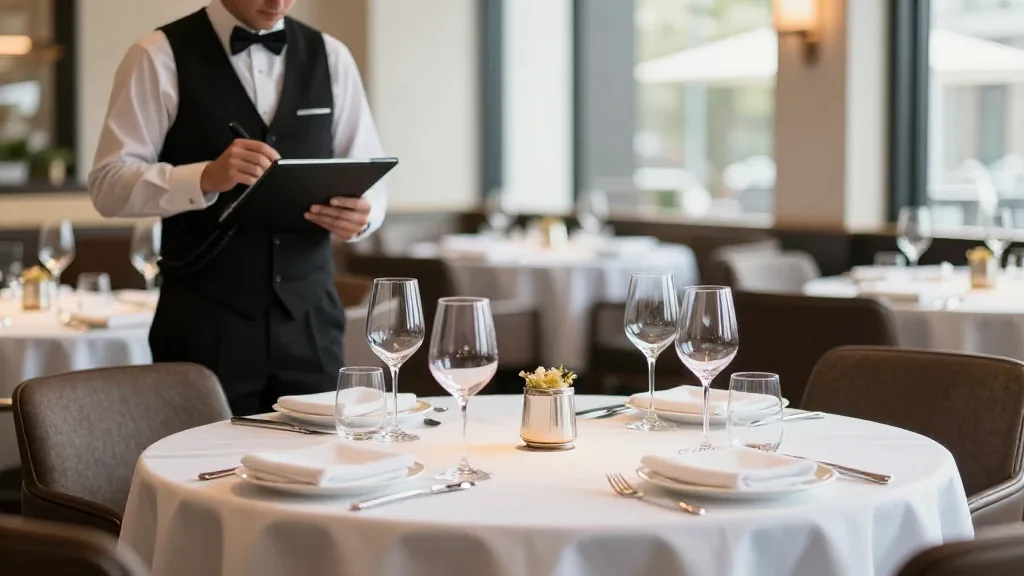
In fine dining, that lost call isn't a $14 burger. It's a two-top at your highest average check, plus a bottle of wine, plus the referrals that a great anniversary dinner would have earned you. AI phone answering for fine-dining restaurants exists to make sure that call never goes unanswered again — and, done right, it does it without a whiff of the robotic hold-music experience that would insult a guest paying for hospitality.
The calls a fine-dining phone actually loses
Casual restaurants lose takeout orders. Fine dining loses something harder to replace: relationships. The phone rings for reasons that map directly onto your revenue and reputation, and every one of them is time-sensitive.
- Reservation requests during service. Your peak booking-inquiry hours overlap exactly with your busiest floor hours. The people trained to answer warmly are the people who cannot stop mid-service.
- Modifications and confirmations. "We're running fifteen minutes late," "can we add two to our party of six," "is the tasting menu still available Thursday?" — small calls that turn into a no-show or an over-set table when nobody catches them.
- After-hours and pre-open inquiries. A guest deciding tonight's plans at 4:45 pm, before your host arrives, or at 11 pm after your line goes dark. That call is a pure gap.
- Private events and large parties. A $4,000 buyout inquiry that sits in voicemail for a day is a booking your competitor answered live.
- Out-of-town and non-English callers. A traveler who speaks Spanish or Chinese wants to book while they're still deciding. A language barrier at the first ring loses them.
Do the math with your own numbers. If your average check is $95 and a typical reservation seats two, one recovered Saturday call is roughly $190 before beverage. Miss three a week and you can see the shape of the leak. We won't invent a figure for you — plug in your check average and your own sense of how many calls slip past on a busy night, and the case usually makes itself.
Why voicemail and a call-back list quietly fail you
The instinct is to let calls roll to voicemail and clear the list after the rush. In fine dining, that's a slow bleed. A guest choosing between two restaurants for a special night doesn't leave a message and wait — they call the next name on their list. And even the messages you do return arrive hours later, when the guest has moved on or the table they wanted is gone.
The other common patch — a call-answering service that takes a message and emails your team — just moves the re-keying problem around. Someone still has to read the note, open your reservation book, and enter the booking manually. That's slow, it drops details, and it's exactly the kind of double-handling that creates the double-booked Saturday night no host wants to explain to a guest.
The test that matters: ask any vendor what happens the instant the caller hangs up. If the answer is "we send you a transcript" or "we create a ticket someone confirms," that's a smarter answering machine. The value is a reservation that's already in your book, not a note about one.
What AI phone answering actually does for fine dining
A capable system answers every call on the first ring, 24/7, and is never busy — so the third and fourth caller during your service crunch get a host instead of a dial tone. It talks like a person, understands natural speech across accents and background noise, and then it completes the task: it books the reservation into your book, captures party size, time, seating preference, and the note that it's an anniversary — directly inside the system that runs your restaurant.
KwickPhone is native to KwickOS and also connects as an open service to the point-of-sale platforms most restaurants already run — Square, Clover, Loyverse, Epos Now, and Revel. That integration page shows each connector's live status and the exact credentials you'll need, so you know before you start whether your setup is plug-in or needs a step. The point is that the booking or order lands where your team already looks, not in a separate inbox.
Grounded on your menu and your policy
Fine dining lives on specifics: a tasting menu with a wine pairing, a corkage policy, a dress code, a "no substitutions on the chef's course." A good assistant is grounded on your real menu, hours, and policies — so it answers "is the tasting menu available for a party of eight?" from your actual rules, and never invents a dish or quotes a price you don't charge.
Keeping the personal touch: when it hands off to a human
This is the fear every owner voices, and it's the right one. The answer is that a well-built assistant knows its limits and passes the call cleanly. It transfers to a person when:
- The caller simply asks for a human — guest preference always wins.
- The party is unusually large, a private-event or buyout inquiry, or a known VIP who deserves your manager's voice.
- The request is genuinely unusual — a dietary situation, a press call, anything outside what it can safely complete.
The goal isn't to wall guests off from your team. It's to catch the routine, high-volume calls — the standard two-tops, the "are you open Sunday," the confirmations — so your people can pour their attention into the calls that build a relationship. You can encode all of this in a per-merchant Playbook: your tone, your booking rules, exactly which calls route to whom.
A Saturday night, before and after
Before. 7:40 pm, full room. The anniversary couple calls, rings out, leaves no message. A regular calls to move their 9:00 to 9:15 and gives up. A Spanish-speaking traveler calls to book for two and hangs up when nobody picks up. Three relationships, gone, and you learn about none of them.
After. The anniversary call is answered on the first ring by a host that knows your book. It confirms next Friday at 8:00, captures "anniversary — quiet table if possible," and drops it straight into your reservation system. At the same moment it takes the regular's time change and updates the booking, and greets the traveler in Spanish, books their two-top, and texts a confirmation. Your staff never broke stride on the floor. Three bookings that would have vanished are now on the books — and the buyout inquiry that came in at 8:15 was recognized as a large party and transferred to your manager's cell.
| Caller's request | Voicemail / message service | KwickPhone |
|---|---|---|
| "Table for two, Friday at 8?" | Message returned hours later | Booked into your reservation book, confirmed by text |
| "Move our 9:00 to 9:15" | Missed; table held wrong | Booking updated live |
| "We'd like a private buyout" | Sits until someone checks | Recognized as VIP/large party, transferred to manager |
| "¿Tienen mesa esta noche?" | English only | Answered in Spanish, booked |
| Four calls during the rush | Two or three drop to voicemail | All answered at once |
| Prank / abusive call | Wastes a message slot | Detected, declined, flagged |
Multilingual hosting without multilingual staffing
Fine dining draws travelers, out-of-town guests, and diverse local diners. KwickPhone serves English, Spanish, and Chinese among others, detecting the caller's language within the first sentence and switching automatically. The same booking and policy grounding applies in each language, so a Chinese-speaking caller's reservation carries the same details into your book that an English caller's would — no scrambling for whoever's on shift that speaks the language.
Owner controls that respect a fine-dining brand
You stay in charge without touching code. Choose from 20+ voices and personas so the assistant matches your room — a warm neighborhood bistro or a crisp, formal host. Update your hours or flip the tasting menu to "sold out" by secure spoken command when you're on the floor, not at a laptop. And your Playbook encodes the house rules: never promise a table you don't have, always capture the occasion, transfer buyouts to the manager. See how KwickPhone works end to end if you want the mechanics.
Setup keeps your existing number
You don't change your number and you don't reprint your matchbooks. You keep your existing line and forward calls to the AI. On a landline that's usually a call-forwarding code — commonly *72 followed by the forwarding number to turn it on (codes vary by carrier, so confirm with yours); on VoIP you point the number in your provider's dashboard. Forward all calls, only the ones your staff can't reach during service, or only calls outside your hours — so the AI becomes your after-hours host while your team owns the floor when the doors are open.
A short decision checklist for fine dining
- Does it book directly into my reservation/POS, or just transcribe? Ask what happens at hangup.
- Can I choose a voice and persona that fits my room, and set the tone in a Playbook?
- Exactly when does it hand off to a human — caller preference, VIP, large party, private events?
- Is it grounded on my real menu, tasting menu, and policies, or a generic script?
- Does it speak my guests' languages and switch automatically?
- How many concurrent calls can it take during the Saturday rush?
- Can I hear it live before I buy? A real call beats a slide.
Compare the trade-specific details on the by-trade hub and the dedicated restaurant page, check whether your setup is a clean connect on the Square or Clover integration pages, and review plain terms on pricing. More reading lives on the KwickPhone blog.
Hear a host that books the table, not takes a message
KwickPhone answers every call, speaks your guests' language, and completes the reservation inside your system. Want to hear it? Call our live demos — real lines, not canned recordings — at /#try.
Book a demoFrequently asked questions
Will an AI answering the phone cheapen my fine-dining brand?
Not if it's built for hospitality. You choose from 20+ voices and personas, and a per-merchant Playbook encodes your tone, your reservation policy, and when to hand a call to a human. The real brand damage is a caller reaching voicemail or a busy signal during service — a warm, well-scripted host beats that every time.
Can it book directly into my reservation and POS system?
The systems worth buying complete the task rather than leaving a message. KwickPhone is native to KwickOS and bolts onto Square, Clover, Loyverse, Epos Now, and Revel as an open service, so a booking or order lands in the system your team already uses instead of a transcript someone has to re-key.
How does it handle VIP guests and large-party or private-event calls?
It stays in its lane and transfers to a person the moment a caller asks for one, when a party is unusually large or a known VIP, or when the request is a private event or anything outside what it can safely complete — so your team gives full attention to the calls that need a human touch.
What languages can it speak?
English, Spanish, and Chinese among others. It detects the caller's language in the first sentence and switches automatically, so travelers and diverse local callers get a fluent host without extra staffing.
Do I have to change my restaurant's phone number?
No. You keep your existing number and forward calls to the AI line — usually a code like *72 on a landline (codes vary by carrier) or a setting in your VoIP dashboard. Forward all calls, only unanswered ones, or only calls outside service hours.
Related: the complete guide to AI phone answering for restaurants and the best AI phone answering services for restaurants in 2026.