AI Phone Answering for Los Angeles Restaurants (2026)
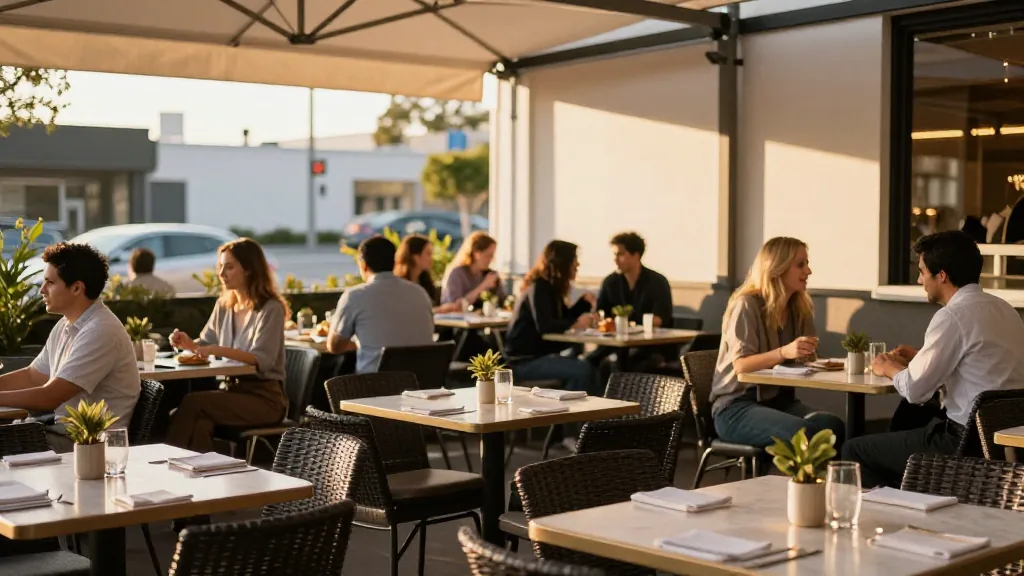
It's 8:40 on a Friday in Koreatown. The dining room is full, two servers are buried in food running, and the phone has rung three times in ninety seconds—one caller wants a pickup order, one is asking in Spanish whether there's parking on the side street, and one wants a table for six. In most Los Angeles kitchens, at least two of those calls just hung up and dialed the place next door. The hardest part of running a phone in this city isn't a single missed call. It's that the calls arrive in bursts, in more than one language, at hours when no one is free to pick up. AI phone answering for restaurants in Los Angeles is the technology built for exactly that pressure.
This guide is for LA owners and operators—from a Boyle Heights taquería to a Sawtelle ramen counter to a Beverly Hills fine-dining room—who want to understand how an AI front desk handles the specific way this city's phones behave, and the one question that separates a real system from a smarter voicemail.
Why LA breaks ordinary phone answering
Los Angeles is one of the most demanding phone environments a restaurant can operate in, and not for one reason but several stacked on top of each other.
The calls come in waves, not a steady line
LA dining concentrates into intense rushes—lunch near the office towers downtown, the long dinner spread across the Westside and the Valley, late-night windows in neighborhoods that don't slow down until well after midnight. When the phone rings, it tends to ring several times at once, precisely when every hand is full. A human host answers one caller at a time; the other three roll to a voicemail nobody hears until cleanup.
It's a genuinely multilingual market
LA's dining scene is as diverse as any in the country, with a very large Spanish-speaking population and substantial communities speaking Chinese and other Asian languages across the San Gabriel Valley and beyond. A caller who would happily place a $50 order may simply hang up if the only option is a recorded English menu. Matching the language of your neighborhood isn't a nicety here—it's table stakes.
The questions are LA-specific
Callers in this city ask about things operators elsewhere rarely hear: where to park, whether there's validation, how bad the wait is "with traffic," whether you deliver to their part of town, and whether you're still open late. Those questions are routine, repetitive, and a drain on a busy floor—exactly the kind of work that should be answered instantly and consistently.
What AI phone answering actually does
An AI front desk is a voice assistant that answers your restaurant's phone, understands what the caller wants in natural speech, and completes the task—taking a pickup order, booking a table, answering hours-and-parking questions, checking a gift-card balance—24/7, with no caller put on hold. Instead of "press 1 for hours," the caller talks the way they would to a host, and the system talks back. The label matters less than the test that follows.
The one question that matters: does it complete the order in your POS?
Plenty of phone bots can hold a conversation. Far fewer can place the order into your point of sale, fire it to the kitchen, seat a reservation in your floor plan, or redeem a gift card—because most live outside the system that runs your restaurant. When the bot can't reach your POS, your staff still has to re-key everything it wrote down. On a packed LA Friday, that re-entry is the bottleneck you were trying to remove.
Rule of thumb: a phone bot that can't reach your POS is a fancy answering machine. The value is in completing the task end to end—an order on the kitchen line, not a note on a screen someone confirms later.
When you evaluate vendors, ask exactly what happens after the caller hangs up. KwickPhone is native to the KwickOS point of sale, so the order lands where your line cooks already look—and for restaurants already running something else, it bolts onto Square, Clover, Loyverse, Epos Now, and Revel rather than forcing you to switch systems mid-service.
English, Spanish, and Chinese—built for LA's callers
This is where a Los Angeles restaurant feels the difference fastest. KwickPhone answers in English, Spanish, and Chinese among other languages, and it detects the caller's language within the first sentence and switches automatically. A Spanish-speaking caller's "sin cebolla, con extra salsa" maps to the same kitchen ticket and the same modifiers an English-speaking caller's order would—because the grounding on your real menu applies in every language. For a neighborhood where your callers don't all share one language, that's a fluent, patient host on every shift without staffing for it.
| An LA caller says... | Basic voicemail | KwickPhone |
|---|---|---|
| "Quiero ordenar para llevar" | English only; caller hangs up | Switches to Spanish, places the order in the POS |
| "Is there parking near you?" | Generic recording, often outdated | Answers from your real policy and directions |
| "Table for six at eight-thirty?" | No response until someone checks | Books it into the floor plan, confirms by text |
| "Are you still open? It's almost midnight" | Nobody checks until tomorrow | Answers live hours, takes the late-night order |
| Three calls at once during the rush | Two go to voicemail | All three answered simultaneously |
Handling a real LA rush
A demo on a quiet line is easy. A Friday dinner rush on the Westside is not. The traits that matter most in this city are the ones that show up under load.
Concurrency: catching the overflow
Human staff answer one call at a time. The AI answers as many as ring at once, so the third and fourth caller during the rush get a host instead of voicemail. In a market where calls arrive in bursts, this is usually where the most recovered orders hide—not in any single call, but in the ones that used to overflow and walk to a competitor down the block.
Prank and abuse calls
The system recognizes obvious prank or abusive calls, declines to act on them, and avoids dropping bogus orders on your kitchen. It can flag repeat offenders rather than dutifully firing ten fake pickups during your busiest hour.
Knowing when to hand off to a person
A well-built assistant stays in its lane and transfers to a human when:
- The caller simply asks for a person—caller preference always wins.
- The order is unusually large, a catering request, or from a known VIP who deserves a personal touch.
- The request is genuinely unusual or outside what it can safely complete.
The goal is to catch the routine, high-volume calls so your staff can give full attention to the ones that need a human. A system that traps callers in a bot with no escape hatch is a worse experience than the missed call it replaced.
You stay in control
KwickPhone puts the owner in charge without turning you into a developer:
- 20+ voices and personas so the assistant fits your brand—warm neighborhood taquería or crisp upscale host on Restaurant Row.
- Per-merchant Playbooks that encode how your restaurant runs: upsell the combo, never promise under 25 minutes on a Friday, always offer parking directions, transfer catering to the manager.
- Voice-controlled updates to change hours, flip a sold-out item, or pause ordering—useful when you're on the line, not at a laptop.
Setup in LA: keep your number
You do not change your phone number, and you do not switch carriers. You keep your existing line and forward calls to the AI. On a traditional landline this is usually a call-forwarding code—commonly *72 followed by the forwarding number to turn it on, and *73 to turn it off—though the exact codes vary by carrier, so confirm with yours. On VoIP, you point the number to the AI line in your provider's dashboard. It works with any LA-area carrier or VoIP service. You can forward all calls, only the ones your staff don't pick up, or only calls outside business hours—so the AI becomes your after-hours and late-night host while your team handles the floor during service.
Hear it before you decide
The honest way to judge a phone system is to call it, not to watch a slide deck. Any LA owner can call our live demos right now at /#try—these are real lines, not recordings. Order from a sample menu, ask in Spanish, ask about parking, interrupt it mid-sentence, and listen to how it handles you. Then picture that same call landing during your Friday rush.
See AI phone answering built for LA's callers
KwickPhone answers every call in English, Spanish, and Chinese, never goes busy, and places the order natively into your POS—or bolts onto the system you already run. Curious how it sounds? Call our live demos at /#try.
Book a demoFrequently asked questions
Does AI phone answering work for LA restaurants in Spanish and Chinese?
Yes. KwickPhone answers in English, Spanish, and Chinese among other languages and detects the caller's language within the first sentence, switching automatically. For LA's heavily Spanish-speaking and large Asian-language communities, every caller gets a fluent host without staffing a multilingual shift for every service.
Can it handle the dinner rush when several calls hit at once?
Yes. Human staff answer one call at a time; the AI answers as many as ring at once. During an LA Friday rush, the third and fourth caller get a host instead of voicemail—often where the most recovered orders hide.
Does it actually place the order into my POS?
Yes. KwickPhone is native to the KwickOS POS and also bolts onto Square, Clover, Loyverse, Epos Now, and Revel. It completes the task end to end—firing the order to the kitchen or seating the reservation—rather than leaving a transcript your staff must re-key.
Will it transfer a call to a person when needed?
Yes. It transfers when the caller asks for a person, when an order is unusually large or a catering request, when a VIP calls, or when a request is outside what it can safely complete. It catches the routine calls; it never walls callers off from your team.
Do I have to change my phone number?
No. You keep your number and forward calls to the AI line—usually a code like *72 on a landline (codes vary by carrier) or a setting in your VoIP dashboard. It works with any LA-area carrier or VoIP service, and you can forward all calls, only unanswered ones, or only after-hours calls.
Related: AI phone answering for NYC restaurants and the complete 2026 guide to AI phone answering for restaurants.