One AI, Every Line: AI Phone Booking for Ticket & Box Offices
On-sale morning, the tickets go live at nine. By 9:01 every seat in your phone room is lit red, every agent is mid-call, and behind them the switchboard is stacking a dozen more people who all hear the same thing: a busy signal, or hold music that loops until they give up. Every one of those callers wanted to give you money. Some will try the website. Some will call the venue down the road. And the ones who speak Spanish or Chinese and can't find an agent who does? They just hang up, quietly embarrassed, and don't call back.
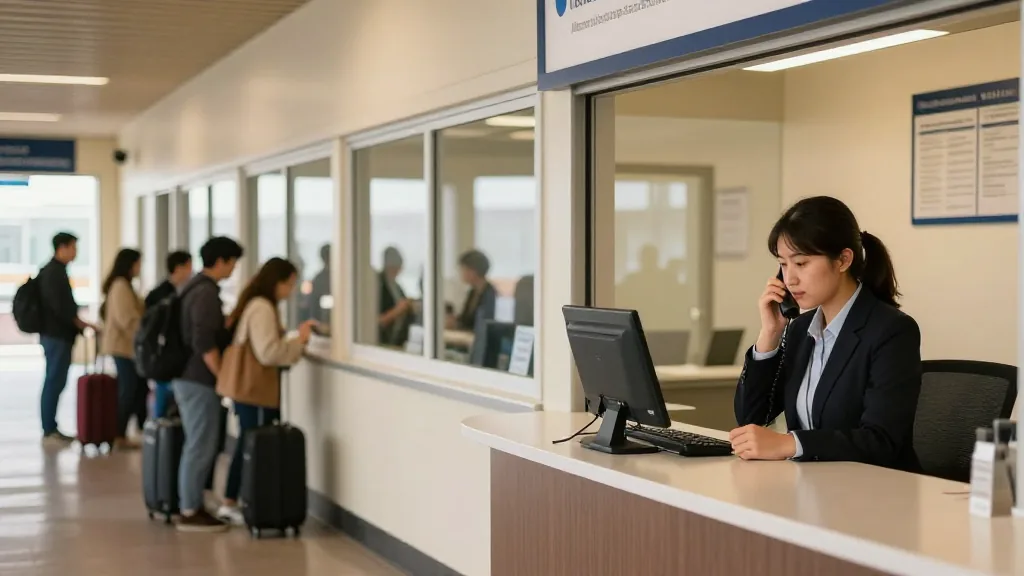
This is the box-office paradox: the busier you are, the worse your phones get. Demand spikes exactly when your fixed number of agents can't stretch. This guide is about the one capability that breaks the paradox — ai phone answering for ticket office booking that answers every line at once, in the caller's own language, and completes the booking on the call. Not a smarter voicemail. A phone room that never fills up.
Where the phone room breaks — and it's not your staff's fault
Your agents are good. That's not the problem. The problem is arithmetic. A phone bank has a hard ceiling: however many people are seated and logged in, that's how many calls you can hold at once. Cross that number and callers wait or bounce. And the ceiling is lowest at the exact moments demand is highest.
Run your own numbers. Picture a game night or an on-sale day where, in one hour, more people call than you have agents to answer. Multiply the ones who hang up by your average order value. That figure — your own illustrative input, not a stat we're inventing — is what the busy signal costs you every peak. Then add the softer losses:
- Shift gaps and sick days. One agent out on a Saturday and the queue balloons. You can't hire a temp for a single afternoon spike.
- Seasonal hiring and training. Ramp up for the holiday travel rush, train them, then let them go in January — every year.
- The voicemail black hole. After-hours callers leave a message someone re-keys the next morning — if it's still available and if anyone gets to it.
- Re-keying tickets. A message that says "book me four for Saturday" still has to be typed into the system by hand, with the caller nowhere to confirm the seats.
- Language walls. A caller who needs Spanish or Chinese gets parked on hold while someone hunts for a colleague — or gets no service at all.
- No-shows. A booking made and forgotten, with no confirmation or reminder, becomes an empty seat.
None of that reflects poorly on the people wearing the headsets. It's a structural limit. And structural limits need a structural fix.
What "answers every line" actually means
Here's the shift. Instead of a fixed row of seats, one AI host answers every call the instant it rings — the first, the fiftieth, and the two-hundredth simultaneously. No busy signal. No queue. No hold music. Each caller gets a real conversation, in parallel, as if each had a dedicated agent to themselves.
That's the concurrency point, and it's the whole game for a box office. A human phone room degrades under load — the busier it gets, the longer the hold, the more clipped the greeting. An always-on AI does the opposite: it's identical at 9am and 9pm, on a dead Tuesday and on the worst on-sale day of the year. It scales to the spike instantly because there's no "next available agent" — every caller is answered now.
Rule of thumb: measure your phone system by its worst minute, not its average one. Average hold time hides the on-sale morning where callers you never see simply bounce. The value of "never busy" is entirely in that worst minute.
Every caller, in their own language, on the first ring
Concurrency solves "answered." Language solves "understood." KwickPhone greets and converses naturally in English, Spanish and Chinese, detecting the caller's language within the first sentence and switching automatically. Nobody is parked on hold while you find "someone who speaks the language." Nobody hangs up embarrassed. The Spanish-speaking family booking four seats for Saturday and the Mandarin-speaking traveler booking a holiday route both get a fluent, patient host on the first ring — and both bookings land in the same system, correctly.
Pair that with a tone that never varies. The AI is professional, patient and polite on call one and call one hundred. It doesn't get curt at 11pm, doesn't sigh at a caller who needs the schedule repeated, doesn't have a bad day. Under real peak pressure, no human phone room can honestly promise that — not because staff don't care, but because they're human. The 100th caller at midnight gets the same warm, correct, courteous service as the first caller at nine in the morning.
Put those three together — answered instantly, understood in your own language, treated courteously — and you get the payoff that actually matters: satisfied callers. People hang up happy with tickets in hand instead of frustrated by a busy tone. That lifts reviews and repeat business in a way another slice of hold music never will.
It completes the booking — it doesn't take a message
This is the line that separates a real system from a fancy answering machine. The AI doesn't jot down "wanted four for Saturday" for someone to type in later. It places the seats and the reservation directly into your box-office or POS system, holds the specific seats, and texts a secure payment link so the caller pays on the call. When they hang up, the booking is done — confirmed, paid, and in the system your staff already look at.
KwickPhone is native to the KwickOS platform, and it also bolts onto the systems you may already run as an open service — check the integrations page to see each connector's live status and the exact credentials it needs, including partners such as Square, Clover, Loyverse, Epos Now and Revel. If the answer to "what happens after the caller hangs up?" is "it completes the transaction," you've automated the work, not just the talking.
Human phone bank vs. one always-on AI
| Scenario | Fixed human phone bank | One always-on AI |
|---|---|---|
| Peak: 200 calls in one hour, on-sale day | Caps at your seat count; the rest hear busy or hold | Answers all 200 in parallel, first ring, no queue |
| An agent calls in sick Saturday | Queue lengthens; someone covers the gap | No effect — capacity is unchanged |
| Holiday travel rush | Hire and train seasonal temps, then let them go | Scales instantly; no ramp, no layoff cycle |
| Caller needs Spanish or Chinese | Hold while you find a bilingual agent, if one's on | Detects and switches language on the first sentence |
| Call at 11pm after the office closes | Voicemail re-keyed tomorrow, maybe | Books and takes payment live, 24/7 |
| The 100th caller at midnight | Fatigue is real; tone can slip | Same patient, courteous service every time |
A worked scenario: booking a batch at the station box office
It's the first morning of holiday advance-sale. A caller rings the station box office to book six seats on the Saturday 8:40 service, outbound and return, and asks in Spanish. Here's the sequence, all on one call while dozens of other lines are answered at the same moment:
- The AI answers on the first ring and, hearing Spanish, continues the whole conversation in Spanish.
- It confirms the date, service and party of six, checks live availability, and holds six adjacent seats.
- It reads back the itinerary and total, offers the return leg, and applies any group rule your office runs.
- It texts a secure payment link; the caller pays before hanging up.
- The booking drops straight into the box-office system, and the caller gets a confirmation and a reminder text closer to travel — trimming no-shows.
Now imagine that same call is a 40-seat group charter with special access needs. The AI recognizes it's unusually large and transfers it cleanly to your booking manager with the context already gathered — because some calls should reach a person, and the system's job is to know which.
When it hands off — and when it shuts a call down
A well-built assistant stays in its lane. KwickPhone transfers to a human when the caller simply asks for a person, when a booking is unusually large or a known VIP or group order that deserves a personal touch, or when the request is genuinely outside what it can safely complete. Caller preference always wins — there's a clean escape hatch, never a bot with no exit.
It also detects obvious prank and abusive calls, declines to act on them, and can flag repeat offenders rather than dutifully placing bogus holds on your best seats. On an on-sale day, that matters — you don't want ten fake six-packs locking up inventory.
You stay in control — down to the voice
The owner runs the show without touching code. Choose from 20+ voices and personas so the host sounds like your venue — crisp and formal for a concert hall, warm and neighborly for a community box office. Per-merchant Playbooks encode how your office works: which fares to offer, how to handle group holds, when to push the return leg, who catering-scale or charter requests transfer to. And you can manage it by secure voice command — flip a sold-out service, pause a sale, update hours — when you're on the floor, not at a desk.
Setup keeps your existing number
You don't change your number and you don't rip out your phones. You keep your existing line and forward calls to the AI. On a landline that's usually a call-forwarding code — commonly *72 followed by the forwarding number to switch on, *73 to switch off — though codes vary by carrier, so confirm with yours. On VoIP, you point the number to the AI line in your provider's dashboard. Forward all calls, only the ones your agents don't pick up, or only calls outside opening hours — so the AI becomes your overflow room on the busy days and your night host after close.
A short decision framework for box offices
- Does it complete the booking and payment in my system, or just transcribe? Ask precisely what happens after hangup.
- How many calls at once, truly — and does it degrade under load? Concurrency is where on-sale revenue lives.
- Which languages, and does it switch automatically without a hold?
- Does it hold real seats against live availability, or invent them?
- When and how does it transfer a group, VIP, or unusual request to a human?
- Can I change hours, fares and sold-out flags myself, instantly, without a support ticket?
- Can I hear it before I buy? A real call beats a slide deck — see pricing and browse the by-trade hub for how it fits venues like yours.
For the broader picture, the KwickPhone blog covers the same mechanics across other high-call businesses, and how it works walks through the speech, grounding and completion steps end to end.
See an AI that answers every line at once
KwickPhone picks up every call, never busy, and completes the booking and payment inside your system — in English, Spanish and Chinese. Want to hear it? Call our live demos (real lines, not canned recordings) at /#try.
Book a demoFrequently asked questions
Can AI phone answering for ticket office booking handle an on-sale rush?
Yes. Unlike a phone bank with a fixed number of seats, the AI answers every line at once — no busy signal, no queue, no hold music. Whether ten or two hundred callers ring at the same moment, each is greeted on the first ring and served in parallel, identical at 9am and 9pm.
Does it actually take the booking and payment, or just leave a message?
It completes the booking. It places the seats and reservation directly into your box-office or POS system and can text a secure payment link so the caller pays on the call, rather than leaving a message your staff must re-key later.
What languages can it book in?
It greets and converses naturally in English, Spanish and Chinese, detecting the caller's language within the first sentence and switching automatically — so no caller is put on hold to find someone who speaks their language.
Can a caller still reach a human?
Yes. It transfers whenever the caller asks for a person, when a booking is unusually large or a group or VIP order, or when the request is outside what it can safely complete. It catches routine, high-volume calls so staff can focus on the ones that need a human.
Do I have to change my phone number?
No. You keep your number and forward calls to the AI line — usually a code like *72 on a landline (codes vary by carrier) or a setting in your VoIP dashboard. Forward all calls, only unanswered ones, or only after-hours calls.
Related: the complete guide to AI phone answering and the best AI phone answering services in 2026.