AI Phone Answering for Steakhouses (2026)
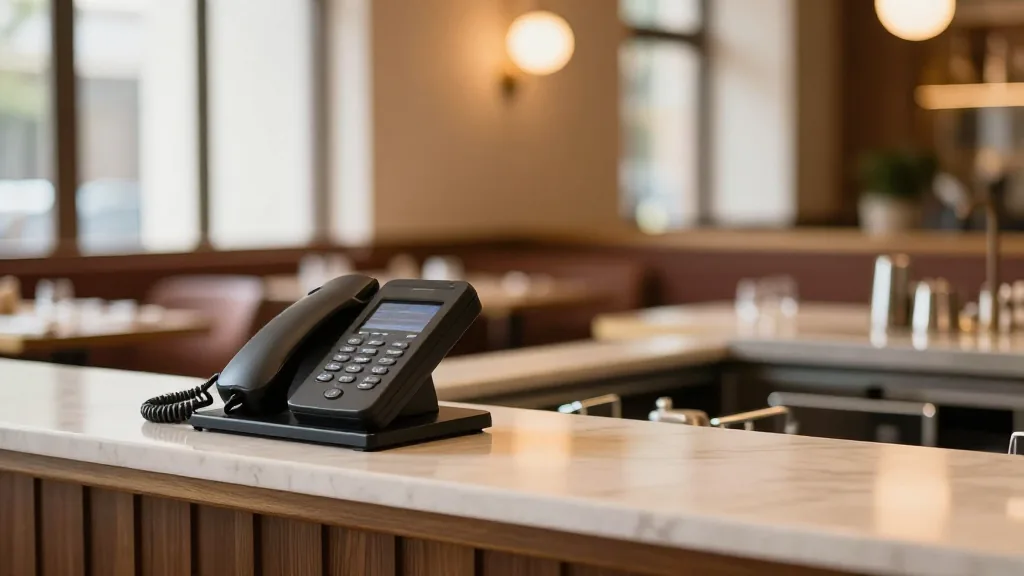
It's a Thursday at 6:40. A regular calls to move his anniversary reservation from four to six people and add a bottle of the Cabernet you keep behind the bar for him. The host phone rings three times while your one host is walking a party to a corner booth, then rolls to a voicemail box that fills up faster than anyone checks it. The regular shrugs, books somewhere else, and you've lost not a $15 pickup order—you've lost a $600 table and a customer who tells his friends. At a steakhouse, the phone doesn't ring for burgers. It rings for the reservations, the private dinners, and the special occasions that carry your average check. Missing those calls isn't a minor annoyance. It's the most expensive thing happening in your dining room.
AI phone answering for steakhouses exists to close that gap: software that picks up every call, talks like a real host, and actually completes the booking or order inside the system that runs your restaurant. This guide is written for owners and GMs who want to understand what the technology does, where it fits a fine-dining operation, and how to tell a useful front desk from a smarter answering machine.
Why the steakhouse phone is different
A quick-service line loses a few dollars per missed call. You don't. The economics of a steakhouse make the phone your highest-leverage—and highest-risk—channel:
- High average check. A single four-top with wine and a shared tomahawk can outweigh a dozen takeout tickets. One lost reservation is a real dent in the night.
- Occasion-driven bookings. Anniversaries, birthdays, closing dinners, out-of-town family. These callers are motivated—and unforgiving of voicemail. If you don't pick up, they call the next name on their list.
- Private dining and large parties. The 12-top holiday party or the buyout inquiry is exactly the call that arrives mid-service, exactly when nobody can talk it through properly.
- Detail-heavy requests. Booth vs. table, dietary restrictions, "can you plate a dessert with a candle," corkage, allergen questions on the dry-aged program. Callers expect a knowledgeable answer, not "let me take your number."
The result is a phone that is most valuable at precisely the moments your staff has zero capacity to answer it.
The pain, named honestly
Before the fix, look at where a steakhouse actually bleeds calls. Run your own numbers as you read—these are your inputs, not our claims.
The dinner-rush overflow
Between 6 and 8 pm your host is seating, quoting waits, and managing the book. The phone competes with the guest standing in front of them, and the guest wins every time. Two or three calls per busy hour go unanswered. If even one of those was a party-of-six looking to book next Saturday, do the math on what that seating is worth.
The after-hours black hole
People plan special dinners at night. Someone decides at 10:30 pm to book their parents' 40th for the following weekend. Your line is dark. They book elsewhere before you open at 4 the next day. Every night your phone is off is a night your competitor's is on.
Re-keying and lost details
Even when a message gets through, someone has to call back and re-enter it into the reservation system. Details drop—"window booth" becomes "any table," the nut allergy note never makes it to the pass. Re-entry is slow and it's where mistakes are born.
No-shows and language gaps
A booked table nobody confirms is a table that can ghost you on your busiest night. And in a lot of markets, the caller's first language isn't English—your host either muddles through or the booking never happens.
The test for any phone solution isn't "can it talk?" It's "does the reservation land in my book, correctly, with the booth and the allergy note attached—without a human re-typing it?" Everything else is decoration.
What AI phone answering actually does
An AI front desk answers your line in a natural voice, understands what the caller wants, and—this is the part that matters—completes the task. It books the reservation into your floor plan with party size, time, seating preference, and occasion notes. It takes a to-go order and fires it to the kitchen. It answers the corkage and allergen questions from your real policies. It's never on hold, never busy, and it handles several callers at once. For the mechanics of how speech understanding, menu grounding, and POS completion fit together, our how KwickPhone works page walks through each step.
The dividing line between a useful system and a glorified voicemail is simple: does it write down what the caller said, or does it do the thing they asked? KwickPhone is native to KwickOS and completes reservations and orders inside the POS directly. If you run a different system, it bolts on as an open service to Square, Clover, Loyverse, Epos Now, and Revel—that page shows each connector's live status and the exact credentials you'll need to link it.
Voicemail vs. a real AI front desk
| The call | Voicemail / basic bot | Real AI front desk |
|---|---|---|
| "Move my table to six people, add the anniversary note" | Message; host calls back if they see it | Updates the booking in the floor plan, confirms by text |
| Party of twelve, private-room inquiry | Goes to voicemail mid-rush | Captures details, transfers to the manager as a VIP lead |
| "Do you do corkage? What's the fee?" | No answer until open | Answers from your real policy, on the spot |
| 10:45 pm booking for Saturday | Line is dark | Books it 24/7, sends a confirmation and reminder |
| "¿Tienen mesa para cuatro?" | English only | Switches to Spanish automatically and books it |
| Four calls at once on Friday | Three roll to voicemail | All four answered simultaneously |
Handling the calls a steakhouse can't afford to fumble
Large parties and private dining
These are your highest-value inquiries and the ones most likely to need a human. A well-built assistant recognizes when a party is unusually large, a buyout, or a catering request, captures the essentials, and transfers it to a manager as a warm lead—so the call never dies in voicemail but also never gets under-handled by a bot.
The VIP who expects to be known
When a regular calls, the system can be configured to route them straight to a person, or to greet them and book their usual with the personal touch that fine dining lives on. Caller preference always wins: ask for a human, get a human.
Concurrency during the rush
Human hosts answer one call at a time. KwickPhone answers as many as ring at once, so the third and fourth caller during peak seating get a host instead of a beep. The recovered revenue usually hides here—not in any single call, but in the ones that used to overflow.
Prank and abuse detection
The system recognizes obvious prank or abusive calls, declines to act on them, and won't drop ten bogus reservations onto your book on a Saturday night.
Owner controls that fit a fine-dining operation
Good technology puts you in charge without making you a programmer. With KwickPhone you get:
- Per-merchant Playbooks. Rules that encode how your room runs: hold the two-top window booths for walk-ins after 7, always confirm dietary notes for parties over six, route any buyout inquiry to the GM, never quote a wait under 30 on a Friday.
- Voice and persona choice. Pick from 20+ voices so the host sounds like your brand—an understated, polished tone for a white-tablecloth room rather than a chirpy fast-food greeting.
- Change things by voice. Flip a sold-out cut, adjust holiday hours, or pause online booking with a spoken command when you're on the floor, not at a laptop.
See how these controls and integrations map to your setup on the by-trade hub, and the steakhouse page for how it's tuned to reservation-heavy, high-check service.
Setup: you keep your number
Nothing about your phone number changes. You forward your existing line to the AI. On a landline that's usually a call-forwarding code—commonly *72 to turn it on and *73 to turn it off, though codes vary by carrier, so confirm with yours. On VoIP you point the number to the AI line in your provider's dashboard. Choose to forward all calls, only the ones your host doesn't pick up, or only after-hours calls—so the AI becomes your late-night booker while your team owns the floor during service.
A five-question buying checklist for steakhouses
Cut through any pitch with these:
- Does it book directly into my reservation system, with booth preference and occasion notes—or just leave a message someone re-keys?
- How does it handle large parties, private dining, and VIPs? There must be a clean, warm transfer to a human.
- How many calls can it take at once, and does it work after hours? That's where rush and late-night bookings live.
- What languages, and does it switch automatically? English, Spanish, and Chinese with auto-detection matters in most markets.
- Can I hear it before I buy? A live call beats a slide deck—you can call KwickPhone's real demo lines at /#try (actual lines, not canned recordings).
When you're ready to compare plans, pricing is straightforward, and the wider KwickPhone blog covers adjacent topics if you're still researching.
A realistic before and after
Before. Friday, 7:05. Your host is quoting a 40-minute wait to a walk-in six-top. The phone rings: a caller wanting to book a party of eight for a retirement dinner next week, with a request for the private alcove. Nobody can pick up. Voicemail. By the time anyone hears it Saturday afternoon, they've booked the steakhouse across town.
After. The same 7:05 call is answered on the first ring by an AI host that knows your room. It captures the party of eight, the retirement occasion, and the alcove request, flags it as a large party, and warm-transfers it to your manager the moment he's free—while simultaneously booking a table-for-two for another caller and answering a third's corkage question in Spanish. Your host never broke stride, and three calls that would have vanished turned into business on the book.
See AI phone answering that completes the booking
KwickPhone answers every call, books reservations and orders natively into your POS—or bolts onto the system you already run. Hear it for yourself on our live demo lines at /#try.
Book a demoFrequently asked questions
Can AI phone answering book reservations into my floor plan?
Yes. It books the reservation directly into your system—party size, time, seating preference, and special-occasion notes—rather than leaving a message a host has to re-enter. For a steakhouse where a booth mix-up costs a whole seating, that end-to-end completion is the entire point.
Will it hand large-party or VIP calls to a human?
Yes, and it should. It transfers when the caller asks for a person, when the party is unusually large or a private-dining or catering request, or when it recognizes a known VIP. It catches the routine volume so your team can give those calls full attention.
Does it work after hours and during the dinner rush?
Yes. It answers 24/7 and is never busy, so a caller who dials at 11 pm to book Saturday—or the third caller during a Friday rush—gets a host instead of voicemail. It handles multiple concurrent calls at once.
What languages can it handle?
English, Spanish, and Chinese. It detects the caller's language within the first sentence and switches automatically, so every guest gets a fluent host without staffing multilingual shifts.
Do I have to change my phone number?
No. You keep your number and forward calls to the AI line—usually a code like *72 on a landline (codes vary by carrier) or a setting in your VoIP dashboard. Forward all calls, only unanswered ones, or only after-hours calls.
Related: the complete guide to AI phone answering for restaurants and the best AI phone answering services for restaurants in 2026.