AI Phone Answering for Sandwich Shops & Delis (2026)
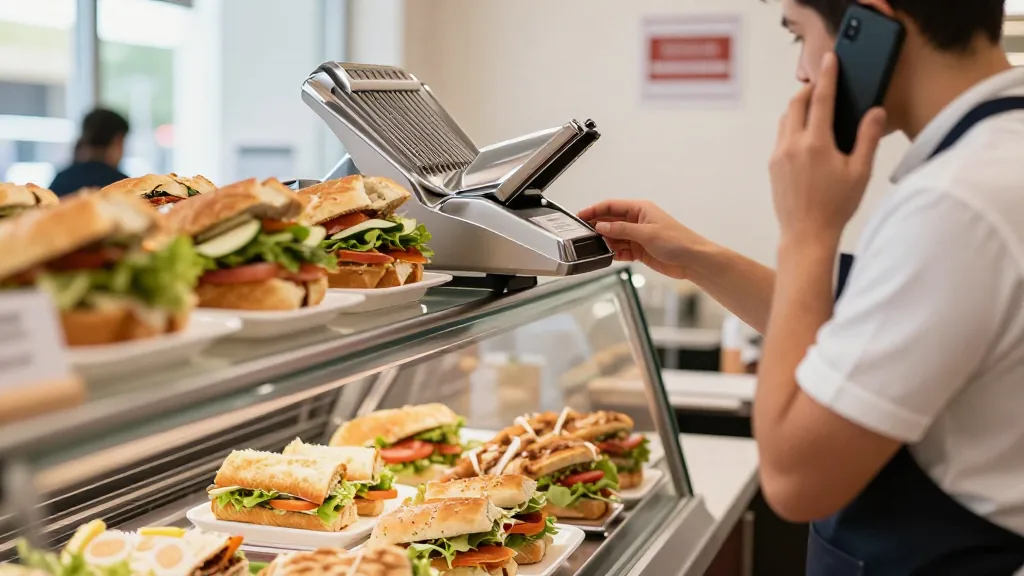
It's 12:04 on a Tuesday. There are fourteen people in line, the slicer is going, your best sandwich maker is buried under a rail of tickets, and the phone starts ringing. It rings four times, then a fifth, then it stops. That was a caller who wanted six subs for their office — the kind of order that pays for the afternoon — and they've already dialed the shop two doors down. You never even heard about it. This is the quiet math of every busy deli: the calls you can't answer are exactly the ones worth the most, and they arrive precisely when nobody has a free hand.
AI phone answering for sandwich shops & delis is the fix that finally matches the shape of the problem. It picks up on the first ring — every ring, all at once — takes the order the way a good counter person would, and drops it straight onto the make line. This guide walks through the exact calls delis lose, why voicemail makes it worse, what a real system does differently, and a short checklist for choosing one.
The calls a deli actually loses (and why)
Sandwich shops have a phone problem that's different from a sit-down restaurant's. Your volume isn't spread across the evening — it's crushed into a 90-minute lunch window where every second of labor is on the make line, not the phone. The result is a predictable pattern of lost business:
- The noon overflow. Two or three calls land in the same two minutes. A human can hold one line. The rest hit voicemail — a black hole nobody checks until the rush is over and the caller has moved on.
- The office catering call. "Can you do a platter of a dozen halves for a 1 o'clock meeting?" These are your highest-ticket orders, and they're the ones most likely to ring out because they come in at peak.
- The after-hours order. Someone planning tomorrow's team lunch calls at 8 p.m. You're closed. They don't leave a message; they book elsewhere.
- The modifier maze. "No mayo, extra oil, sub provolone, hold the onions, cut in three." Taking that by phone while making a sandwich is how tickets get wrong — and a wrong sub is a remake, a refund, and a regular you might not see again.
- The language gap. A neighborhood with Spanish- or Chinese-speaking regulars means calls that a mono-lingual counter can't fully serve.
Put a dollar figure on it with your own numbers: if your average phone order is, say, $22 and your average catering call is $80, and you miss even three of each on a busy Friday, that's real money walking out the door every week — money you already paid rent and payroll to capture. The tension isn't hypothetical; it's baked into how a deli runs at lunch.
Why voicemail and "we'll call you back" don't work
The old answer was a voicemail greeting or a promise to call back. Both fail for the same reason: a sandwich order is time-sensitive. The caller wants lunch now, or wants catering confirmed today. A callback 40 minutes later — after the rush, after they've eaten — is a callback to nobody. And even when someone does leave a message, your staff has to stop, listen, decode a name and a garbled order, then re-key it into the register. That re-entry is slow, error-prone, and happens exactly when there's no time for it.
Rule of thumb for delis: a message you have to re-key during the rush is barely better than a missed call. The win is an order that's already on the make line before your team touches it.
What AI phone answering does differently
An AI front desk answers every call instantly, understands natural speech — including the messy, mid-sentence corrections real callers make — and, critically, completes the order inside your POS instead of just writing it down. It's grounded in your actual menu: your breads, your meats, your named sandwiches, and the modifiers your make line already knows. When a caller says "the Italian on a hero, no hots, extra oil," it maps to the real item and the real options, so the ticket that prints is one your team can build without translation.
Because it's software, it's never busy. Ten calls at noon? It answers all ten at once. And it works in English, Spanish, and Chinese, detecting the caller's language in the first sentence and mapping every order to the same kitchen ticket regardless of what language it was spoken in. To understand the underlying steps — speech, menu grounding, and POS completion — see our how KwickPhone works walkthrough.
It lands in the system you already run
This is the difference that matters. KwickPhone is native to KwickOS, and it also bolts onto the POS you're already using as an open service — the integrations page shows each connector's live status and the exact credentials required to connect it. If you run Square, Clover, Loyverse, Epos Now, or Revel, the order fires to the make line where your crew already looks. For deli owners, the two most common setups are worth checking directly: the Square connector and the Clover connector each list what they can complete end-to-end. A phone bot that can't reach your POS is just a fancier answering machine.
A worked lunch-rush scenario
Before. 12:04, three lines light up. Your host grabs one, takes a six-sandwich order by ear while ringing a walk-in, and mishears "no mayo" as "add mayo." The other two calls ring out. One was a $75 platter for a 1 p.m. meeting. Net result: one wrong ticket, one remake, and roughly $95 of lost orders you never knew existed.
After. The same three calls all get answered on the first ring. Caller one's six subs go in clean — right breads, right modifiers, a suggested drink upsell, a 15-minute pickup time. The $75 platter caller is walked through options and booked into the POS for 12:45. The third caller asks in Spanish where to park; the AI answers and takes their order too. Your make line sees three correct tickets. Your counter person never left the register.
| Lunch-rush moment | Voicemail / callback | AI phone answering |
|---|---|---|
| Three calls in two minutes | Two hit voicemail | All three answered at once |
| "Italian, no hots, extra oil, cut in three" | Re-keyed by hand, easy to mishear | Mapped to real modifiers, fired to make line |
| $75 platter for a 1 p.m. meeting | Rings out at peak, caller moves on | Booked into the POS with pickup time |
| Order at 8 p.m. for tomorrow | Closed — lost | Answered 24/7, order placed |
| "¿Puedo ordenar en español?" | English only | Switches language automatically |
Handling the deli-specific edge cases
Big catering, VIPs, and the human hand-off
Not every call should be fully automated, and a good system knows it. When an order is unusually large — a 40-person catering job — or comes from a known regular who deserves a personal touch, or when the caller simply says "put me through to a person," the AI transfers to your staff or manager. It catches the high-volume routine so your team can spend real attention on the orders that carry the most margin.
Prank calls and abuse
Delis near schools and busy corridors get their share of prank calls. The system detects obvious prank or abusive calls, declines to act on them, and won't send ten bogus platters to your make line. It can flag repeat offenders instead.
Owner controls that fit a counter operation
You run this from behind the counter, not a laptop. Update hours, flag the roast beef as sold out, or pause phone ordering with a secure spoken command. Choose from 20+ voices and personas so the assistant sounds like your shop — laid-back corner deli or crisp downtown lunch spot. And per-merchant Playbooks encode how your place runs: always offer chips and a drink, never promise pickup under 12 minutes at peak, route catering over a set size to the manager. For the full by-trade picture, see the by-trade hub, and for sandwich shops specifically, the deli and sandwich-shop overview.
Setup: you keep your number
Nothing about your line changes. You keep your existing phone number and forward calls to the AI. On a landline that's usually a call-forwarding code — commonly *72 followed by the forwarding number to turn it on, and *73 to turn it off, though codes vary by carrier, so confirm with yours. On VoIP, you point the number in your provider's dashboard. Forward all calls, only the ones your staff don't pick up, or only calls outside business hours — so the AI becomes your after-hours order-taker while your team owns the counter during the rush. Pricing for the plans is on the pricing page, and you can browse more trade guides on the blog.
A short checklist for choosing a system
- Does it complete the order in my POS, or just leave a message? Ask exactly what happens after hangup.
- Is it grounded on my real menu, breads, and modifiers, or a generic script that can invent items?
- How many calls at once? The noon overflow is where your lost revenue lives.
- Does it handle Spanish and Chinese and switch automatically?
- When does it transfer to a human — big catering, VIPs, caller preference?
- Can I flip a sold-out item and change hours myself, instantly, from the counter?
- Can I hear it live before I buy? A real call beats a slide deck.
Hear it take a deli order — then never miss the lunch call again
KwickPhone answers every call and places it natively into your POS, or bolts onto Square, Clover, Loyverse, Epos Now, or Revel. Want to hear how it sounds? Call our live demos at /#try — real lines, not canned recordings.
Book a demoFrequently asked questions
Can AI phone answering handle a full catering platter order for a deli?
It can take the routine parts — party size, platter type, pickup time, contact details — and place them into the POS. For unusually large orders or known regulars, a good system transfers to a human or a manager so the personal touch and margin aren't lost.
Does it actually put the sandwich order into my POS?
Yes. KwickPhone is native to KwickOS and bolts onto Square, Clover, Loyverse, Epos Now, and Revel, so the order lands on the make line with the right bread, meats, and modifiers — not as a voicemail your staff has to re-key during the rush.
What happens when three lunch calls come in at once?
The AI answers all of them simultaneously and is never busy. Where a single human host would send the second and third caller to voicemail, every caller gets a live host who can take the order end-to-end.
Can it take orders in Spanish or Chinese?
Yes. It serves English, Spanish, and Chinese and detects the caller's language in the first sentence, then maps the order to the same make-line ticket regardless of language.
Do I have to change my deli's phone number?
No. You keep your existing number and forward calls to the AI line — usually a code like *72 on a landline (codes vary by carrier) or a setting in your VoIP dashboard. Forward all calls, only unanswered ones, or only after-hours calls.
Related: the complete guide to AI phone answering for restaurants and the best AI phone answering services for restaurants in 2026.