AI for a High-Volume Order Hotline: Kill the Hold, Keep the Order
At 7:04 on a Friday, your order hotline has more callers than people to answer them. Two of your three phone-room staff are mid-order, the third just put someone on hold to check whether the family platter comes with rice, and three new calls are already ringing. Two of those roll to hold music. One of those two hangs up at forty seconds and orders from somewhere else. That caller wanted a $70 catering pickup. You never knew they called.
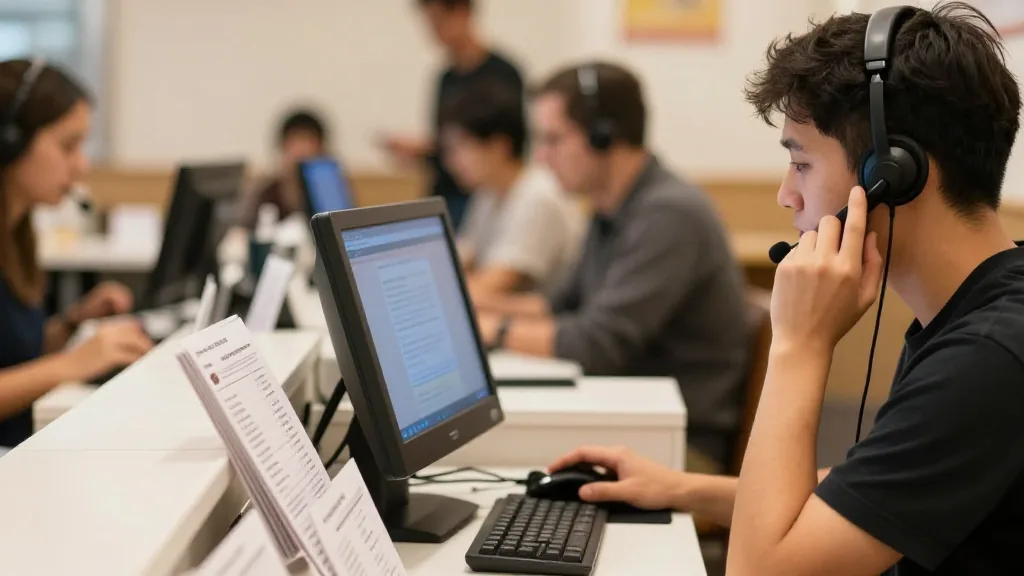
This is the specific, structural problem of a high-volume order hotline: your ability to answer is capped by how many humans are holding a headset, but demand is not. AI phone answering for a high volume order hotline removes that cap—one system answers every simultaneous call, takes the whole order into your POS, and hands off to a person only when a person is actually needed. This guide is for operators who already run a phone room and keep hitting the same ceiling at peak.
The peak ceiling nobody budgets around
Here's the math you already feel in your gut. A phone room with four staff can hold four conversations. Call five and six wait. Every order takes ninety seconds to four minutes depending on modifiers and questions. During the two-hour dinner rush, your throughput is fixed and your demand spikes—so the gap between them is pure leakage, and it leaks fastest at the exact moment each order is worth the most.
You can't staff for the peak without overstaffing the trough. Hire two more people for Friday at 7pm and you're paying them to stand around at 3pm on Tuesday. So most operators quietly accept the overflow: some calls will go to hold, some to voicemail nobody checks until close, some just gone. It's a rational tradeoff made under a bad constraint.
What the overflow actually costs you
Do this with your own numbers, not ours. Take your average takeout ticket—call it whatever yours is. Estimate how many calls per Friday rush go unanswered or abandon on hold; your staff can usually guess within a range. Multiply. Then add the ones that don't show as lost calls at all: the regular who tried twice, got hold music both times, and quietly stopped calling. That last group never appears in any report, which is exactly why it's dangerous.
The other tax: re-keying and the voicemail black hole
Even the calls you do catch carry a hidden cost. When an answering service or a basic bot "takes a message," someone on your team has to read that transcript and re-enter the order into the POS by hand. That re-entry is slow at exactly the wrong time, and it's where the wrong modifier, the missed allergy note, or the transposed phone number sneaks in. You automated the talking but not the work.
Voicemail is worse. A voicemail on an order line is a customer who wanted food now and will not wait for a callback. By the time anyone listens, the moment—and often the customer—is gone. For the full picture on why message-taking isn't the same as answering, our complete guide to AI phone answering for restaurants walks through the difference in depth.
Concurrency, language, and courtesy are one experience
It's tempting to list these as three separate features. They're not. From the caller's side they're a single moment: the phone is answered instantly, in their own language, by a host who is unfailingly polite—and the order gets done on the call. Break any one of those and the experience breaks.
Every line, at once, with no busy signal
AI doesn't answer one call at a time. When ten lines ring during the rush, ten callers get a host on the first ring. The eleventh does too. There is no queue, no hold music, no "all our representatives are busy." The peak ceiling that shaped every staffing decision you've made simply isn't there anymore. Your people can then focus on the floor and on the calls that genuinely need a human, instead of racing the ring count.
Served in their own language, on the first ring
In a lot of neighborhoods, a meaningful share of your callers are more comfortable ordering in Spanish or Chinese than in English. In a human phone room, that means either putting the caller on hold to find someone who speaks the language—or a strained, error-prone exchange that embarrasses everyone and gets the order wrong. KwickPhone greets and converses naturally in English, Spanish, and Chinese, detects the caller's language within the first sentence, and switches automatically. No hold, no hand-waving, no lost order. The same menu and modifier grounding applies in every language, so a Chinese-speaking caller's order lands on the kitchen line identical in structure to an English-speaking one.
The 100th caller at midnight gets what the first caller got
This is the part human phone rooms genuinely can't promise, and it's no knock on your staff—it's physiology. Under a two-hour rush, tone frays. People get curt, rushed, a little short with the caller who can't decide. The AI doesn't have a bad night. The 100th caller near close gets the same warm, patient, correct, courteous service as the 9am opener. That consistency is what turns "answered" into "answered well," and answered-well is what shows up later in reviews and repeat orders.
The payoff isn't a metric on your dashboard—it's the caller's last three seconds on the line. Answered instantly, understood in their language, treated politely, order confirmed. They hang up satisfied instead of annoyed. Do that a few hundred times a week and it compounds into reputation.
Completing the order, not just capturing it
Concurrency and courtesy still leave one question that separates a real front desk from a fancy answering machine: does it actually place the order? KwickPhone completes the task inside the system that runs your restaurant. It fires the takeout ticket to the kitchen with an accurate pickup time, seats the reservation in your floor plan, redeems the gift card, or texts a secure payment link—no transcript for your staff to re-key. It's native to KwickOS and bolts onto the POS you already run—Square, Clover, Loyverse, Epos Now, and Revel—as an open service. The integrations directory shows each connector's current status and the credentials you'll need to switch it on, so you can check compatibility before you commit.
Phone room vs. always-on AI: the honest comparison
| Friday-rush reality | Phone room alone | Phone room + AI hotline |
|---|---|---|
| Ten calls ring at 7:04 | Four answered, six wait or drop | All ten answered on the first ring |
| Caller orders in Chinese | Hold while you find someone; or a rough exchange | Served in Chinese instantly, order grounded to the same menu |
| Order taken by a message service | Staff re-key it into the POS by hand | Placed in the POS, fired to the kitchen automatically |
| Tone at the 90th call of the night | Frayed, rushed under pressure | Same warm, patient, correct service |
| $700 catering request comes in | May get lost in the rush | Recognized and transferred to a manager |
| 3am, line closed to humans | Voicemail nobody checks | Order taken or reservation booked 24/7 |
The point isn't that machines beat people. It's that people can't be in five places at 7:04. AI covers the overflow and the off-hours; your staff keep the relationships, the room, and the calls that need a human touch.
Knowing when to hand a call to a person
A good hotline AI stays in its lane. KwickPhone transfers to a human when the caller simply prefers a person—caller preference always wins—when the order is unusually large, a catering job, or from a known VIP who deserves a personal touch, or when the request is genuinely unusual. It also recognizes obvious prank or abusive calls and declines to send bogus orders to your kitchen, so your line cooks aren't chasing ten fake pickups on the busiest night of the week.
A worked scenario: the Friday dinner rush
Before. 7:04pm. Four staff, four active calls, six lines ringing. Two roll to hold. A Spanish-speaking caller waits ninety seconds for someone who can help, then hangs up. A $70 catering pickup abandons on hold music. A regular tries twice, gives up, and orders elsewhere—and you'll never see that in a report.
After. Same 7:04. All ten lines are answered on the first ring. The Spanish caller is greeted in Spanish, orders a family platter with modifiers, and gets a 25-minute pickup and a payment link by text. The catering caller is recognized as a large order and warmly transferred straight to your manager. Two English callers, one Chinese caller, and a reservation-for-six are all handled at once—every ticket landing in the POS, on the kitchen line, in the floor plan. Your four staff never broke stride, because the AI absorbed the overflow that used to spill onto the floor. See exactly how that flow works in how KwickPhone works.
Owner controls: it runs how your hotline runs
Your peak isn't generic, so the AI shouldn't be. Per-merchant Playbooks encode your rules: never promise under 20 minutes on a Friday, always offer the loyalty signup, transfer catering to the manager, upsell the combo only when it's honest. Choose from 20+ voices and a persona that fits your brand—crisp and efficient for a high-volume line, or warm and neighborly. And you can manage it by voice: flip a sold-out item or pause ordering while you're standing on the line, not sitting at a laptop. If you run more than one location or a specific concept, the by-trade hub and our restaurant page show how the setup adapts by vertical.
Setup keeps your existing number
You don't change your hotline number. You keep it and forward calls to the AI. On a landline that's usually a call-forwarding code—commonly *72 to turn on, *73 to turn off—though codes vary by carrier, so confirm with yours. On VoIP you point the number to the AI line in your provider's dashboard. Crucially, you choose which calls: forward everything, forward only calls your team doesn't pick up, or forward only overflow during peak and after-hours. Many operators start with overflow-only—staff answer while they can, AI catches the rush that would have been lost. Plans and what's included are laid out on the pricing page, and more field guides live on the KwickPhone blog.
Hear it answer a rush without hold music
KwickPhone answers every simultaneous call, completes the order in your POS, and serves callers in English, Spanish, and Chinese. Want proof it's real? Call our live demo lines—actual working numbers, not canned recordings—at /#try.
Book a demoFrequently asked questions
Can AI phone answering handle many calls at the same time?
Yes. Unlike a phone room where each person answers one line, AI answers every simultaneous call at once. When ten lines ring during the dinner rush, all ten callers get a host on the first ring instead of hold music or a busy signal.
Does it take the full order into the POS or just leave a message?
The best systems complete the task. KwickPhone places the order or reservation directly into the POS and fires it to the kitchen or seats it in the floor plan, so your staff never re-key a transcript. It's native to KwickOS and bolts onto Square, Clover, Loyverse, Epos Now, and Revel.
What languages can it speak on the hotline?
It greets and converses naturally in English, Spanish, and Chinese, detects the caller's language in the first sentence, and switches automatically. No caller is put on hold to wait for someone who speaks their language.
Will it transfer to a human when needed?
Yes. It hands off when the caller asks for a person, when an order is unusually large, a catering request, or from a known VIP, or when the request is outside what it can safely complete. It catches the routine, high-volume calls so your team focuses on the ones that need a human.
Do I have to change my hotline number?
No. You keep your number and forward calls to the AI line—usually a code like *72 on a landline (codes vary by carrier) or a setting in your VoIP dashboard. Forward all calls, only unanswered ones, or only overflow during peak hours.
Related: the complete guide to AI phone answering for restaurants and the best AI phone answering services for restaurants in 2026.