AI Phone Answering for Korean Restaurants & BBQ (2026)
It's 7:40 on a Saturday and the grills are all lit. Every server is either changing out a scorched grill grate or ferrying a fresh round of banchan, the host stand is three parties deep, and the phone is ringing off the hook. One of those callers wants to book a table for eight for a birthday. Another wants a two-person BBQ set to go, extra rice, hold the doenjang jjigae. A third only speaks Korean and gives up after four rings. By the time anyone thinks to check voicemail, it's 11 p.m., the kitchen is broken down, and those three calls are gone.
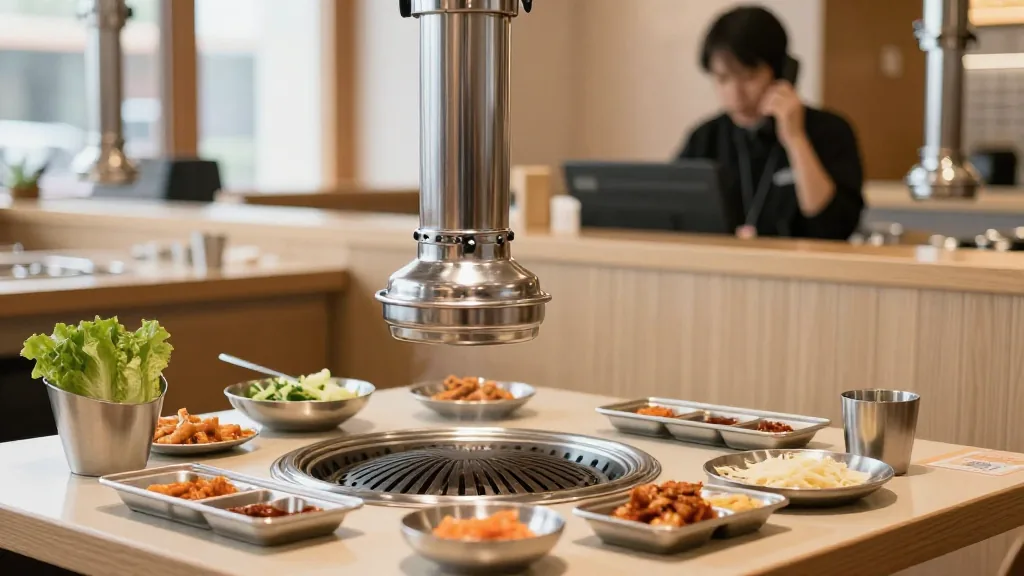
Korean restaurants and KBBQ houses have a phone problem that's sharper than most: the calls are high-value, they arrive in bursts precisely when the floor is most slammed, and a meaningful share of them come in a language your Saturday-night crew may not all speak. This guide is about the technology built to catch those calls — what it does, where it earns its keep, and how to tell a real system from a fancy answering machine.
Why the phone hurts more at a KBBQ house
Most restaurants lose a few calls at the rush. A Korean BBQ operation loses expensive ones. Consider the shape of your inbound calls:
- Reservations are the lifeblood. KBBQ is a party-and-group business. A missed reservation isn't a $15 sandwich — it's a table of six or eight, plus the drinks and the second round of meat, walking to the place down the block.
- Grill-table logistics matter. Callers ask whether you have vent-hood tables, whether the party of ten can be seated together, whether the private room is free. A voicemail can't answer any of that.
- Takeout orders are long and detailed. Combo sets, banchan swaps, spice levels, "add egg soufflé," "extra ssamjang" — a message scrawled on a ticket pad and re-keyed later is where mistakes and remakes are born.
- The language mix is real. Korean-speaking regulars, Spanish-speaking calls, English walk-ins — one host can't fluently serve all of them at once during service.
Put a rough dollar figure on it using your own numbers: if you miss even three qualifying calls on a busy Friday and your average party check is, say, whatever your last month's average was, you can multiply that out in your head. The point isn't a statistic — it's that the calls you drop are your biggest tickets, not your smallest.
Rule of thumb for this trade: the calls that overflow to voicemail during the dinner rush are disproportionately your group reservations and your large takeout orders — the exact business you can least afford to lose.
The voicemail black hole, quantified
Voicemail feels like a safety net. It isn't. Group diners planning a birthday don't leave a message and wait — they call the next restaurant. Takeout customers hungry now don't want a callback in 40 minutes. And nobody on your floor has the bandwidth mid-service to work through a queue of voicemails, cross-reference the reservation book, and call people back. The message sits until close, then it's stale. That's the "black hole": a system that captures calls but converts none of them.
What AI phone answering actually is
AI phone answering for Korean restaurants & BBQ is a voice assistant that picks up your line, talks with the caller the way a good host would, and — this is the part that matters — completes the task. It books the table into your floor plan, places the takeout order in your POS and fires it to the kitchen, or answers the grill-table question from your real policies. It answers every call 24/7, it's never busy, and it handles several callers at once. There's no "press 1 for hours" phone tree; the caller just talks.
If you want the category from the ground up, our complete guide to AI phone answering for restaurants covers the mechanics in depth. This piece stays focused on the Korean and KBBQ reality.
The one test that separates real systems from voicemail 2.0
Plenty of phone bots can hold a conversation. Far fewer can put the reservation in your book or the order on the kitchen line. The question to ask any vendor is blunt: after the caller hangs up, what happens? If the answer is "we send your host a transcript" or "we create a ticket someone confirms," that's manual re-entry with extra steps. Your staff still has to re-key it during the rush — slow, error-prone, and pointless.
A real system is POS-native or integrates deeply. KwickPhone is native to KwickOS and also bolts onto Square, Clover, Loyverse, Epos Now, and Revel as an open service — and that integrations page shows each connector's live status and the exact credentials you'll need to connect it. When the order lands where your line cooks already look, you've automated the work, not just the talking.
How it handles a real KBBQ order
Grounding is what keeps the assistant honest. It's trained on your actual menu — the two-person and four-person sets, the à la carte meats by cut, the stews, every banchan and every modifier your kitchen recognizes. So when a caller rattles off "the deluxe combo for four, sub the brisket for pork belly, extra rice, one soondubu mild, add egg soufflé," the system maps each piece to a real item and a real option. It won't invent a dish or quote a price that doesn't exist. Then it fires the order to the line with an accurate pickup time and can text a payment link so it's paid before pickup.
| Saturday-night call | Voicemail | Real AI front desk |
|---|---|---|
| "Table for eight, birthday, tonight?" | Message sits until close | Books it into the floor plan, notes party size, confirms by text |
| "Do you have a vent-hood table for ten?" | No answer until callback | Answers from your real seating policy |
| Detailed combo + banchan swaps | Scrawled note, re-keyed later | Placed in the POS, fired to the kitchen with modifiers intact |
| Korean-only caller | Hangs up | Detects the language and switches automatically |
| Four calls at once at 7:40 | Three go to voicemail | All four answered simultaneously |
Language: serving every caller without a bigger payroll
The assistant works across English, Spanish, and Chinese, detecting the caller's language within the first sentence and switching automatically. The same menu and modifier grounding applies in each language, so a Spanish-speaking caller's combo set produces the same kitchen ticket an English caller's would. For a Koreatown or suburban KBBQ spot with a mixed clientele, that means every caller gets a fluent, patient host on every shift — without staffing multilingual hosts for each service.
Surviving the rush: concurrency and judgment
It answers all the lines at once
A human host answers one call at a time. AI answers as many as ring simultaneously, so the third and fourth caller at 7:40 get a host instead of a beep. For a group-reservation-driven business, this concurrency is usually where the recovered revenue actually hides — not in any single call, but in the ones that used to overflow.
It knows when to hand you the phone
A well-built assistant stays in its lane. It transfers to a person when:
- The caller asks for a human — preference always wins.
- The order is unusually large, a full-room buyout, a catering request, or a known VIP who deserves a personal touch.
- The request is genuinely unusual or outside what it can safely complete.
It also recognizes obvious prank or abusive calls and declines to fire ten bogus pickups to your kitchen. The goal is to catch the routine, high-volume calls so your team can pour full attention into the ones that need a human.
You stay in control
You shouldn't need a developer to run this. KwickPhone gives owners:
- Voice management by voice. Flip a sold-out cut off the menu, update hours, or pause ordering with a secure spoken command — handy when you're on the floor, not at a laptop.
- Per-merchant Playbooks. Rules that encode how your house runs: always offer the combo upsell, never promise under 30 minutes for a large set on Friday, transfer buyouts to the manager, offer the loyalty signup.
- Voice and persona choice. A library of 20+ voices so the host sounds like your brand — warm neighborhood spot or crisp upscale room.
See exactly how these controls behave in how KwickPhone works, and browse the by-trade hub — including the dedicated page for Korean restaurants & BBQ — for setups tuned to your kind of operation.
Setup keeps your existing number
You don't change your number. You keep your line and forward calls to the AI. On a traditional landline that's usually a call-forwarding code — commonly *72 followed by the forwarding number to turn it on, *73 to turn it off — though codes vary by carrier, so confirm with yours. On VoIP, you point the number to the AI line in your provider's dashboard. You can forward all calls, only the ones your team doesn't grab, or only calls outside business hours — so the AI becomes your after-hours reservation host while your crew works the floor during service. Costs are laid out plainly on the pricing page.
A decision checklist for Korean & KBBQ operators
- Does it complete the task in my POS or reservation book — or just transcribe? Ask precisely what happens after hangup.
- Is it grounded on my real menu — sets, cuts, banchan, modifiers — so it can't invent items?
- Can it answer grill-table and seating questions from my actual floor policy?
- How many calls at once? Concurrency is where your Friday reservations live.
- Korean, Spanish, English — does it switch automatically?
- When and how does it transfer to a human for a buyout or VIP? There must be a clean escape hatch.
- Can I change hours and 86 an item myself, instantly, without a support ticket?
- Can I hear it before I buy? A real call beats a slide deck.
Before and after, one Saturday
Before. 7:40 p.m. The birthday-party caller wants a table for eight, hits four rings and voicemail, and books elsewhere. The two-person-set takeout call hangs up. The Korean-only caller gives up. Nobody hears any of it until cleanup.
After. The same three calls are answered on the first ring. The party of eight is booked into the floor plan with a grill-table note and a confirmation text. The takeout combo — modifiers and all — drops onto the kitchen line with a 30-minute pickup time and a payment link. The Korean-speaking caller is served in Korean and asks about parking on the way. Your host never left the floor, and three lost calls became business on the books.
Hear it answer a KBBQ call, live
KwickPhone answers every call and places the order or reservation natively into your POS — or bolts onto the system you already run. Want to hear how it handles a combo order? Call our live demo lines (real numbers, not canned recordings) at /#try.
Book a demoFrequently asked questions
Can AI phone answering handle Korean-language callers?
Modern voice AI works across English, Spanish, and Chinese and detects the caller's language, switching automatically. It grounds every order against the same menu and modifiers, so a Korean-speaking or Spanish-speaking caller's order maps to the same kitchen ticket an English caller's would.
Will it actually book the KBBQ table into my system?
The best systems complete the task inside your POS or reservation system rather than leaving a message — seating the party in your floor plan with size, grill-table preference, and time captured, not a transcript your host has to re-key during the rush.
Can it take a complicated banchan and combo takeout order?
Yes. It's grounded on your real menu, modifiers, and combos, so "the two-person BBQ set, extra rice, no kimchi jjigae, add egg soufflé" maps to the actual items and options your kitchen knows, then fires to the line with an accurate pickup time.
Do I have to change my restaurant's phone number?
No. You keep your number and forward calls to the AI — usually a code like *72 on a landline (codes vary by carrier) or a setting in your VoIP dashboard. Forward all calls, only unanswered ones, or only after-hours calls.
Does it work with my POS?
KwickPhone is native to KwickOS and also bolts onto Square, Clover, Loyverse, Epos Now, and Revel as an open service. The integrations page shows each connector's status and the credentials required to connect it.
Related: the complete guide to AI phone answering for restaurants, the best AI phone answering services for restaurants in 2026, and more on the KwickPhone blog.