AI Phone Answering for Italian Restaurants (2026)
It's 7:40 on a Saturday. The pass is stacked, two servers are mid-fire on a twelve-top's antipasti, and the phone by the host stand has rung four times. The one person who could grab it is walking three entrées to table nine. The caller wanted a family-style takeout—two orders of lasagna, a chicken parm, a tiramisu, garlic knots. That's real money, and it just rang out. By the time anyone plays the voicemail, it's cleanup and the caller has already eaten at the trattoria two blocks over.
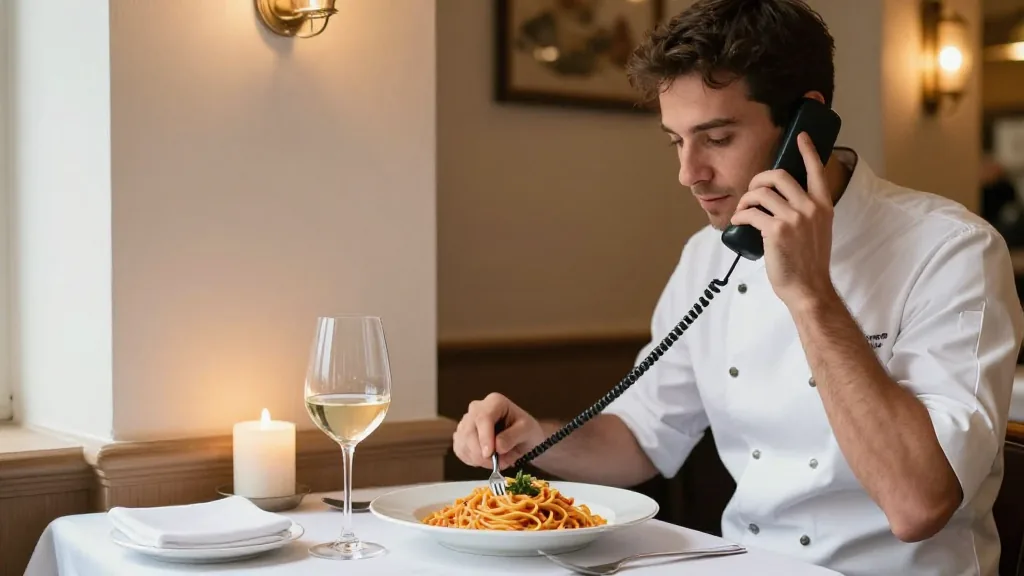
Every Italian restaurant lives this. The phone is busiest at the exact moment your floor is busiest—and the caller on the other end is holding a check average two or three times your average pizzeria ticket. AI phone answering for Italian restaurants exists to catch those calls: software that picks up on the first ring, talks like a host, and actually completes the order or reservation inside the system that runs your restaurant.
The calls an Italian spot loses most
Not all missed calls are equal. In an Italian kitchen, the ones that hurt cluster around a few patterns:
- The large family takeout. Sunday-dinner style orders—multiple entrées, sides, a dessert or two. High ticket, easy to lose if it goes to voicemail.
- The reservation for a special occasion. Anniversaries, birthdays, a table for eight. These callers often want a person and won't leave a message; they'll just call the next place on the list.
- The modifier-heavy order. "Gluten-free penne, no cream in the vodka sauce, gluten-free bread on the side." Your staff can handle it—if they can pick up.
- The after-hours planner. Someone booking Friday's date on Tuesday at 10 p.m., long after you've locked up. Straight to a mailbox nobody checks.
- The language mismatch. A caller more comfortable in Spanish or Chinese, met with an English-only voicemail, hangs up.
Do the math on one lost Saturday
Put your own numbers in. Say your average takeout ticket is $55 and you miss six calls on a busy Friday and Saturday combined—not unreasonable when the phone competes with a packed floor. If even four of those would have converted, that's $220 in a single weekend, walking to a competitor. Multiply across a month and the arithmetic gets uncomfortable fast. Now add the reservation you lost to voicemail: not just that table's covers, but the wine, the shared appetizers, the desserts, the regulars they'd have become.
Rule of thumb: a phone bot that can't reach your POS is a fancy answering machine. The value isn't in hearing the order—it's in getting that lasagna ticket onto the kitchen line without anyone re-keying it.
What AI phone answering actually does
A capable system answers your phone, understands the caller in natural speech, and completes the task—takes the order and fires it to the kitchen, books the table into your floor plan, answers questions about your hours, your gluten-free options, your patio, your corkage policy. It works 24/7, is never busy, and handles several callers at once. Instead of "press 1 for hours," the caller just talks the way they'd talk to your host.
The plain-English walkthrough of the technology lives in how KwickPhone works, but the short version is three steps: it understands the speech, it grounds the request against your real menu and policies, and then it acts inside your point-of-sale. The first two steps are conversation. The third is the work—and it's where most phone bots quietly stop.
Why POS-native completion is the whole game
Plenty of bots can hold a conversation. Far fewer can drop the order into your POS, fire it to the line, or seat a reservation in your floor plan—because most live outside the system that runs your restaurant. If a vendor's answer to "what happens after the caller hangs up?" is "it sends your staff a transcript," that's re-keying wearing a nicer coat. It's slow, it's where mistakes creep in, and it defeats the purpose.
KwickPhone is native to KwickOS, and it also bolts onto the system you already run as an open service—it works with Square, Clover, Loyverse, Epos Now, and Revel. Before you commit, the integrations directory shows each connector's live status and the exact credentials required to link it, so you know what a setup actually involves rather than guessing. If reservations run through a separate booking tool, check its listing there too.
Handling a real Italian menu without inventing dishes
The step cheap bots skip is grounding. A generic script will happily "confirm" a dish you don't make or a price that doesn't exist. A grounded assistant is trained on your actual menu, modifiers, and policies—so when a caller says "the penne alla vodka, gluten-free pasta, no cream, add grilled chicken," it maps every word to the real item and the real options your kitchen knows, and it knows whether gluten-free penne is even available today.
That matters more in an Italian kitchen than almost anywhere, because your orders carry allergen questions (gluten, dairy, shellfish in the fra diavolo), portion choices (half tray vs. full tray for family style), and preparation notes your line depends on. Grounding is what keeps the AI from promising a "spicy carbonara" that isn't on the board.
| Caller's request | Voicemail | KwickPhone |
|---|---|---|
| "Family lasagna order for pickup" | Message; called back after close | Placed in the POS, fired to the kitchen, pickup time given |
| "Table for eight, Saturday, anniversary" | No response until someone checks | Booked into the floor plan, confirmed and reminded by text |
| "Do you have gluten-free pasta?" | Generic recording | Answered from your live menu and policies |
| "¿Hacen entregas para diez personas?" | English only | Switches to Spanish, takes the catering-size request |
| Four calls during the 7:30 rush | Three go to voicemail | All four answered at once |
Speaking your neighborhood's languages
KwickPhone serves English, Spanish, and Chinese, and detects the caller's language within the first sentence, then switches automatically. For a neighborhood spot, that means the caller who's more comfortable in Spanish gets a fluent, patient host without you scheduling a bilingual server for every shift—and their order maps to the same kitchen ticket an English caller's would. The trade-focused breakdowns on the by-trade hub go deeper on how this plays out across different kinds of food businesses.
Knowing when to hand the call to a human
A well-built assistant stays in its lane. KwickPhone transfers to a person when the caller simply asks for one—preference always wins—when an order is unusually large, a catering request, or from a known VIP who deserves a personal touch, and when the request is genuinely unusual or outside what it can safely complete. It also recognizes obvious prank or abusive calls and declines to fire bogus tickets to your kitchen. The goal is to absorb the routine, high-volume calls so your host can give full attention to the eight-top booking their anniversary.
Owner controls built for a working service
You shouldn't need a laptop mid-service to run this. KwickPhone gives you:
- Voice management. Secure spoken commands to flip the veal special to sold out, adjust hours, or pause takeout when the kitchen is buried.
- Per-merchant Playbooks. Rules that encode how your place runs—offer the garlic knots with every pasta, never promise under 25 minutes on a Friday, transfer catering over $200 to the manager.
- 20+ voices and persona choice. A warm neighborhood host or a crisp upscale maître d', to match your room.
Setup keeps your existing number
You don't change your number. You forward calls to the AI line—on a landline that's usually a code like *72 followed by the forwarding number (codes vary by carrier, so confirm with yours), and on VoIP it's a setting in your provider's dashboard. You choose the mode: forward all calls, only the ones your staff don't pick up, or only calls outside business hours—so the AI becomes your after-hours host while your team works the floor during service. Plans and what's included are laid out on the pricing page.
A short decision checklist for Italian operators
- Does it complete the order in my POS, or just transcribe it? Ask exactly what happens after hangup.
- Is it grounded on my real menu, including modifiers and allergen options, or a generic script that can invent a dish?
- Does it book reservations into my floor plan and send reminders to cut no-shows?
- How many calls at once, and does it hold up on a loud Friday?
- Does it handle Spanish and Chinese and switch automatically?
- Can I hear it before I buy? A real call beats a slide deck.
The same Saturday, rewritten
It's 7:40 again. The family-style caller rings, and this time an AI host answers on the first ring—already knowing the menu. It takes the two lasagnas, the chicken parm, the tiramisu and knots, suggests a Caesar for the table, confirms a 30-minute pickup, texts a payment link, and drops the ticket straight onto the kitchen line. Meanwhile it books the anniversary table-for-eight for another caller and tells a third where to park. Your servers never broke stride, and three calls that used to die in voicemail turned into business on the books.
Hear it complete a real Italian order
KwickPhone answers every call and places it natively into your POS—or bolts onto Square, Clover, Loyverse, Epos Now, or Revel. Curious how it sounds? Call our live demos (real lines, not canned recordings) at /#try.
Book a demoFrequently asked questions
Can AI phone answering handle a complicated Italian order with modifiers?
Yes. When it's grounded on your real menu and modifiers, the assistant maps requests like "penne alla vodka, gluten-free pasta, no cream, add grilled chicken" to the exact items your kitchen knows, then places the order in your POS instead of leaving a note to re-key.
Does it book reservations into my floor plan?
The best systems seat the reservation directly—party size, time, and special requests captured—and send a confirmation and reminder text to cut no-shows, rather than just taking a message.
What languages can it speak for my restaurant?
KwickPhone serves English, Spanish, and Chinese and detects the caller's language within the first sentence, switching automatically. The same menu grounding applies in each language.
Do I have to change my phone number?
No. You keep your number and forward calls to the AI line—usually a code like *72 on a landline (codes vary by carrier) or a setting in your VoIP dashboard. Forward all calls, only unanswered ones, or only after-hours calls.
Will it always answer during my Friday dinner rush?
Yes. It answers every call 24/7, is never busy, and handles multiple concurrent calls—so the third and fourth callers during service get a host instead of voicemail.
Related: the complete guide to AI phone answering for restaurants, the best AI phone answering services for restaurants in 2026, and more on the KwickPhone blog.