AI Phone Answering for Food Trucks (2026)
Picture the lunch rush at a downtown lot. There's a fifteen-deep line at the window, your grill cook is calling out tickets, and your phone starts buzzing in your apron. It's almost certainly a catering lead—a $900 office order for Thursday—but you have exactly zero free hands and a burrito to wrap. You let it ring. It goes to a voicemail you'll check tonight, by which point the office manager has already booked the truck two lots over. That one call was worth more than the entire lunch service you were too busy to leave.
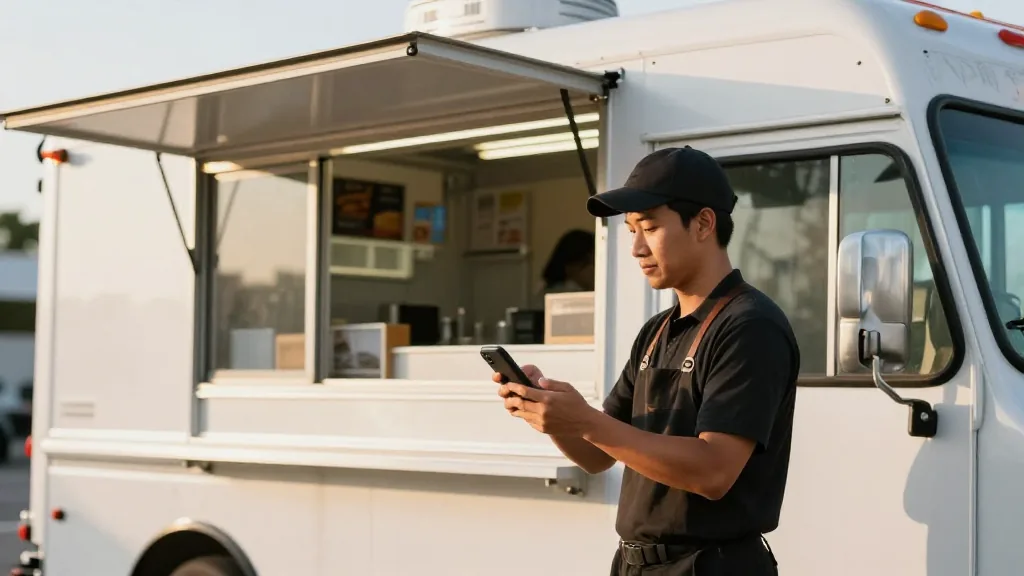
AI phone answering for food trucks exists because a truck is the worst possible environment for answering a phone and the best possible business for one to be answered. This guide covers the specific calls trucks lose, what a real system does about them, and how to choose one that actually completes the order instead of just taking a message.
The calls a food truck loses—and what each one costs
A brick-and-mortar restaurant has a host stand and, usually, someone who can grab the phone. A truck has neither. Your two-to-four person crew is fully committed to the window during every profitable minute of the day. That creates a predictable set of losses:
- Catering and event leads. These come in during service, which is the only time you cannot pick up. A single dropped inquiry might be worth several hundred to a few thousand dollars—plug in your own average catering ticket and the math gets uncomfortable fast.
- Call-ahead pickup orders. Regulars who want to skip the line call to order. If it rings out, they either wait in line anyway (fine) or drive off (a lost check).
- "Where are you today?" Trucks move. Callers who can't find your spot on a given day give up. A recorded greeting with last week's location is worse than nothing.
- After-hours and off-day calls. Someone plans a weekend event on a Tuesday night when your truck is dark and your crew is home. Voicemail catches it; nobody follows up until Thursday.
- Re-keying what you did catch. Even when you scribble a catering note on a receipt roll, someone has to re-enter it later—slow, error-prone, and easy to lose in the chaos of a mobile operation.
Rule of thumb for trucks: your phone rings hardest at exactly the moment you're least able to answer it. Any fix that requires a free pair of hands during service isn't a fix.
What "AI phone answering" actually means for a truck
It's a voice assistant that picks up your line, understands what the caller wants, and completes the task—takes a pickup order, captures a catering lead, answers "are you at the brewery lot today?", checks a gift-card balance, or texts a payment link. It runs 24/7, is never busy, and can handle several callers at once. Instead of a phone tree, the caller just talks like they're at the window, and it talks back.
The label varies—AI receptionist, AI front desk, virtual host. The only test that matters for a truck is whether it does the thing or just writes it down. More on that below.
The one thing that separates a tool from a toy: POS-native completion
Plenty of bots can chat. Few can drop the order into the system that runs your truck—fire the ticket to your line, log the catering deposit, seat the gift-card redemption. Most live outside your point of sale, which means everything they "take" still has to be re-keyed by a human. For a truck, that human is you, at 9 p.m., squinting at a transcript.
KwickPhone is built the other way around. It's native to KwickOS, and it bolts onto the POS you already run as an open service—the integrations page shows each connector's live status and the exact credentials you'll need to link it, including Square, Clover, Loyverse, Epos Now, and Revel. When a caller orders, the ticket lands where your cook already looks. That's the difference between automating the talking and automating the work. If you want the mechanics end to end, how KwickPhone works walks through it.
Catering: the highest-stakes call your truck gets
For most trucks, catering is where the real margin lives, and it's the call you're structurally worst at catching. A good AI host handles the intake that would otherwise never happen:
- Captures date, headcount, location, service window, and budget range.
- Answers the standard questions—minimums, deposit, service area, dietary options—from your real policies, not a made-up script.
- Books smaller catering directly, or, for a large or unusual event, transfers to you or texts you the lead immediately so you can call back while it's warm.
The point isn't to have a bot negotiate a wedding. It's to make sure the office manager who called at 12:40 during your rush gets a real conversation, real answers, and a callback—instead of a full voicemail box.
Everything a real AI front desk handles for a truck
| Caller's request | Ringing phone / voicemail | AI phone answering |
|---|---|---|
| "Can I order two burrito bowls for pickup?" | Rings out during rush | Places it in the POS, fires to the line, texts a payment link |
| "Do you cater office lunches?" | Voicemail, checked after close | Captures details, books or transfers the lead live |
| "Where's the truck parked today?" | Outdated recording | Answers from your live location and hours |
| "¿Tienen opciones sin gluten?" | English only | Switches to Spanish, answers from your menu |
| Three calls at once at a festival | Two go to voicemail | All three answered simultaneously |
| Prank order for 40 tacos | Written down, maybe made | Flagged as likely abuse, not fired to the line |
Speaking your customers' languages
Trucks work events, festivals, and neighborhoods with wildly mixed crowds. KwickPhone serves English, Spanish, and Chinese, detects the caller's language within the first sentence, and switches automatically—so a Spanish-speaking caller's order maps to the same kitchen ticket an English-speaking caller's would. You don't have to staff for languages you can't predict on a given day.
Handling the real world of mobile service
Never busy, always concurrent
A person answers one call at a time; a truck crew answers roughly zero during a rush. The AI answers as many calls as ring at once. On a festival day where three or four people call in the same ten minutes, none of them hit voicemail. That overflow is usually where the quietly recovered revenue hides—not in any one call, but in the ones that used to spill over.
Prank and abuse detection
Trucks at events attract joke calls. The system recognizes obvious prank or abusive calls, declines to act, and can flag repeat offenders—so nobody's ghost-ordering forty tacos onto your line.
Knowing when to hand you the call
A well-built assistant stays in its lane and transfers to a human when:
- The caller simply asks for a person—preference always wins.
- It's a large catering order, a VIP, or an unusual request that deserves your voice.
- The ask is outside what it can safely complete.
The goal is to catch the routine, high-volume calls so the ones that need you actually reach you.
Owner controls built for someone who's never at a desk
You run your business from the cab and the line, not a laptop. KwickPhone is built for that:
- Update by voice. Set today's location, flip a sold-out item, or pause ordering with a secure spoken command—useful when you're driving to the lot.
- Per-merchant Playbooks. Encode how your truck runs: quote a 20-minute pickup, offer the combo, route catering over $500 straight to your cell, mention the loyalty signup.
- 20+ voices and personas. Pick a host that fits your brand, from laid-back taco stand to polished dessert truck.
Setup: keep your number, forward the line
You don't change your number. You keep your existing line—mobile or otherwise—and forward it to the AI. On most phones that's a call-forwarding code, commonly *72 plus the forwarding number to turn it on and *73 to turn it off, though codes vary by carrier, so confirm with yours. On VoIP you point the number in your provider's dashboard. Forward all calls, only the ones you don't pick up, or only calls outside service hours—so the AI becomes your after-hours and mid-rush host while you work the window.
A quick decision framework for trucks
Before you buy, run any vendor through this short checklist built for mobile operators:
- Does it complete the order in my POS, or just send me a transcript to re-key at midnight?
- Can it capture and route catering leads, not just simple pickup orders?
- Can I update today's location by voice from the road?
- How many calls at once? Festival concurrency is the whole game.
- English, Spanish, Chinese, auto-switching?
- Clean transfer to my cell for VIP and big jobs?
- Can I hear it before I buy? A real call beats a slide.
Compare what fits your setup on the by-trade hub and the food truck page, and check plans on pricing. There's more category background across the KwickPhone blog.
A realistic before and after
Before. 12:40, brewery lot, line out to the sidewalk. The phone rings. It's the office manager two blocks over wanting Thursday catering for 30. You can't answer. It hits voicemail. You call back at 8:15 that night; she booked elsewhere at 2 p.m.
After. The same 12:40 call is answered on the first ring by an AI host that knows your catering minimums and service area. It captures 30 people, Thursday, downtown, gluten-free options needed, and—because it's over your Playbook threshold—texts the lead straight to your cell with all the details. You call her back at 1:15 during a lull. Meanwhile, two pickup callers got their orders dropped onto your line without you touching the phone once.
Hear AI phone answering that finishes the order
KwickPhone answers every call and places it natively into your POS—or bolts onto the ordering system you already run. Want to hear it? Call our live demos (real lines, not canned recordings) at /#try.
Book a demoFrequently asked questions
Can AI phone answering handle catering inquiries for a food truck?
Yes. It captures date, headcount, location, budget range, and dietary needs, answers from your real policies, and either books it or transfers a high-value lead to you—so a big inquiry never dies in voicemail.
Does it work when I'm parked somewhere with no time to answer the phone?
That's the point. It answers every call even when the window's slammed, takes the order, and completes it in your POS. No one is put on hold, and several callers can be handled at once.
Do I need to change my phone number?
No. You keep your number and forward calls to the AI—usually a code like *72 (codes vary by carrier) or a setting in your VoIP dashboard. Forward all calls, only unanswered ones, or only off-hours calls.
Can it tell callers where the truck is today?
Yes. It answers from your live information, not a fixed recording, so you update today's spot by voice or in the dashboard and callers get the current location.
What languages can it speak?
English, Spanish, and Chinese, with automatic detection and switching early in the call—handy for events and mixed crowds without extra staffing.
Related: the complete guide to AI phone answering for restaurants and the best AI phone answering services for restaurants in 2026.