AI Phone Answering for Event Venues & Theater Box Offices
Ten o'clock, on-sale morning. A show everyone's been waiting for opens the season, and the moment the doors flip to "buy," every phone line in the box office lights up at the same second. You staffed up. You brought in seasonal agents, ran a Saturday of training, printed the seat-map cheat sheets. And still—somewhere around the fourth simultaneous ring—callers start hearing the busy tone or dropping into a voicemail box that no one will empty until the rush is over. Those aren't complaints. Those are seats you'll be discounting in week three.
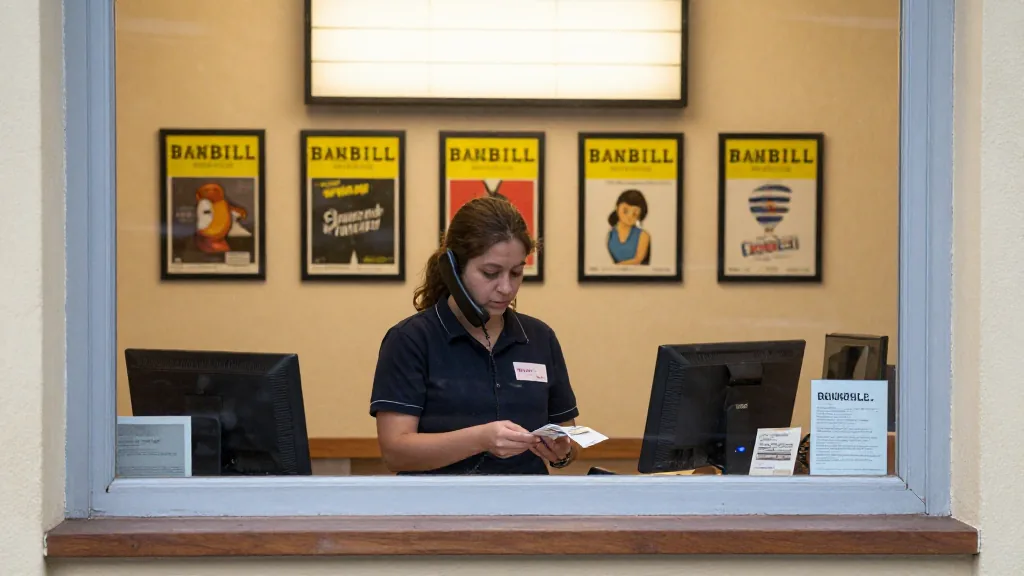
This is the central, maddening math of running a phone room for live events: demand is spiky and staffing is fixed. This guide is about closing that gap with AI phone booking for an event venue box office—software that answers every line the instant tickets go on sale, books seats and takes payment, in the caller's own language, with nobody on hold.
Why the phone still decides the night
Plenty of tickets sell online, and yet the phone never stops mattering. Older patrons and subscribers prefer to talk to someone. Groups need to sit together and want to confirm it out loud. People with accessibility needs call to be sure of the seat. Donors and members expect a human touch on a VIP hold. Tourists who don't read your website fluently would rather ask. And on chaotic on-sale mornings, the callers who couldn't get the online map to load call you as their backup plan.
So the phone isn't a legacy channel you tolerate—it's where your highest-intent, highest-value buyers land. Which makes a dropped call on on-sale day one of the most expensive misses in the whole operation.
The pain, named honestly
Before the fix, be precise about what's actually breaking. None of this is a knock on your staff—it's the structural problem no human phone room can fully beat.
Fixed seats meet an infinite spike
Your phone room can handle exactly as many calls as it has people holding headsets. Call volume on a hot on-sale doesn't respect that number. Caller five, caller nine, caller twelve—they all arrive in the same breath, and the ones past your headcount get a busy signal or voicemail. You can't hire for the peak because the peak lasts ninety minutes twice a season.
The voicemail black hole
A voicemail asking someone to "call back to book" is a callback you have to make while the phone is still ringing off the hook—so you don't, and the buyer has already tried another way or given up.
Re-keying tickets after the fact
If your after-hours or overflow service just takes messages, someone re-enters every request into the ticketing system later—slow, error-prone, and by then the seat the caller wanted is gone.
Language left at the door
"Let me get someone who speaks Spanish" means a hold, a hunt, and sometimes an apology. In a mixed neighborhood or a tourist market, the caller who can't be served in their language is simply a lost sale—and a slightly embarrassed one.
The tone tax of a stressed phone room
Even great agents get clipped by hour two of a surge. The 40th caller hears a faster, flatter version of the greeting the first caller got. That's human, and it's exactly the kind of consistency a machine can hold.
What AI phone booking actually does here
KwickPhone answers your box-office line 24/7 and is never busy. It understands what the caller wants in natural speech, checks it against your real inventory and policies, and—this is the part that matters—completes the booking inside your system: it reserves the seats and takes payment rather than leaving a message someone has to re-key. It runs native to the KwickOS platform, or it bolts onto the ticketing and POS stack you already run as an open service. See exactly which connectors are supported, their live status, and the credentials each one needs on the integrations page—including partners like Square and Clover, alongside Loyverse, Epos Now, and Revel.
Rule of thumb for this trade: an overflow service that only takes messages is a callback list you'll never finish during a surge. The value is a completed booking on the call—seat held, card charged, confirmation texted—while the next caller is already being helped.
Concurrency: one AI absorbing a dozen agents' worth of surge
Here's the difference that changes on-sale day. A human agent handles one call at a time. KwickPhone handles as many calls as ring at once. The moment tickets go live, caller one, caller eight, and caller twenty are all greeted on the first ring, walked through availability, and booked in parallel. No busy tone. No hold music. No overflow into a voicemail box.
That's elastic capacity you don't have to hire, train, or send home. The spike that would demand a room full of temporary agents for two mornings a season is simply absorbed—and the same system quietly covers the sleepy Tuesday afternoon when one caller wants two seats to a matinee.
| On-sale reality | Fixed phone room | AI phone booking |
|---|---|---|
| 20 calls in the first minute | Handles as many as you have agents; rest get busy/voicemail | All 20 answered on the first ring, booked in parallel |
| Peak lasts 90 minutes, twice a season | Hire & train seasonal agents for a rare spike | Elastic capacity, no seasonal hiring |
| Spanish- or Chinese-speaking caller | Hold while you find someone | Served in their language on the first ring |
| Hour two of the rush | Tone flattens under pressure | Same warm, patient greeting for caller #100 |
| Group / accessibility / VIP hold | Handled—if a line is free | Transferred to a person, cleanly |
Three languages, one first ring
KwickPhone greets and converses naturally in English, Spanish, and Chinese, detecting the caller's language within the first sentence and switching automatically. No caller waits on hold for "someone who speaks the language." A Spanish-speaking grandmother booking three seats for a family outing and a Mandarin-speaking tourist asking about the 8pm show both get a fluent, patient host immediately—and the same seat map, the same real prices, the same completed booking an English speaker would get.
The tone that never has a bad day
Concurrency and language only pay off if the experience is pleasant, and this is where consistency becomes a feature. KwickPhone is professional, patient, and polite on every single call. It's never curt, never rushed, never sighs, never runs out of patience because it's the ninetieth call of the morning. The person calling at 12:14am to book a weekend show hears the same courteous, correct greeting as the caller at 9:02am. Human agents are wonderful and under pressure they're also human—the machine's job is to hold the line on courtesy exactly when the room is slammed.
Put the three together—answered instantly, understood in your own language, treated with unfailing courtesy, and booking finished on the call—and callers hang up satisfied instead of frustrated. That's the payoff that shows up later in reviews and repeat subscriptions.
Worked scenario: opening-night on-sale surge
Picture your own numbers here as illustrative inputs, not a promise. Say an average phone order is worth $95, and on a hot on-sale you know from experience your four agents can clear roughly one call a minute each. In the first ten minutes, forty callers try you; your team completes about forty—but sixty more hit a busy tone or voicemail, and maybe a third of those never come back. Plug in your own figures and the leak is easy to see.
Now run the same ten minutes with KwickPhone in front of the line. All hundred callers are greeted instantly. The Spanish speakers and Chinese speakers are served without a hunt. Straightforward bookings—pick a section, confirm the count, pay by the texted link—are completed by the AI and dropped straight into your system. The genuinely complex ones—an eight-person group split across two price tiers, a wheelchair-companion pairing, a donor's VIP hold—are transferred to your four agents, who now spend the surge on exactly the calls that need a human. Nobody re-keys anything afterward.
Knowing when to hand the call to a person
A good system stays in its lane. KwickPhone transfers to your staff when the caller simply prefers a person, when the request is a large group or an accessibility-seating question that deserves care, when it's a VIP or donor hold, or when anything falls outside what it can safely complete. It also recognizes prank or abusive calls and declines to act on them rather than firing off bogus reservations. The goal isn't to wall callers off from your team—it's to let your team do the human work while the routine volume never overflows.
Owner controls and setup
You stay in charge without touching code. Choose from 20+ voices and a persona that fits your house—warm community playhouse or crisp concert hall. Encode how your box office actually runs with per-merchant Playbooks: always offer the membership signup, never oversell the accessible row, route catering-style group inquiries to the manager, cap phone holds at a set window. Update tonight's availability or pause phone sales for a sold-out show by voice, from the floor.
Setup keeps your existing number. Forward your box-office line to the AI—usually a code like *72 on a landline (codes vary by carrier, so confirm with yours) or a setting in your VoIP dashboard. Forward all calls, only the ones staff don't pick up, or only calls during an on-sale window so the AI becomes your surge valve. Explore the whole approach on how KwickPhone works, see plans on the pricing page, and browse setups by business type on the by-trade hub.
A short decision checklist for box offices
- How many concurrent calls can it truly take? On-sale day is a concurrency test, not a quality-of-one-call test.
- Does it complete the booking in my ticketing/POS, seat held and payment taken, or just leave a message to re-key? Confirm on the integrations page.
- Which languages, detected and switched automatically? English, Spanish, and Chinese should be on the first ring.
- When does it transfer to a human, and is the escape hatch clean for groups, accessibility, and VIPs?
- Can I change availability and pause sales myself, instantly, without a support ticket?
- Can I hear it live before buying? Real calls beat a slide deck.
Answer the whole on-sale surge on the first ring
KwickPhone picks up every line at once, books seats in your system, and speaks English, Spanish, and Chinese—native to KwickOS or bolted onto the stack you already run. Want to hear it? Call our live demo lines (real lines, not canned recordings) at /#try.
Book a demoFrequently asked questions
How does AI phone booking handle an on-sale surge?
It answers every incoming line at once. Where a phone room can only field as many calls as it has staff, one AI takes dozens of simultaneous callers, books seats, and takes payment with no hold time—so the spike doesn't overflow into voicemail.
What languages can it book tickets in?
It greets and converses naturally in English, Spanish, and Chinese, detecting the caller's language in the first sentence and switching automatically—no caller waits for "someone who speaks the language."
Does it actually complete the booking or just take a message?
It completes the booking—reserving seats and taking payment inside your system rather than leaving a note to re-key—running native to KwickOS or bolting onto Square, Clover, Loyverse, Epos Now, and Revel.
Can it transfer complex or group orders to a person?
Yes. It hands off whenever the caller prefers a person, for large group or accessibility-seating requests, VIP holds, or anything unusual, so staff focus on calls that need judgment.
Do we have to change our box-office phone number?
No. Keep your number and forward calls to the AI line—usually a code like *72 on a landline (codes vary by carrier) or a setting in your VoIP dashboard. Forward all calls, only unanswered ones, or only calls during an on-sale window.
Related: the complete guide to AI phone answering, the best AI phone answering services for 2026, and more on the KwickPhone blog.