AI Phone Answering for Catering Businesses (2026)
A corporate assistant is booking lunch for forty on Thursday. She has a list of three caterers and twenty minutes before her next meeting. She calls the first one—straight to voicemail. She calls the second—it rings out during your lunch rush. She calls the third, someone picks up on the second ring, answers her questions, and she stops calling. You were caterer number one. You never even knew she rang.
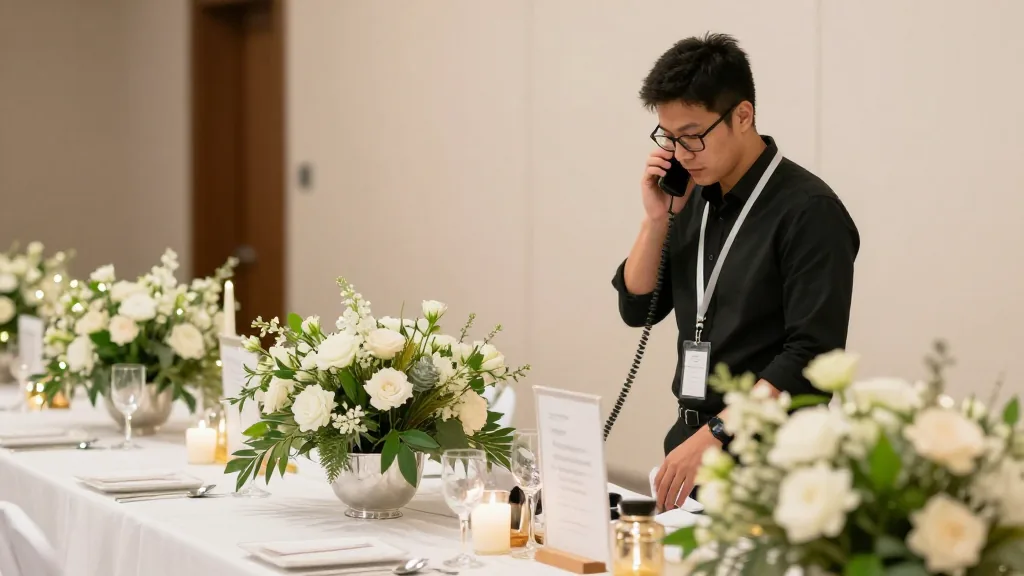
Catering runs on a different economy than a walk-up counter. A single missed lunch order is a $40 problem. A single missed catering inquiry can be a $1,200 job—and if that client throws four events a year, it's a relationship worth thousands. AI phone answering for catering businesses exists so that the person comparing three caterers at 9pm on a Sunday reaches yours, gets real answers, and leaves qualified details behind.
Why the catering phone is different from the restaurant phone
Most restaurant phone advice assumes short, transactional calls: a pickup order, a table for four, "are you open?" Catering calls are longer, higher-stakes, and full of variables. One inquiry can involve headcount, event date, delivery address, kitchen or drop-off, dietary restrictions, service style (buffet vs. plated vs. boxed), rentals, staffing, and a budget the caller may not want to say out loud. Miss the call and you don't lose a sandwich—you lose the whole event.
The other difference is timing. Catering inquiries almost never arrive during a calm window. They come mid-service when your line cooks are slammed, or after hours when the planner finally has a minute to shop around. Your kitchen's busiest moments and your caller's decision moments overlap perfectly—and that's exactly when a human can't get to the phone.
The pain, named precisely
Before the fix, be honest about what's actually leaking. If you run catering, at least three of these will land:
- The voicemail black hole. A serious planner rarely leaves a voicemail. They hang up and call the next name on the list. The message you never got is the job you never bid.
- The after-hours gap. Corporate assistants and event planners often shop in the evening. Your closed kitchen is their open shopping window—and your line just rings.
- The re-keying tax. When someone does grab the phone mid-shift, the details land on a napkin or a text-to-self, then get re-entered later (or not). Every hop is a chance to drop the date, the allergy, or the delivery time.
- No-show and forgotten-detail risk. A confirmation that never went out, a headcount that changed and wasn't captured, a gluten-free note that got lost—these are the errors that cost you the repeat client.
- The language barrier. A Spanish-speaking family planning a quinceañera or a Mandarin-speaking office manager may bounce off an English-only line before you ever get to quote.
The math that should keep you up at night: it isn't the price of one missed call. It's the lifetime value of the client behind it. Plug in your own numbers—average event value times events per year times how many years a happy client stays—and a handful of missed inquiries a month adds up fast.
What AI phone answering actually does for catering
An AI phone agent answers every call on the first ring, 24/7, and is never busy—so the planner comparing three caterers reaches a warm, patient voice instead of a beep. It talks naturally, understands the messy way real people describe events ("uh, it's a work thing, maybe fifty people, next Friday, they've got a couple vegetarians"), and captures the details that turn a vague call into a real lead.
The part that separates a useful agent from a glorified answering machine: it doesn't just take a message. Where it's native to your system, it books the inquiry, drops the details where your team already looks, and can place standard catering orders directly. This is the same principle behind everyday order-taking—covered in our restaurant phone guides—applied to higher-value jobs. If you want the full mechanics of how the technology answers, understands, and completes a task, here's how KwickPhone works end to end.
It qualifies before it books
Not every caller is ready to commit, and not every inquiry belongs in the system unattended. A good agent works from a per-merchant Playbook—rules that encode how your catering operation runs. It can gather headcount, date, venue, and service style, then decide: standard drop-off order under a set headcount? Book it. Fifty-person plated dinner with rentals? Capture everything and route it to your events manager with the details already collected, so your human starts the conversation warm instead of cold.
The one question that decides everything: does it complete the task?
When you evaluate any system, ask exactly what happens after the caller hangs up. If the answer is "it emails your staff a transcript," that's manual re-entry in a nicer outfit—and the re-entry is where the date gets fat-fingered and the allergy gets dropped. The systems worth paying for either live inside the platform that runs your business or integrate deeply with it, so a booked order lands where your kitchen already looks.
KwickPhone is native to KwickOS, and it also bolts onto the systems you may already run as an open service—Square, Clover, Loyverse, Epos Now, and Revel. Before you commit, the integrations directory shows each connector's live status and the exact credentials it needs, so there are no surprises during setup.
| Caller's request | Voicemail / basic bot | AI front desk for catering |
|---|---|---|
| "Lunch for 40 this Thursday, some vegetarian" | Message; someone calls back tomorrow | Captures headcount, date, dietary notes; books or routes to events manager |
| Sunday 9pm inquiry while comparing caterers | Rings out; caller moves on | Answered live; details logged; follow-up text sent |
| "Can you do a plated dinner for 120?" | Not possible to assess | Recognizes the scale, transfers to a human with context |
| "¿Hacen catering para una fiesta?" | English only | Switches to Spanish automatically |
| Three inquiries during the lunch rush | Two hit voicemail | All three answered at once |
| Prank or nuisance "order 200 tacos" | Wastes staff time | Flags and declines to fire a bogus job |
Multilingual reach, built in
KwickPhone serves English, Spanish, and Chinese and detects the caller's language within the first sentence, then switches automatically. For catering, that matters more than for a quick-serve counter: family events, community gatherings, and multicultural corporate offices are core catering demand, and the caller who feels understood in their own language is the one who books. The same event-detail capture applies in every language—so a Spanish-speaking caller's headcount and date land in the same place an English caller's would.
Handling the real world: concurrency, abuse, and knowing when to step back
A human takes one call at a time. AI answers as many as ring at once, so the second and third inquiry during service don't overflow into voicemail. It also recognizes obvious prank or abusive calls and declines to act on them—no phantom 200-person orders hitting your prep list.
Just as important, a well-built agent knows its lane. It transfers to a person when:
- The caller asks for a human—caller preference always wins.
- The event crosses a size or budget threshold you set in your Playbook.
- It's a known VIP or repeat client who deserves your events manager directly.
- The request is genuinely unusual—an off-menu request, a wedding, a complicated multi-day contract.
The goal is to catch the routine, qualify the serious, and never wall a caller off from your team.
Owner controls that fit how caterers actually work
You shouldn't need a developer to change a thing. KwickPhone gives you spoken commands to update availability or pause bookings when your calendar fills, a library of 20+ voices and personas so the agent matches your brand—warm home-style caterer or crisp corporate event company—and per-merchant Playbooks that encode your rules: minimum headcount for delivery, blackout dates, required lead time, always offer the tasting, transfer weddings to the owner.
Setup: keep your number
You don't change your phone number. You forward your existing line to the AI. On a landline that's usually *72 followed by the forwarding number to turn it on (codes vary by carrier—confirm with yours); on VoIP you point the number in your provider's dashboard. Forward all calls, only the ones your team can't reach, or only after-hours inquiries—so the AI becomes your night-and-weekend events desk while your staff runs service. See pricing for what plans include, and the by-trade hub for how it's tuned to different operations. Caterers who also run a storefront can start from the restaurant setup and layer catering rules on top.
A five-question decision checklist for caterers
- What happens after hangup? Does it book or route with details, or just transcribe?
- Can it qualify and hand off? Confirm the transfer thresholds you can set for size, budget, and VIPs.
- Does it answer after hours and on weekends, when planners actually shop?
- Does it switch languages automatically for your neighborhood's callers?
- Can I hear it before I buy? A real call beats a slide deck—call the live demos at /#try (real lines, not canned recordings).
Before and after, a Thursday lunch that pays for itself
Before. 11:40am, the lunch rush is peaking, and the phone rings. It's the corporate assistant booking for forty. Nobody can grab it. She hangs up after four rings and calls the next caterer. You find out never, because there was nothing to find.
After. The same call is answered on the first ring. The AI captures forty guests, Thursday, the office address, two vegetarians, a boxed-lunch service style, and a budget range. It confirms your delivery window, texts her a confirmation, and drops a qualified lead straight to your events manager with every detail in place. Your line cooks never broke stride, and a $1,200 job—maybe a four-events-a-year client—is on the books instead of your competitor's.
See AI phone answering that books the job, not just a message
KwickPhone answers every catering call 24/7, captures the event details, and completes or routes it inside your system—or bolts onto the platform you already run. Want to hear it? Call the live demos at /#try.
Book a demoFrequently asked questions
Can AI phone answering handle detailed catering inquiries, not just simple orders?
Yes. It captures headcount, event date, venue, dietary restrictions, service style, and budget, then either books the inquiry into your system or routes it to your events manager with the details already collected—so nothing is scrawled on a sticky note and lost.
Will it hand large or complex events to a human?
It should, and a well-built system does. It transfers when the caller asks for a person, when the guest count or budget crosses a threshold you set, when it's a known VIP or repeat client, or when the request is genuinely unusual. It captures the routine details and passes qualified leads to your team with context.
Does it work after hours and on weekends?
Yes. It answers 24/7 and is never busy, so the inquiry that lands at 9pm on a Sunday—when your kitchen is closed and the planner is comparing three caterers—gets a real conversation instead of voicemail.
What languages can it speak?
It commonly serves English, Spanish, and Chinese and can detect the caller's language within the first sentence and switch automatically, so a corporate assistant or family planner is served in their own language without hiring for every shift.
Do I have to change my phone number?
No. You keep your existing number and forward calls to the AI line—usually a code like *72 on a landline (codes vary by carrier) or a setting in your VoIP dashboard. You can forward all calls, only unanswered ones, or only after-hours calls.
Related: the complete guide to AI phone answering for restaurants and the best AI phone answering services for restaurants in 2026.