AI Phone Answering for Breweries & Taprooms (2026)
It's a Saturday and the taproom is slammed. There's a line at the bar, a food truck is backing up outside, and someone in the back is trying to keg-swap a blown line. Then the phone rings. It rings for a caller who wanted to book a 30-person retirement party in your back room next month — the kind of booking that pays your rent for the day. Nobody can get to it. It rolls to a voicemail box that fills up faster than anyone checks it, and by Monday that party is happening at the brewery across town.
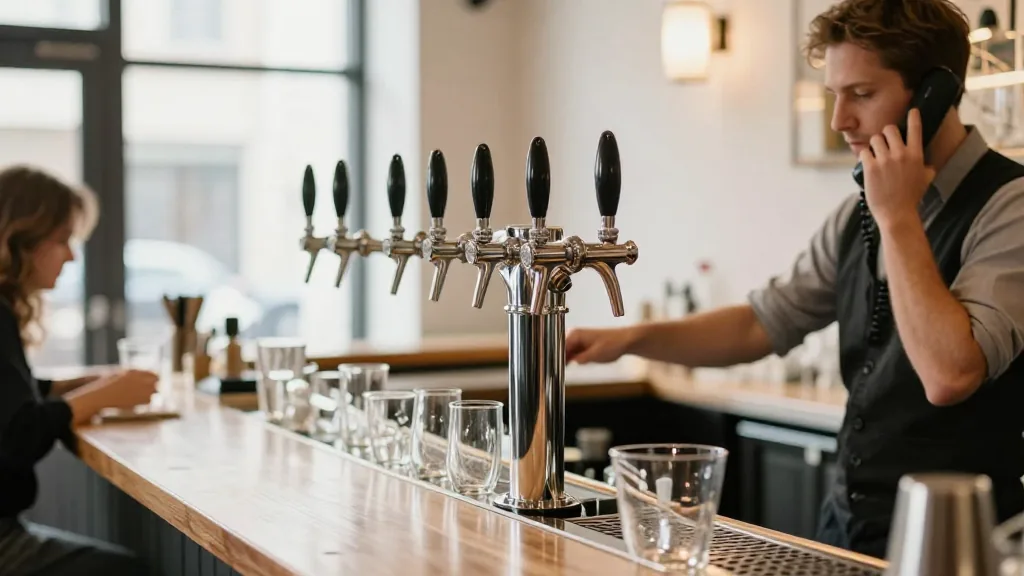
Breweries and taprooms have a phone problem that's uniquely brutal: the calls you most want to answer arrive precisely when you're least able to. This guide is about AI phone answering for breweries & taprooms — what it does, the specific calls it rescues, and how to tell a system that actually books the event and fires the crowler order from one that just leaves you another note to deal with.
The calls a taproom actually misses
Restaurants worry about takeout. A brewery's phone carries a stranger, more valuable mix of requests — and each one leaks in a different way when nobody picks up.
- Private events and buyouts. The birthday party, the corporate happy hour, the wedding-rehearsal group of 40. These are your highest-margin calls, and they almost always come in mid-shift.
- Growler and crowler orders ahead. "Can you fill four 32-oz crowlers of the hazy for pickup at five?" A great pre-order — if someone's there to take it.
- What's on tap right now. Your tap list changes weekly, sometimes daily. Callers want to know if the seasonal is still pouring before they drive across town.
- Tours, tastings, and reservations. Weekend tour slots, flight bookings, table holds for big groups.
- Dog policy, kid policy, food trucks, parking. The endless small questions that decide whether a family piles into the car.
- Wholesale and distro. The bar owner or bottle shop asking about keg availability — a relationship, not a transaction.
- After-hours everything. The taproom closed at 10, but people plan their weekends at 11pm on a Tuesday.
Why voicemail is the worst possible answer
Run the math with your own numbers. Say a private event nets you $1,200 and you miss two inquiries a month because the phone went unanswered during service. That's a used-truck payment walking out the door annually — and it never shows up on any report, because a call that never connects leaves no trace. The voicemail black hole is invisible losses, which makes them easy to ignore until you actually count.
And it compounds. The caller who couldn't reach you for an event booking is the same caller who could've become a monthly-mug-club regular. A phone that doesn't get answered doesn't just cost one order; it quietly trains your neighborhood to stop calling. The after-hours gap is worse still — the entire evening and every closed day is a window where 100% of calls hit dead air.
The uncomfortable truth: your busiest, most profitable hours are exactly when your phone is least likely to be answered by a human. That's not a staffing failure — it's a structural one. You can't clone a bartender.
What AI phone answering does differently
AI phone answering is software that picks up your taproom's line, talks with the caller in natural language, and — this is the part that matters — completes the task. Not "takes a message." Books the event slot, places the crowler order into your point-of-sale, reads back the live tap list, confirms the tour time. Here's how the underlying flow works: it answers instantly, converts speech to text, understands the request grounded against your real menu and hours, then acts on it inside the system that runs your business.
KwickPhone answers every call, 24/7, and is never busy — it handles multiple concurrent calls, so the third caller during Saturday rush gets a host instead of a busy signal. It speaks English, Spanish, and Chinese and switches automatically when it hears the caller's language. It's native to KwickOS and also bolts onto the POS you already run — that page shows each connector's live status and the exact credentials you'll need to link it.
The one question that separates real from theater
Ask any vendor: what happens after the caller hangs up? If the answer is "we email your staff a transcript" or "we create a ticket someone confirms," that's manual re-entry in a nicer outfit. Your bartender still has to re-key the crowler order between pours — slow, error-prone, and exactly the work you were trying to remove. A system worth paying for drops the order onto the line and the booking into the calendar directly. KwickPhone integrates deeply with Square and Clover, plus Loyverse, Epos Now, and Revel, so the ticket lands where your staff already look.
Growler, crowler, and to-go orders that complete themselves
Fill-ahead orders are where POS-native completion earns its keep. A caller says, "Two crowlers of the West Coast IPA and one growler refill of the porter, pickup at 5:30." A grounded system maps that to your real items and real sizes — it knows the porter is on and the pilsner blew an hour ago because your inventory says so. It places the order, texts a payment link so it's paid before pickup, and sends a ready confirmation. Your team fills it when they have a hand free, not while juggling the phone against a shoulder.
Private events: catch the whale, or hand it off cleanly
The 40-person buyout is too important to lose to voicemail and too nuanced to fully automate. The right approach is a hybrid: the AI captures the whole inquiry — date, headcount, which space, food-truck coordination, rough budget — then either books it against your event calendar or transfers to your events manager with every detail already in hand. No callback tag, no "we'll get back to you," no lead going cold over the weekend. You can encode exactly how this works in a per-merchant Playbook: any group over 20, capture details and transfer to the manager; anything else, book it.
Knowing when to hand off to a human
A good system stays in its lane. KwickPhone transfers to a person when:
- The caller simply asks for a human — caller preference always wins.
- The inquiry is a large private buyout, a wholesale/distro account, or another high-touch relationship.
- The request is genuinely unusual or outside what it can safely complete.
It also detects obvious prank or abusive calls, declines to act on them, and won't fire ten bogus crowler orders to your bar. The goal is to swallow the routine, high-volume calls so your staff can pour beer and give the whale-sized calls their full attention.
Voicemail vs. a real AI front desk
| Caller's request | Basic voicemail | Real AI front desk |
|---|---|---|
| "Fill four crowlers for 5pm pickup" | Message; staff call back later | Order placed in POS, payment link texted |
| "Book the back room for 30 people" | Sits until someone checks the box | Details captured, booked or transferred to events |
| "Is the hazy still on tap?" | No answer, caller drives elsewhere | Reads the live tap list from inventory |
| "Are dogs and kids allowed?" | Generic or outdated recording | Answers from your real policies |
| "¿Tienen comida hoy?" | English only | Switches to Spanish automatically |
| Four calls at once on Saturday | Three roll to voicemail | All four answered simultaneously |
Owner controls built for a taproom's chaos
Your tap list moves fast, and you're rarely at a laptop. KwickPhone lets you manage by voice — a secure spoken command to mark a keg blown, flip the tour to sold out, or pause pickup orders when the fill station is backed up. You pick from 20+ voices and personas so the assistant sounds like your brand, whether that's a laid-back neighborhood taproom or a sleek downtown tasting room. And per-merchant Playbooks encode how you run: always mention the current seasonal, never promise a fill under 15 minutes on a Saturday, offer mug-club signup on every to-go order.
Setup keeps your existing number
You don't change your number. You forward your existing line to the AI. On a landline that's usually *72 followed by the forwarding number to turn it on (codes vary by carrier — confirm with yours); on VoIP you point the number in your provider's dashboard. Forward all calls, only the ones staff miss during service, or only after-hours and closed-day calls so the AI becomes your late-night host. Curious about what it runs? See straightforward pricing and browse the by-trade hub, including the dedicated page for breweries and taprooms.
A short decision checklist for breweries
- Does it complete the order and booking in my POS, or just transcribe? Ask what happens after hangup.
- Can it read my live tap list, so it never quotes a beer that blew this morning?
- How does it handle private-event inquiries — capture and transfer, or book directly?
- How many concurrent calls can it take during Saturday rush?
- Does it cover after-hours and closed days, when 100% of calls are otherwise lost?
- Can I update tap availability myself, instantly, by voice — without a support ticket?
- Can I hear it live before I buy? A real call beats a slide deck.
A realistic before and after
Before. 6:40 on a Friday. The bar is three deep, a keg just kicked, and the phone rings four times before rolling to voicemail. The caller wanted to book a $1,200 corporate happy hour for 25 people. They leave a message. Nobody hears it until Sunday afternoon, by which point they've booked elsewhere. Two other calls that hour — a crowler pre-order and a "what's on tap" — also vanish into the same box.
After. The same 6:40 call is answered on the first ring. The AI captures the 25-person happy hour — date, budget, food-truck question — and transfers a warm lead to your events manager's cell with the details already typed up. Meanwhile it takes the crowler pre-order into your POS and texts a payment link, and tells the third caller the seasonal hazy is still pouring and the food truck is tacos tonight. Your bartender never touched the phone.
Hear it answer your kind of calls
KwickPhone answers every call and completes it inside your POS — or bolts onto the ordering system you already run. Want to hear how it sounds? Call our live demos (real lines, not canned recordings) at /#try.
Book a demoFrequently asked questions
Can AI phone answering book a private event or brewery tour?
It captures the whole request — party size, date, space, budget — and either books it or hands it cleanly to your events manager with everything captured, so nothing dies in a voicemail nobody checks until Monday.
Does it place growler and crowler orders into my POS?
The best systems do. A bot that only takes a message forces your bartender to re-key it. KwickPhone is native to KwickOS and also bolts onto Square, Clover, Loyverse, Epos Now, and Revel, so the order lands where your staff already work.
Will it handle calls when we're closed?
Yes. It answers 24/7 and is never busy. Forward every call, only the ones staff miss during service, or only after-hours calls — so it becomes your late-night and off-day host.
Can it transfer to a real person?
Yes. It transfers when the caller asks for a human, for a large buyout or wholesale account, or for anything unusual. It catches routine calls; it never walls callers off from your team.
Do I need a new phone number?
No. Keep your number and forward calls to the AI line — usually a code like *72 on a landline (codes vary by carrier) or a setting in your VoIP dashboard.
Related: the complete guide to AI phone answering for restaurants, the best AI phone answering services for restaurants in 2026, and more on the KwickPhone blog.