AI Phone Answering for BBQ & Smokehouses (2026)
You started the brisket at 4am. By noon the counter line is out the door, the pit master is pulling a rack that's finally probing tender, and the phone is ringing for the fourth time in ten minutes. Nobody can reach it. On the other end is somebody who wanted three racks and two pints of burnt-end chili for a Saturday cookout — a hundred-dollar-plus ticket that just rolled to voicemail and, thirty seconds later, to the smokehouse two exits down. That's the quiet math of a BBQ joint: the food takes all day, and the orders you lose take four rings.
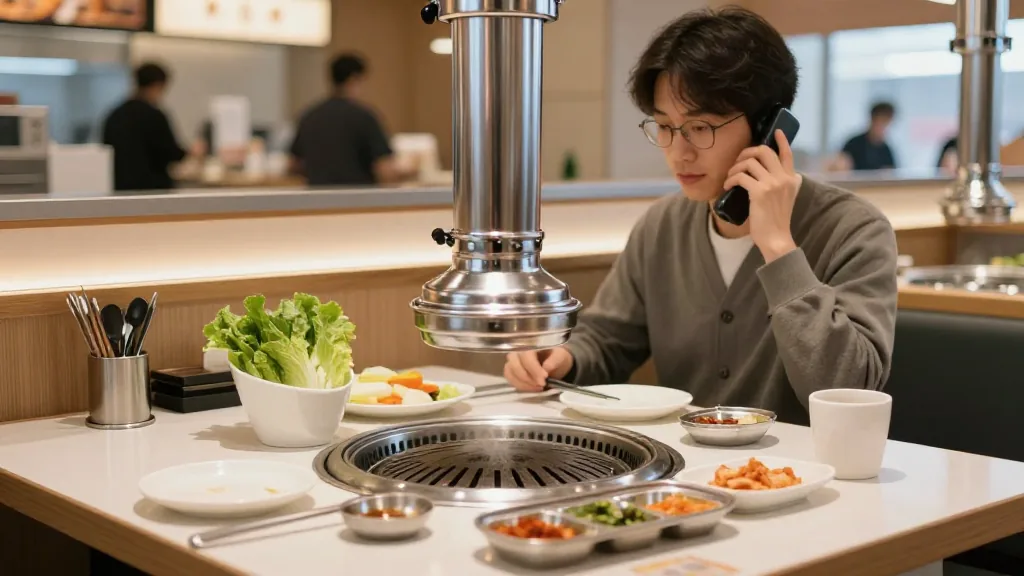
AI phone answering for BBQ & smokehouses is software that picks up every one of those calls, talks to the caller like a host who knows your menu, and drops the order straight onto the line — without pulling a single person off the pit or the register. This guide is for owners who want to understand the category honestly before spending a dime on it.
The calls a smokehouse actually loses
A BBQ operation has a call profile unlike almost any other restaurant, and the losses cluster in predictable places:
- The by-the-pound guesser. "How much brisket for eight people?" is a call that takes ninety seconds and often turns into a $90 order. It also never gets answered during a rush.
- The party-tray and family-pack call. Graduations, Little League, church potlucks — these are your fattest tickets, and they come in by phone because the caller wants to talk through portions.
- The "are you out of ribs yet?" call. When you smoke a fixed amount and sell until it's gone, callers want to know what's left before they drive over. A missed call here becomes a wasted trip and a disappointed regular.
- The after-hours planner. Someone books a Sunday cookout on Thursday night at 9pm — long after your counter went dark. That call has nowhere to land.
Now stack on the operational drag. When a bot or a service just takes a message, your counter staff has to re-key the whole ticket into the POS between customers — and a smudged "1/2 lb pulled, no sauce, extra slaw" is exactly the ticket that comes out wrong. Add the language gap in neighborhoods where a chunk of your walk-up is Spanish- or Chinese-speaking, and the no-shows on party orders where nobody confirmed pickup, and you've got a phone that's costing you real money every single day it rings unanswered.
Rule of thumb for a smokehouse: your biggest phone tickets arrive during your busiest hours and your darkest hours — precisely when a human can't pick up. That overlap is where the recovered revenue lives.
What "AI phone answering" actually means here
It's a voice assistant that answers your smokehouse's phone, understands what the caller wants in plain speech, and completes the task — placing a pickup order, quoting portions from your real menu, checking what's still on the smoker, booking a large-order handoff, or texting a payment link. It works 24/7, it's never busy, and it can talk to several callers at once. The caller doesn't press 1 for hours; they just talk, the way they'd talk to the guy at the counter.
The label — "AI receptionist," "AI front desk," "voice agent" — matters less than one test: after the call ends, is there an order on your kitchen line, or a note somebody still has to type in? For a deeper walkthrough of the whole category, the complete guide to AI phone answering for restaurants covers the fundamentals; this piece is about the parts specific to smoke and low-and-slow.
How it works, from ring to kitchen ticket
1. It hears the messy version
Real BBQ calls aren't clean. "Uh, gimme like a pound of the moist brisket, couple links of hot sausage, and — hang on — two sides, get the mac and the beans." Good voice AI converts that to text in real time, tracks context so "make it three links" updates the right item, and handles background noise from the counter and the exhaust hood.
2. It's grounded on your real menu
This is the step that separates a useful system from a bot that invents a "smoked salmon platter" you've never served. The assistant is grounded on your actual menu, modifiers, sides, and sauces — so "chopped, not sliced," "sauce on the side," and "family pack feeds four" map to items your kitchen recognizes. If you're 86'd on ribs, it knows.
3. It completes the order in the POS
The final step is the whole point: the system places the order and fires it to the line inside the software that runs your shop. KwickPhone is native to the KwickOS platform, and it also bolts onto the POS you already run as an open service — Square, Clover, Loyverse, Epos Now, and Revel among them. Our integrations page shows each connector's live status and the exact credentials you'll need to link it, so there are no surprises on setup day.
The one question that decides everything: does it hit the POS?
Plenty of phone bots can hold a conversation. Far fewer can actually place the order into your point-of-sale and fire it to the pit line. Most live outside your system, which means they take a message and your staff re-keys it — the slow, error-prone step that defeats the purpose. When you talk to any vendor, ask precisely what happens after the caller hangs up. If the answer is "we send your team a transcript" or "we create a ticket someone confirms," that's manual re-entry in a nicer outfit.
| Caller's request | Voicemail / message-taker | KwickPhone (POS-native) |
|---|---|---|
| "Two racks and a quart of beans for pickup" | Message; staff re-key later | Order placed in POS, fired to the line, pickup time quoted |
| "How much brisket for eight?" | No answer during the rush | Quotes portions from your menu, offers to place the order |
| "You still got ribs?" | Rings out; caller drives over anyway | Checks the sold-out flag, suggests what's still on the smoker |
| "Party tray for 30, Saturday" | Voicemail nobody hears till close | Transfers to a human for the big-order details |
| "¿Tienen tortas de cerdo?" | English only | Switches to Spanish, maps to the same kitchen ticket |
| Four calls at 6:15 on a Friday | Three go to voicemail | All four answered at once |
Handling the sold-out reality of a smokehouse
No other restaurant type runs out of its headliner as reliably as a BBQ joint does. When the brisket's gone at 6:40, you need the phone to know instantly. With KwickPhone you flip an item to sold-out by voice — right from the counter, no laptop — and the assistant stops offering it and starts steering callers to what's still smoking. That single capability prevents the worst BBQ phone experience there is: promising ribs on the phone that you can't hand over at the window.
The party-tray call: catch the routine, hand off the whopper
A well-built assistant stays in its lane. It should take the standard pickup and family-pack orders all day long, and transfer to a human when:
- The caller asks for a person — caller preference always wins.
- The order is an unusually large catering job, a load-out that needs timing and a deposit, or a known VIP who deserves a personal touch.
- The request is genuinely unusual — a custom whole-hog, an off-menu ask, a complaint that needs an owner.
The point is to let the AI absorb the high-volume routine calls so your team can give real attention to the $600 graduation order. It also detects obvious prank and abusive calls and declines to fire bogus tickets to your kitchen — no ten fake rib platters at 2am.
Owner controls built for how a pit runs
- Voice management. Update hours, flip a sold-out item, or pause ordering with a spoken command while you're elbow-deep in the pit — not stuck at a screen.
- Per-merchant Playbooks. Rules that encode how your smokehouse operates: always offer the two-meat combo, never promise under 15 minutes on a Saturday, push the day-old brisket special before it's gone, route catering to the manager's cell.
- 20+ voices and personas. Pick a voice that fits your brand, whether that's a warm roadside pit or a polished downtown smokehouse.
Setup: keep your number, keep your workflow
You don't change your phone number. You keep your existing line and forward calls to the AI. On a traditional landline that's usually a call-forwarding code — commonly *72 followed by the forwarding number to turn it on, and *73 to turn it off — though codes vary by carrier, so confirm with yours. On VoIP, you point the number to the AI line in your provider's dashboard. Forward all calls, only the ones your counter doesn't grab, or only after-hours calls — so the AI becomes your late-night order-taker while your crew works the rush. See the BBQ & smokehouse setup page for the specifics, and the wider by-trade hub if you also run a taqueria or coffee bar next door.
A five-question checklist before you buy
- Does it place the order in my POS, or just transcribe? Ask exactly what happens after hangup.
- Is it grounded on my real menu and my sold-out flags, or a generic script that can invent items?
- How many calls can it take at once? Your Friday overflow is the whole game.
- Does it switch to Spanish and Chinese automatically?
- How and when does it transfer to a human for the big catering jobs?
Weigh the answers against what a single lost party order costs you — use your own average ticket as the input — and the math tends to make itself. When you're ready to compare what a fair plan looks like, the pricing page lays it out, and the roundup of the best AI phone answering services for restaurants in 2026 puts the category in context.
A realistic before and after
Before. It's 6:15 on a Friday. The line's out the door, both counter people are slicing, and the phone rings. A caller who wanted two racks, a quart of beans, and a pint of banana pudding — call it a $75 ticket — waits four rings and hangs up. Over the next hour it happens three more times. All four roll to a voicemail nobody plays until the mop bucket comes out.
After. The same 6:15 call gets answered on the first ring by an AI host that already knows the menu and knows you're down to a half-case of ribs. It takes the order, suggests the extra pint of pudding, quotes a 25-minute pickup, texts a payment link, and drops the ticket straight onto the pit line — while at the same time booking a second caller's family pack and telling a third you sold out of pork belly an hour ago. Nobody at the counter broke stride, and four calls that used to evaporate turned into money on the books.
Hear it take a BBQ order before you commit
KwickPhone answers every call and places it natively into your POS — or bolts onto the ordering system you already run. Want to hear how it handles a real order? Call our live demo lines (real lines, not canned recordings) at /#try.
Book a demoFrequently asked questions
Can AI phone answering take a large catering or party-tray order for a BBQ joint?
Yes for the routine version, and it hands off the big ones on purpose. It takes standard pickup and family-pack orders and places them directly in your POS. For an unusually large catering job, a known VIP, or anything unusual, it transfers to a human so a person can confirm timing, deposit, and load-out.
What happens when brisket or ribs sell out mid-service?
You flip the item to sold-out by voice or in your dashboard, and the AI stops offering it immediately. It can suggest what's still on the smoker instead, so callers aren't promised brisket you ran out of at 6pm.
Does it just take a message, or actually place the order?
It completes the order end-to-end inside your point-of-sale and fires it to the line. A system that only leaves a transcript forces your staff to re-key everything. KwickPhone places the order natively in KwickOS or through partners like Square, Clover, Loyverse, Epos Now, and Revel.
What languages can it handle?
English, Spanish, and Chinese. It detects the caller's language in the first sentence and switches automatically, mapping the order to the same kitchen ticket in every language.
Do I have to change my phone number?
No. You keep your existing number and forward calls to the AI line — usually a code like *72 on a landline (codes vary by carrier) or a setting in your VoIP dashboard. Forward all calls, only unanswered ones, or only after-hours calls.
Related: the complete guide to AI phone answering for restaurants, the best AI phone answering services for restaurants in 2026, and more on the KwickPhone blog.