KwickPhone for IT Support / MSPs · After-hours answering

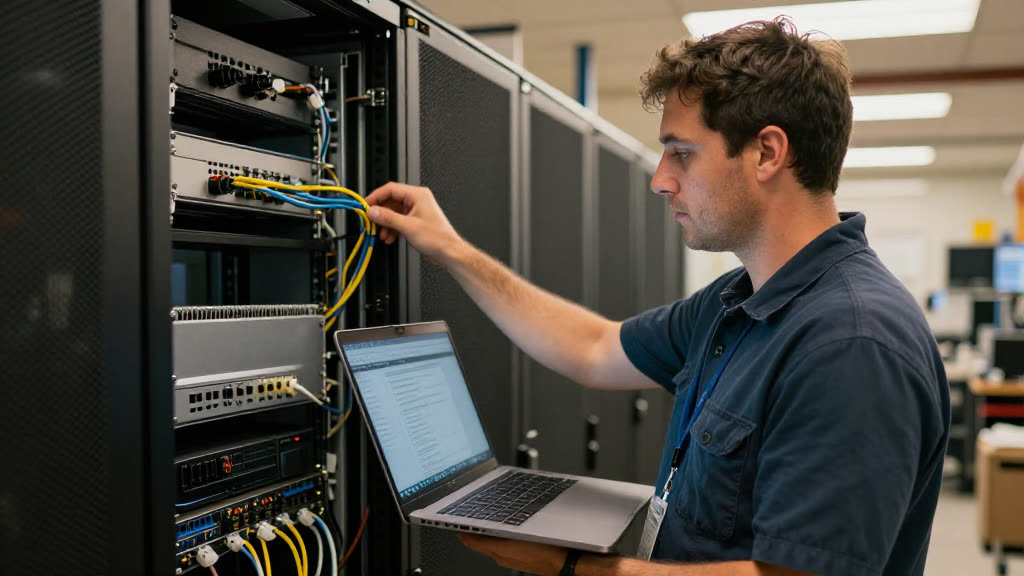
Both hands in a rack while another client's network is down

KwickPhone answers the after-hours call you physically can't reach, triages it, and either tells the caller you're on it or pages you only when it's real.

After-hours answering for IT Support / MSPs — KwickPhone answers the phone

It's 8:40 on a Tuesday night and you're elbow-deep in a client's server rack, reseating a NIC with a flashlight in your teeth. You can't stop, you can't see your phone, and you can't take your gloves off. Meanwhile another client's office has gone dark — their internet dropped, the POS won't take cards, and the owner is panicking. They call you. It rings out. By the time you climb out of the rack and check, they've already dialed the next MSP in their email signature, and tomorrow you're explaining why you 'weren't there.' That's how MSPs lose accounts: not on the work, but on the one ring they couldn't get to.

KwickPhone answers that call on the first ring, after hours, when you're heads-down or asleep. It speaks from what you set up — your actual service tiers, your on-call rules, your escalation thresholds — so it can tell a panicked caller the difference between 'log it for the morning help desk' and 'this is a P1, paging your engineer now.' It captures the company name, the contact, the affected system, what changed, and whether they're fully down or degraded, then writes a clean ticket and reads the caller a reference number so they know they were heard. If it's genuinely urgent under the rules you defined, it pages you; if it's not, it reassures the caller, sets the expectation, and lets you sleep.

For an MSP this matters more than for almost any trade, because your whole value proposition is 'we've got you covered' — and after-hours is exactly when that promise gets tested. A missed midnight call isn't a missed sale, it's a breach of the implicit SLA the client thinks they bought. Whether you sell managed IT, help desk, cybersecurity, or cloud & backup, the client doesn't care which bucket their problem falls in at 2am; they care that a human-sounding voice picked up, understood 'we're down,' and started something. KwickPhone is that voice, every night, on every line, so you stop trading your sleep for retention and stop losing clients to the competitor who simply answered.
How it works

After-hours answering for IT Support / MSPs, handled.

Real calls

What it sounds like for it support / msps.

1

A restaurant client calls at 9:15pm: their whole network is down mid-dinner-rush and they can't run cards. KwickPhone confirms it's a full outage affecting payments, classifies it P1 under the rules you set for that account, pages your on-call engineer with the site name and 'payment systems down,' and tells the manager an engineer has been notified and will call back — so they stop panicking and stop dialing other MSPs.

2

A law office's bookkeeper calls at 11pm saying a 'weird message' is asking for Bitcoin to unlock files. KwickPhone recognizes the ransomware signal in your cybersecurity triage script, treats it as a security P1, tells the caller not to touch or restart anything, and immediately escalates to you with the affected machine and the time it appeared, instead of letting it sit in voicemail until morning.

3

A user from a next-business-day client calls at 7am, before help desk opens, because they can't get into email. KwickPhone checks that account's contract, sees it's not 24/7, logs a help-desk ticket with the symptom and contact, gives them a reference number, and tells them the desk opens at 8 — so you're not woken for a single-user issue but the ticket is already triaged when your team logs in.

4

A cloud-backup client calls Sunday afternoon worried their nightly backup job failed three nights running. KwickPhone captures which server, which job, and the error they're seeing, marks it as degraded-not-down, and routes it to the right queue with full detail, so your engineer opens Monday with a ready-to-action ticket instead of a vague 'call me about backups' note.

After-hours answering for a it support / msp — answered by KwickPhone
Built for it support / msps

Your whole phone, handled.

Hands in a server rack at one client — another's network is down and they call the next MSP. KwickPhone answers every call for your it support / msp business — not just after-hours answering, but the everyday requests that keep ringing in:

Every call is picked up 24/7 in English, Spanish & Chinese, with no hold music — and each order, booking or quote is written straight into the POS you already run, or KwickPhone’s own built-in POS if you don’t have one. No missed calls, no voicemail, no lost it support / msp jobs.

Why it pays off

What it support / msps get.

KwickPhone answering calls and taking orders for it support / msps
More ways KwickPhone helps IT Support / MSPs

Every it support / msp call, handled.

Questions
How does it know which calls are real emergencies versus things that can wait?
You define the severity rules up front — for example, full outage, payment systems down, or a suspected security incident counts as P1, while a single user with a minor issue is a P3. KwickPhone asks the triage questions that map a call to those levels and only pages your on-call engineer when the answers hit your urgent threshold. Everything else is logged with a ticket number and queued for help-desk hours.
Can it handle the fact that different clients have different SLAs?
Yes. You can tell it which accounts are on 24/7 contracts and which are next-business-day, and it checks the caller's company against those rules before deciding whether to escalate. A 24/7 client's outage at 2am pages you; a next-business-day client's morning email issue gets queued without waking anyone.
What happens if a caller describes something the script doesn't cover?
It won't guess or invent a fix. KwickPhone only speaks from the triage rules and information you give it, and when a caller describes something too unusual or ambiguous to classify safely, it hands the call off to your on-call line rather than risk mis-triaging a real incident. Honest 'let me get an engineer' beats a confident wrong answer.
Will it actually catch a ransomware or security call correctly?
It catches the signals you teach it — ransom messages, mass file lockouts, suspicious account activity — and treats them as a security P1 with immediate escalation. It will also tell the caller not to restart or touch the affected machine while you're being paged. It is a triage and dispatch layer, not a remediation tool, so the fix still comes from you.
Does the client get anything to prove they actually reached someone?
Yes — it reads back a ticket reference number on the call so the caller knows the issue was captured, not lost to voicemail. That reference matches the structured ticket your team sees, so there's no ambiguity later about whether they called or when.
We already use a tool for tickets. Does this fit, or do I have to switch?
KwickPhone captures the call into a clean, structured record — company, contact, system, symptom, severity, timestamp — designed to drop into your existing workflow rather than replace your stack. If you don't run a ticketing system at all, it can serve as the system of record for these after-hours calls. The point is that nothing is lost between the ring and your morning queue.
What does the caller hear — will it sound like a generic robot that annoys my clients?
It answers in a natural conversational voice in English, Spanish, or Chinese and only says what you've configured — your service tiers, your on-call expectations, your real escalation language. You can hear exactly how it handles an after-hours call by dialing the demo line at (832) 979-1760 before you ever point a real number at it.

No POS yet? KwickPhone can be your POS too — a built-in register, orders & menu in one place. Already on a POS? Orders write straight back into it.