Quote Shipping on the Call: FedEx, UPS & Shippo (2026)
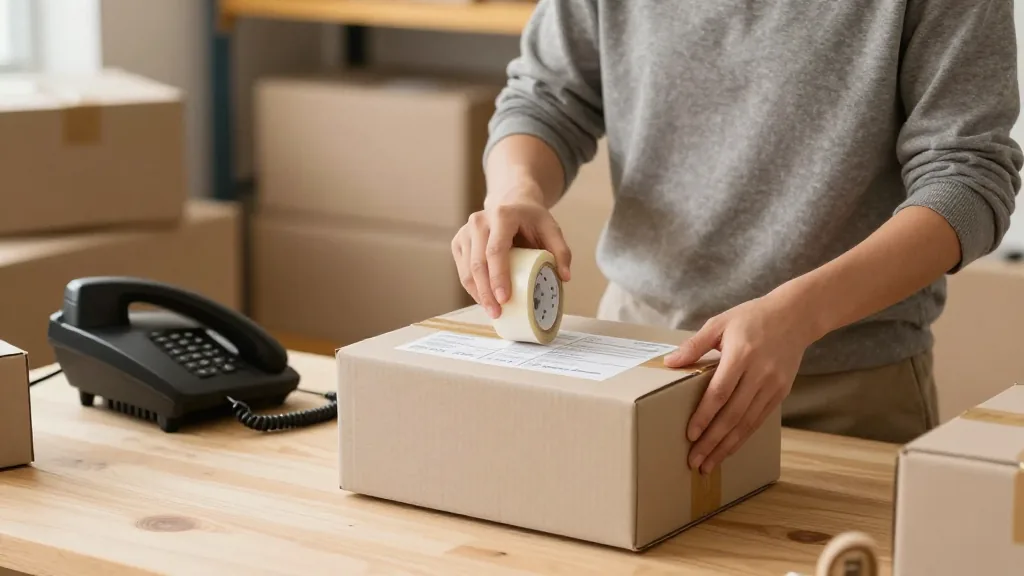
The call comes in at 4:45 on a Tuesday. A customer wants the part shipped overnight. Your staffer says the words that end more sales than any competitor ever could: "Let me call you back with a quote." By the time someone looks up the rate, the customer has already ordered from Amazon. That gap—the thirty minutes between "how much to ship?" and an actual answer—is not a staffing problem. It is a systems problem, and it has a precise fix: an AI phone agent that pulls live carrier rates and quotes shipping on the phone, in the same breath it confirms the order.
This article explains how that works, which businesses it fits, what you need to connect, and what the full picture of an AI shipping desk looks like across a dozen trades.
The Shipping Quote Black Hole: Where Sales Quietly Disappear
Before the fix, it helps to sit with the problem for a moment—because it shows up differently in every trade, but the damage is the same.
Repair shops
A customer calls about mailing in a cracked laptop screen. They want to know what overnight shipping costs before they commit. The technician is elbow-deep in a motherboard swap. The call goes to voicemail. The customer sends the laptop to a national chain instead, even though you would have done the job better and cheaper. The voicemail stays unplayed until close, and by then it doesn't matter.
Salons and beauty supply
A regular wants three bottles of the Brazilian keratin treatment she always buys in-store, shipped to her new address across the state. It's a high-margin sale—$120 in product—and all that stands between you and a completed transaction is a shipping rate. But the front desk doesn't know the weight of three bottles off the top of their head, and the carrier rate tool lives on the office computer in the back. The customer says she'll "check online," and she does: she finds the same brand on a retail marketplace and never calls back.
Medical supply and clinics
A patient calls to reorder CPAP supplies. They're moving out of the area and need the next shipment mailed. The front desk can confirm the supplies are in stock, but cannot quote shipping without walking to another screen. They put the patient on hold. The patient hangs up. The practice eats the churn.
Boutique retail and specialty food
A corporate buyer calls about sending a gift basket to a client in another city. They want ground versus two-day pricing before they approve the order. The owner knows the basket weight. The owner does not have FedEx rates memorized. Three "I'll check and call you back" cycles later, the buyer has moved on to a vendor who could quote on the spot.
Hotels
A guest calls the front desk to ship luggage ahead to the next property on their trip—a service many full-service hotels offer. The front desk agent quotes from memory, gets it slightly wrong, and now there's an awkward conversation at checkout. A live rate pull from the carrier API would have locked in the real number the moment the guest called.
In every case the pattern is identical: the information exists (the carrier has the rate), the sale is ready (the customer has their card out), and the only thing standing between them is a human who can't access both at the same moment.
The problem isn't that your staff are slow—it's that quoting shipping requires two systems talking at once: your order details and a live carrier API. That's exactly what software is for.
What Actually Happens When the AI Quotes Shipping on the Call
Here is the sequence from the caller's perspective, condensed to a single conversation:
- The caller describes what they need shipped: the item, rough dimensions, and destination zip.
- The AI confirms the package details, either from the order it already captured or by asking two short questions.
- Mid-call, the AI hits the carrier API—FedEx, UPS, or Shippo depending on your configuration—and retrieves live rated options: ground, two-day, overnight, and their current prices.
- The AI reads the options back: "Ground arrives Thursday for $8.40, two-day arrives tomorrow for $18.75, overnight is $34.20."
- The caller chooses. The AI confirms, collects payment if needed via a text-link to the caller's phone, and queues the label for printing.
Total time on the caller's end: under a minute for that exchange. No hold music. No callback. No lost sale.
How It Works: Carrier APIs Under the Hood
The AI connects to shipping carriers through their rate-shopping APIs—the same programmatic endpoints that large e-commerce platforms have used for years. KwickPhone's carrier connections, currently in beta, include:
- FedEx rate API — live FedEx Ground, Express, and overnight rates; label generation on confirmation.
- UPS rate API — UPS Ground, 2nd Day Air, Next Day Air, and other UPS service levels; direct label creation.
- Shippo — a multi-carrier hub that gives access to FedEx, UPS, USPS, and regional carriers through a single connection, with a unified label workflow and tracking.
The full integrations directory shows each connector's current status and the credentials you'll need to activate it—your carrier account number, API keys, or Shippo token depending on which path you choose. Because these connections are in beta, verify directly before building your quoting workflow around a specific carrier.
What the AI needs to fetch a rate
For a real-time rate quote the carrier needs: origin zip (your location, set once in your account), destination zip (the caller provides this), weight (your staff configure common items in advance, or the AI asks the caller), and dimensions for dimensional-weight calculation on larger packages. For most repeat products—a box of salon treatments, a CPAP resupply kit, a standard repair-return mailer—you pre-configure the weight and box size in your Playbook so the AI never has to ask.
A Full Shipping Desk, Not Just a Rate Lookup
Fetching a rate is one step. What makes KwickPhone useful is that it handles the entire shipping conversation end-to-end without any hand-off required.
Takes the order first
The AI captures the full order—what items, what quantities, what address—before quoting shipping. When the caller confirms a carrier option, the order is already complete. There is nothing to re-key.
Collects payment by voice, text, or email
After the caller selects their service level the AI can text a secure payment link to complete the transaction—no staff involvement needed. The same AI handles follow-up over SMS and email, so if the caller prefers to confirm details in writing, they get that too, from the same conversation.
Creates the label
On confirmed payment the AI queues a label through the connected carrier or Shippo. Your staff see a print job, not a handwritten note they have to decode and re-enter.
Answers 24/7, handles concurrent calls
The afternoon rush, the Saturday morning call-in spike, the 10 p.m. voicemail from a customer who needs something shipped tomorrow—all answered immediately, all handled simultaneously, with no caller reaching voicemail because the line was busy. This is where the phone-tag loop that usually costs you the sale gets cut entirely.
Multilingual by default
The shipping quote conversation works in English, Spanish, and Chinese. The AI detects the caller's language within the first sentence and switches automatically, which matters for any business serving a diverse customer base.
Transfers to a human when the situation calls for it
When a caller asks for a person, when the shipment is unusually large or high-value, or when the request falls outside what the AI can safely handle, the call transfers to your staff cleanly—with a summary of what was already discussed so nobody starts from scratch.
Which Businesses Benefit Most
Any business that ships physical goods to customers can put this to work. The by-trade guides cover setup specifics, but the core value is the same across all of them:
| Trade | Common shipping scenario | What the AI handles |
|---|---|---|
| Repair shop | Customer mails in device; you ship it back | Quotes return shipping, creates inbound label for the customer to drop off |
| Salon / beauty supply | Regular wants products shipped to new address | Confirms product, fetches ground vs. express rate, takes payment by text link |
| Boutique retail | Gift order needs two-day delivery for a birthday | Quotes service levels, locks in rate, queues label |
| Medical / clinic | Patient relocating, needs supplies mailed | Confirms items in stock, quotes carrier options, collects shipping address |
| Hotel | Guest wants luggage forwarded to next destination | Quotes options live, confirms service, logs for front-desk fulfillment |
| Specialty food | Corporate gift basket, needs pricing before approval | Quotes ground vs. two-day for the basket weight, closes the sale on the call |
| Home services / parts | Customer wants a part shipped instead of waiting for a tech visit | Identifies part, quotes shipping on the call, processes payment |
Owner Controls: Configure Once, Run Forever
You shouldn't need to re-explain your shipping rules every time something changes. KwickPhone's Playbooks let you encode the logic once:
- Pre-configured package profiles. Set the weight and dimensions for your ten most common shipped items so the AI never has to ask the caller to estimate. When someone orders the standard repair-return kit, the rate fetch is instant.
- Carrier preference rules. Tell the AI which carrier to default to, which service level to lead with, and whether to always offer all options or only the two most popular.
- Upsell logic. Configure a rule that says: when the caller chooses ground, mention that two-day is only $X more—and show them the exact live delta, not a guess.
- Voice and persona. A library of 20-plus voices and personas so the assistant sounds like your brand, not a generic bot. Your repair shop's AI can sound different from your boutique's.
- Voice-command updates. Update your default package profiles or carrier preferences by speaking a secure command—useful when you're standing at the packing table, not in front of a laptop.
Prank and Abuse Detection
Any system that creates labels on confirmed calls needs to recognize when a call is an attempt to generate bogus shipments. KwickPhone's abuse detection watches for patterns consistent with prank or nuisance callers and declines to act on them—protecting your carrier account, your label budget, and your staff's time.
Setup: Keep Your Number, Connect Your Carrier
You don't change your phone number. You keep your existing line and forward calls—the code is commonly *72 on a landline (exact codes vary by carrier, so confirm with yours), or a routing change in your VoIP provider's dashboard. Forward all calls, only unanswered ones, or only after-hours calls; the choice is yours.
For the carrier connection, activate the relevant integration from the integrations directory: your FedEx account credentials, your UPS API key, or your Shippo token. Each connector's setup page lists the exact credentials required. Because these carrier integrations are in beta for retail and e-commerce use cases, verify current availability before committing to a workflow.
Point-of-sale integrations—Square, Clover, Loyverse, Epos Now, Revel—work alongside the shipping flow. If a caller places a retail order that also needs shipping, the POS order and the shipping label are created from the same call with no double entry.
Hear the shipping quote in action
KwickPhone fetches live carrier rates and closes the sale on the call—no callback, no re-keying. Want to hear how it sounds for your trade? Call our live demos at /#try—real lines, not canned recordings.
Book a demoFrequently Asked Questions
Can an AI really quote shipping rates on the phone in real time?
Yes. KwickPhone connects to live carrier APIs—FedEx, UPS, and Shippo—and fetches current rates mid-call based on the package weight, dimensions, and destination zip the caller provides. The AI reads back the options, the caller chooses, and the rate is locked before the call ends. These carrier connections are in beta; check the integrations directory for current status.
Which carriers does KwickPhone connect to?
Carrier integrations currently in beta include FedEx, UPS, and Shippo as a multi-carrier hub. Shippo gives access to additional regional carriers through a single connection. Visit /integrations/ for up-to-date availability and the credentials each connector requires.
Does the AI create the shipping label automatically?
Yes. Once the caller confirms the rate and service level, KwickPhone generates a label through the connected carrier or Shippo. It lands in your print queue—nothing to re-key, no handwritten notes to decode.
Do I have to change my business phone number?
No. Keep your existing number and forward calls to KwickPhone. On a landline the forwarding code is commonly *72 (codes vary by carrier); on VoIP you update the routing in your provider's dashboard. You choose when to forward—all calls, unanswered only, or after-hours only.
What types of businesses can use this shipping-quote feature?
Any business that ships physical items to customers: repair shops, boutique retailers, salons with a product line, medical-supply clinics, hotels offering luggage forwarding, specialty food merchants, and e-commerce sellers who also take phone orders. See the by-trade guides for industry-specific setup notes.