AI Phone Answering for San Jose Restaurants (2026)
Friday night, 7:45 pm. Your hostess is managing a 20-minute wait, both servers are running food, and the phone rings. It rings again. Then a third time. By the time anyone can reach it, the caller has already opened a competitor's listing. They placed their order somewhere else and, quietly, will probably not think of you first next weekend. In San Jose's hyper-competitive restaurant market — where the next option is always one tap away — that pattern plays out silently, dozens of times a month, in kitchens that never know what they lost.
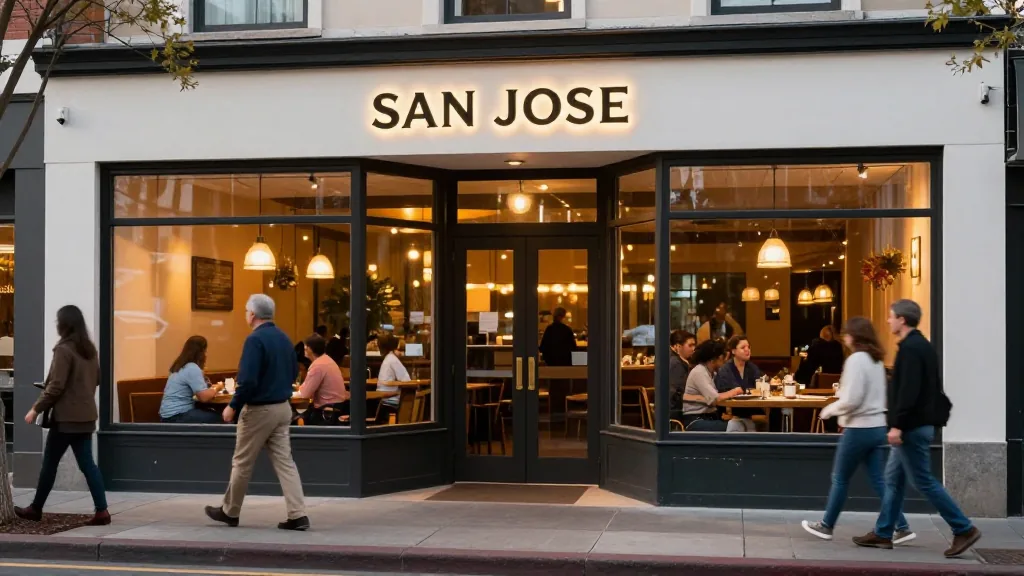
AI phone answering for restaurants in San Jose is the technology that closes that gap. It picks up every call, converses naturally with the caller in English, Spanish, or Chinese, and — when it's properly built — completes the task inside your point-of-sale rather than leaving a transcript someone has to re-key. This guide explains how the technology actually works, what separates the useful systems from the fancy voicemails, and what San Jose operators specifically should look for given the city's language diversity and late-evening dining culture.
Six ways your phone is losing you business right now
Before looking at the solution, it helps to name the specific problems. Most of them are invisible — you don't see the callers who never leave a message.
The dinner-rush overflow
Calls cluster at exactly the moments your staff is least free to answer: 5 pm, 7:30 pm, and the late Sunday brunch window. Callers who reach voicemail during those peaks rarely wait — they hang up and open the next listing. Every call that overflows into voicemail during service is a potential order that left without a record.
The voicemail black hole
Even when callers do leave messages, the callback is delayed — sometimes until after close, sometimes until the next morning. A caller who wanted a 7:30 reservation and left a message at 6:45 has already made other plans by the time the message is played back. The window is shorter than most owners assume.
After-hours inquiries
San Jose has a late-dining culture in many neighborhoods, and diners frequently research and call between 9 pm and midnight. Those calls land on a voicemail nobody checks until the morning shift — too late for the same-day booking, too late for the catering inquiry that had a decision deadline of "tonight."
Re-keying mistakes
When staff do catch a call, they jot the order on paper or a sticky note, then transcribe it manually into the POS. That step is where "extra spicy, no onions" becomes extra onions on the ticket — and where a rushed server omits the special modifier entirely.
No-shows from unconfirmed reservations
A reservation booked over the phone with no confirmation text and no reminder has a meaningfully higher no-show rate than one that triggers automated follow-up. Manual phone bookings rarely come with that follow-up built in.
Language barriers in a diverse city
San Jose is one of California's most linguistically diverse cities, with large Spanish- and Chinese-speaking communities concentrated across its neighborhoods. A caller who doesn't feel comfortable in English may hang up quickly if they sense the line will be frustrating — not because your food isn't what they want, but because the communication gap felt like too much work.
What AI phone answering actually means — and what it doesn't
An AI phone agent is not a phone tree ("press 1 for hours, press 2 for reservations"). It's a voice assistant that picks up the call, understands natural speech across accents and background noise, and converses the way a patient host would — tracking context through the whole call so "make that two" maps back to the right item without asking the caller to repeat themselves.
The category splits into two groups on one dimension: does the system complete the task inside your POS, or does it only document what the caller said? You can read the full breakdown of how KwickPhone approaches this on the how-it-works page, and see what each integration requires on the integrations page. Understanding that split before you evaluate vendors saves a lot of wasted demos.
The full range of what a properly built system handles goes well beyond orders and reservations: parking and allergen questions, hours confirmation, loyalty enrollment, gift-card balance lookups, payment-by-SMS, and order-ready or reservation-reminder texts that cut no-shows. For a breakdown by use case, the restaurant hub on /for/restaurants/ is a useful reference.
The one question that separates a useful tool from a fancy voicemail
When you evaluate any vendor, ask exactly this: after the caller hangs up, what happens? If the answer is "it creates a note" or "it sends your staff a transcript to confirm" — that is manual re-entry wearing a smarter coat. Your team still has to touch every order, and the friction that creates mistakes is still there.
Rule of thumb: a phone bot that can't reach your POS is a well-spoken answering machine. The value is completing the task — the order on the kitchen line, the reservation in the floor plan — not just documenting what the caller said.
KwickPhone is native to KwickOS and also integrates as an open service with Square, Clover, Loyverse, Epos Now, and Revel — so when a caller places an order, it fires to your kitchen without anyone re-typing it. The integrations page shows each supported connector's status and the credentials each one requires, which is useful before you start a trial. If you want to understand the cost picture before going further, the pricing page lays out what each tier covers.
| Caller's request | Voicemail / basic IVR | AI phone agent (POS-connected) |
|---|---|---|
| "I'd like to order takeout" | Records a message; staff call back and re-key | Places the order in the POS, fires it to the kitchen |
| "Table for four at 7:30?" | No response until someone checks messages | Books it in the floor plan, texts a confirmation |
| "¿Tienen mole rojo esta noche?" | English-only recording | Answers in Spanish, checks the live menu |
| Three simultaneous calls at 7 pm | Two go to voicemail | All three answered at once, no caller on hold |
| 10:45 pm: "Are you open for brunch Sunday?" | Voicemail; unanswered until morning shift | Answered immediately from live hours data |
| Repeat prank caller | Takes the fake order; staff re-key it | Detects and declines; no bogus ticket fires |
San Jose's multilingual diners deserve a fluent host
KwickPhone answers in English, Spanish, and Chinese, and detects the caller's language within the first sentence. For a restaurant in Eastside San Jose or the Berryessa corridor, a Chinese-speaking family placing a weekend order gets the same fluent, patient experience as an English-speaking diner calling from downtown. The same item grounding and modifier mapping applies in each language — so customizations land on the kitchen ticket with full fidelity, regardless of the language the caller used to describe them.
This matters beyond the feature-sheet level. A caller who cannot communicate their order comfortably is a caller who hangs up — not one who patiently waits while a staff member tries to bridge the gap. Multilingual answering is not a nice-to-have for San Jose; it is a coverage gap that shows up in every neighborhood with a significant non-English-speaking population.
The trade hub at /for/ shows how KwickPhone's capabilities map across restaurant types and service models — useful context if you're evaluating it for a concept with a different call mix than a standard takeout operation.
What happens when four calls hit simultaneously
Human staff answer one call at a time. The second, third, and fourth caller during the dinner rush get voicemail — or worse, a busy signal. An AI phone agent has no such limit: it handles as many concurrent calls as ring at once, so every caller during your peak hour gets a live response. This is often where the biggest volume of recovered business sits — not in any single high-value call, but in the calls that used to silently overflow.
After-hours coverage that never clocks out
The system is live at 11 pm when a diner calls to ask about tomorrow's reservation capacity. It pulls from your real floor-plan data and answers accurately, rather than falling back to a recording of posted hours that may not reflect your actual Sunday availability. For San Jose's late-dining culture, this window is not a marginal edge case — it is a regular source of the next day's business.
Prank and abuse detection
The agent recognizes obvious prank or abusive calls, declines to act on them, and avoids firing bogus tickets to your kitchen. Repeat offenders are flagged rather than served, which matters for high-volume operations that would otherwise have to manually void the orders after the fact.
Clean handoff to a human
When a caller prefers to speak with a person, the transfer happens immediately — no friction, no prompts, no "I'm sorry, I didn't understand." The system also escalates proactively when an order is unusually large, when the caller is a known VIP who benefits from a personal touch, or when the request touches something outside what it can safely handle — a severe allergy concern, a catering contract, or anything the owner's Playbook flags as requiring human judgment. The AI's job is to catch the routine, high-volume calls so your team can give their full attention to the ones that genuinely need a person.
Owner controls: your restaurant, your rules
The best AI phone systems adapt to how you run your restaurant, not the other way around. KwickPhone gives the owner direct control without requiring developer access:
- 20+ voices and persona options. Choose a voice and personality that fits your brand — warm neighborhood trattoria, brisk ramen counter, upbeat taqueria. The assistant should sound like it belongs to your restaurant, not to a call center.
- Per-merchant Playbooks. Encode the rules of your specific operation: always offer the combo upsell, never promise under 30 minutes on a Saturday, route any catering inquiry above a certain party size to the manager, enroll every new caller in the loyalty program. Playbooks replace ad-hoc staff training with a consistent policy layer the AI applies on every call.
- Voice-command management from the floor. Update hours, flip a sold-out item, or pause phone ordering with a spoken command — useful when you're in the middle of service and can't stop at a laptop.
Getting started without changing your number
You keep your existing phone number. Calls forward to KwickPhone using a call-forwarding setting — on a traditional landline this is typically activated with a code such as *72 followed by the forwarding number (codes vary by carrier, so confirm with yours before activating), and on VoIP you update the routing in your provider's dashboard. You can forward all calls, only calls your team doesn't pick up within a set number of rings, or only after-hours calls — making the AI your overnight host while your staff handles the floor during service.
If you want to hear how the system actually sounds before making any commitment, the live demos at /#try are real phone calls to working agents — not canned recordings. Call one during your next break and run it through the kind of order your regulars place.
See AI phone answering built for San Jose restaurants
KwickPhone answers every call, completes orders directly in your POS, and handles English, Spanish, and Chinese callers without putting anyone on hold. Hear how it sounds on a live line at /#try — real agents, not recordings.
Book a demoFrequently asked questions
Does KwickPhone work with my existing POS?
Yes. KwickPhone is native to KwickOS and connects as an open service to Square, Clover, Loyverse, Epos Now, and Revel. When a caller places an order, it fires directly to your kitchen without anyone re-typing it. The integrations page lists each supported connector and the credentials each requires.
Can it take calls in Spanish and Chinese?
Yes. KwickPhone handles English, Spanish, and Chinese, detecting the caller's language within the first sentence and switching automatically. The same menu grounding and modifier mapping applies in each language, so a Spanish-speaking caller's customizations land on the kitchen ticket with full fidelity.
What happens when a caller wants to speak to a real person?
The system transfers immediately and without friction when the caller prefers a human, when an order is unusually large or from a known VIP, or when the request falls outside what it can safely handle. The AI is built to catch the high-volume routine calls — not to wall callers off from your team.
Do I have to change my phone number?
No. You keep your existing number and forward calls to KwickPhone — typically via a code like *72 on a landline (codes vary by carrier, so confirm with yours) or a setting in your VoIP dashboard. You can forward all calls, only unanswered ones, or only calls outside business hours.
Can I customize what the AI says and how it handles my menu?
Yes. KwickPhone offers 20+ voices and persona options plus per-merchant Playbooks where you encode your restaurant's specific rules — upsells, escalation thresholds, loyalty enrollment prompts, and anything else that defines how your front desk should behave. Hours and sold-out items can be updated by voice command from the floor, with no laptop required.
Related: the complete guide to AI phone answering for restaurants and the best AI phone answering services for restaurants in 2026.