AI Phone Answering for Austin Restaurants (2026)
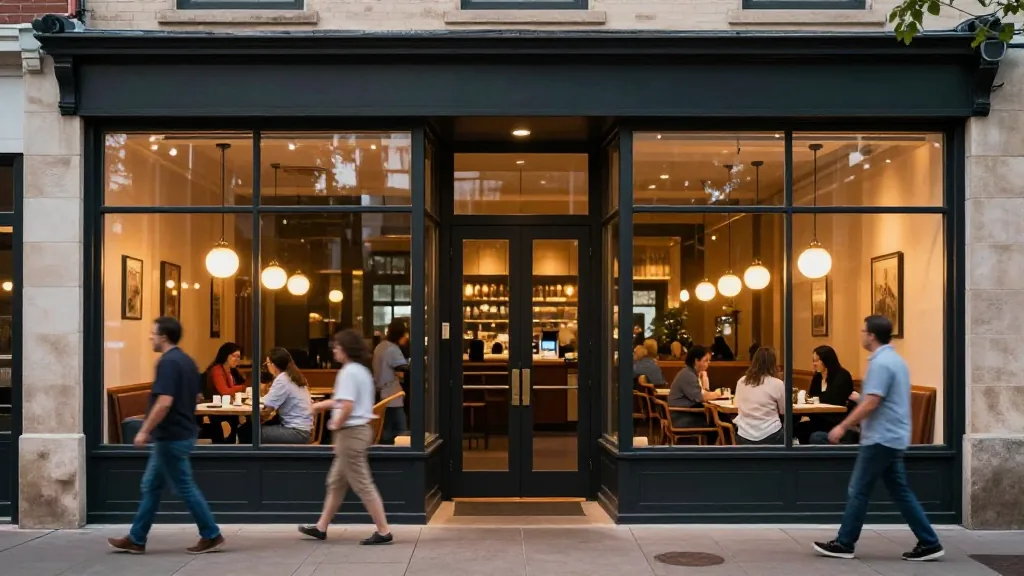
Picture the scene: it's 7:45 on a Friday, your dining room is packed, the pass is stacked three deep, and the phone rings. Nobody can get to it. It rings again. And again. Each of those rings is a caller who already decided to give you money—and somewhere between ring three and ring six, they decided to give it to someone else. Austin's restaurant scene doesn't reward the places that cook the best food alone; it rewards the places that are easiest to reach. The gap between "rang" and "answered" is what AI phone answering for restaurants in Austin is built to close.
Why Austin restaurants lose more calls than they realize
Austin puts unusual pressure on restaurant phones. The city's event calendar—major music festivals, film weeks, Formula One weekend at Circuit of the Americas, home football game days, and conference weeks spread across the year—creates call spikes that no staffing plan fully survives. On a busy event weekend, inbound call volume can multiply in the span of an hour while every person on your floor is already running at maximum.
But the event-weekend story is only a fraction of the problem. The deeper issue is ordinary: every weeknight at 6:50 when the front-of-house is full and the phone hits voicemail. Every Sunday morning when callers try to book brunch before you open. Every time a caller dials while you're already on a line with another caller. These aren't dramatic failures—they're the daily texture of Austin restaurant life, and each one is a quiet, unrecorded lost sale that never shows up on a dashboard.
The concrete pain: five problems inside every missed call
Owners who have looked honestly at their phone patterns describe the same cluster of recurring problems—not just "missed calls" in the abstract, but specific patterns that cost real money every week:
- The voicemail black hole. Callers leave a message; it sits unheard until the post-rush lull; by then the caller has eaten somewhere else, and sometimes left a review about how nobody picks up.
- Re-keying telephone orders. When a call does get answered, someone scribbles the order, then enters it into the POS by hand. That re-entry step is where "no jalapeños" becomes "jalapeños," and where a $55 order becomes a re-fire and a comped dessert.
- After-hours gaps. A meaningful share of Austin's reservation-booking happens between 9 p.m. and midnight—when people are out and deciding what to do tomorrow. If your phone rolls to voicemail every night at 10, you're invisible at exactly the moment people are making plans.
- No-show reservations. A booked table with no confirmation loop and no reminder is a guess. Empty seats on a packed Friday evening hurt in ways that ripple through the entire service's floor plan.
- Language gaps. East Austin, South Congress, and the wider metro area have a large Spanish-speaking population. A caller who switches to Spanish and gets silence—or gives up because the system can't follow—is not a caller who books a second visit.
What AI phone answering is—and what makes it worth paying for
AI phone answering is voice software that answers your restaurant's inbound calls, understands natural speech, and completes the caller's request—an order, a reservation, a question about hours or parking—without human intervention. The best systems are grounded on your real menu: they know your modifiers, daily specials, current hours, and policies. They handle multiple calls simultaneously, serve multiple languages, and work around the clock.
The category is sometimes called an AI front desk or AI receptionist. The label matters less than the outcome. See the full breakdown of how KwickPhone works and the restaurant use-case hub for a complete walkthrough by task type. The one meaningful test isn't the label—it's whether the system does the thing, or merely records what the caller said and hands it off for a human to act on later.
The critical test: does it complete the task inside your POS?
Most phone bots can hold a conversation. That is the easy part. The hard part—and the part that separates a useful front desk from an expensive gimmick—is what happens after the caller hangs up.
If the answer is "it sends your staff a transcript to re-key into the system," you have not solved the problem. You have changed the format of the problem. Re-keying is still re-keying whether the source is a voicemail or a chat log. The only systems worth paying for are the ones that place the order directly into your POS and fire it to the kitchen, seat the reservation in your floor plan, or redeem the gift card in real time—so the work is done before your host turns around.
When evaluating any vendor, ask one question: "What is the exact state of my POS 30 seconds after the caller hangs up?" If the answer involves a staff member doing anything, that's manual re-entry wearing a smarter coat.
KwickPhone is native to KwickOS and also connects to Square, Clover, Loyverse, Epos Now, and Revel as open integrations. You can see the current status of each connector and its required credentials on the integrations page. For Austin restaurants already running one of those systems, the AI phone agent attaches to what you have—no POS swap required.
Austin's language reality
Austin's population means your phone line is not monolingual, and your AI front desk can't be either. Callers switch languages mid-conversation, start in Spanish and finish in English, or call entirely in Spanish expecting a fluent host. KwickPhone detects the caller's language in the first sentence and switches automatically. English, Spanish, and Chinese are all supported, with the same menu grounding in each language—your real modifiers, specials, and allergen notes—so a Spanish-speaking caller's order hits the kitchen ticket the same way an English one does, with no translation lag and no accuracy penalty.
The by-trade hub covers every restaurant sub-type, and multilingual capability applies across all of them—from Tex-Mex to ramen to fine dining.
Concurrent calls: the event-weekend multiplier
A human host answers one call at a time. An AI front desk answers as many as ring simultaneously, with no queue and no busy signal. During the event weekends and Friday-night rushes that define Austin's restaurant calendar, the three callers who would normally hear "please hold" or roll to voicemail are instead answered by three simultaneous AI hosts—each completing a separate order or reservation in parallel, in the caller's preferred language.
This concurrency is where the economics of AI phone answering become clearest. A human shift covers one station. Unlimited concurrent calls covers the entire phone line without adding headcount. Once you've tracked a single event weekend's missed-call volume, the math writes itself.
Prank and abuse detection
Austin's event weekends and late-night scene also bring a higher-than-average rate of nuisance calls. KwickPhone recognizes obvious prank or abusive calls, declines to act on them, and can flag repeat offenders rather than dutifully firing ten fake pickup tickets to your kitchen. That protection matters most on the nights when call volume is highest and your team has the least bandwidth to chase it down.
| Scenario | Without AI answering | With AI phone answering |
|---|---|---|
| 6 calls during Friday dinner rush | 2 answered; 4 go to voicemail | All 6 answered simultaneously |
| Reservation request at 10:30 p.m. | Voicemail; caller moves on | Booked in floor plan, confirmed by text |
| Spanish-speaking caller | Language gap; call abandoned | Language detected; handled fluently |
| Pickup order with modifiers | Scribbled down; re-keyed into POS | Fires to kitchen with exact modifiers |
| Prank call during event week | Bogus ticket sent to kitchen | Flagged; no fake order placed |
| VIP caller with a large order | Handled by AI (or lost) | Transferred to a human automatically |
When to hand a call to a person
Good AI stays in its lane. KwickPhone transfers to a live team member when the caller asks for a person—caller preference is never overridden. It also transfers when an order is unusually large, when the caller is a known VIP who deserves a personal touch, when a catering inquiry comes in, or when the request falls outside what it can safely complete. The goal is for the AI to absorb the high-volume routine calls—pickup orders, reservation slots, hours and directions, gift-card balances—so your team can give its full attention to the table in front of them and to the call that genuinely needs a person. A system that traps callers in a loop with no exit is a worse experience than the missed call it replaced.
Customization: Playbooks, voices, and owner controls
KwickPhone gives restaurant owners meaningful control without requiring a developer. The tools that matter most for Austin operators:
- Per-merchant Playbooks. Rules that encode how your specific restaurant runs: always offer the loyalty program signup on pickup orders, never promise a time under 25 minutes on a Friday, transfer any catering inquiry over a set party size to the manager. Playbooks translate your actual policy into AI behavior.
- 20+ voices and persona choice. Pick a voice and persona that sounds like your brand—warm neighborhood spot, energetic fast-casual, or composed upscale host. The same number can carry a different persona at lunch than at dinner.
- Voice management by voice. Spoken commands let you flip a sold-out item, update hours, or pause ordering from anywhere on the floor—useful when you're in the middle of service, not in front of a laptop.
See pricing for what's included at each tier, and browse the full connector list on the integrations page—it shows each integration's current status and the credentials you'll need to connect it.
Setup: your Austin number stays yours
You do not change your phone number. You keep your existing line and forward calls to KwickPhone. On a traditional landline, call forwarding is usually activated with a carrier code—commonly *72 followed by the forwarding number to turn it on, and *73 to deactivate—though exact codes vary by carrier, so confirm with yours before flipping the switch. On a VoIP or hosted-PBX line (common in Austin's tech-forward restaurant scene), you add a call-forward rule in your provider's dashboard. You can choose to forward all calls, only the calls your staff don't pick up within a set number of rings, or only calls outside business hours—so the AI becomes your after-hours host while your team handles the floor during service.
See AI phone answering built for restaurants like yours
KwickPhone answers every call, completes the order in your POS, and never puts a guest on hold—in English, Spanish, and Chinese. Want to hear exactly how it sounds before you commit? Call our live demos at /#try—real lines, not canned recordings.
Book a demoFrequently asked questions
Can AI phone answering handle Austin's event weekends?
Yes. The system handles multiple calls at once with no queue and no busy signal. A Friday or event-weekend surge that would push callers to voicemail instead routes each one to a fluent host who completes the order or reservation in real time.
Does it speak Spanish for Austin's Spanish-speaking diners?
Yes. KwickPhone detects the caller's language in the first sentence and switches automatically. English, Spanish, and Chinese are all supported—with the same menu grounding in each language—so a Spanish-speaking caller's order fires to the kitchen exactly as an English order would.
Does it place the order into my POS or just take a message?
KwickPhone completes the task end-to-end: it places the order in the POS and fires it to the kitchen, or books the reservation in your floor plan. It works natively in KwickOS and integrates with Square, Clover, Loyverse, Epos Now, and Revel. A bot that only leaves a transcript for your staff to re-key has not solved the problem.
Will I have to change my Austin restaurant's phone number?
No. You forward your existing number to KwickPhone—via a code like *72 on a landline (codes vary by carrier) or a rule in your VoIP dashboard. Forward all calls, only unanswered ones, or only after-hours calls—whatever fits your operation.
What happens when a caller wants to speak to a real person?
KwickPhone transfers immediately. Caller preference always wins. It also transfers for unusually large orders, VIP callers, catering requests, and anything outside what it can safely handle—so your team stays free for the interactions that genuinely need a human.
Related: Complete Guide to AI Phone Answering for Restaurants and Best AI Phone Answering Services for Restaurants (2026). Browse all topics in the KwickPhone blog.