AI Phone Answering for San Francisco Restaurants (2026)
On a Saturday evening in the Mission, your kitchen has twenty tickets on the board, both servers are in the weeds, and the host is mid-seating a party of five. The phone rings. Then again—a different caller. Then a third. Nobody can reach it. One caller wanted to place an $85 pickup order. One wanted to book a birthday dinner for six. The third wanted to know whether you serve halal meat. All three hear voicemail and hang up. The birthday table stays empty. The order goes to the place down the street. The question goes unanswered until close.
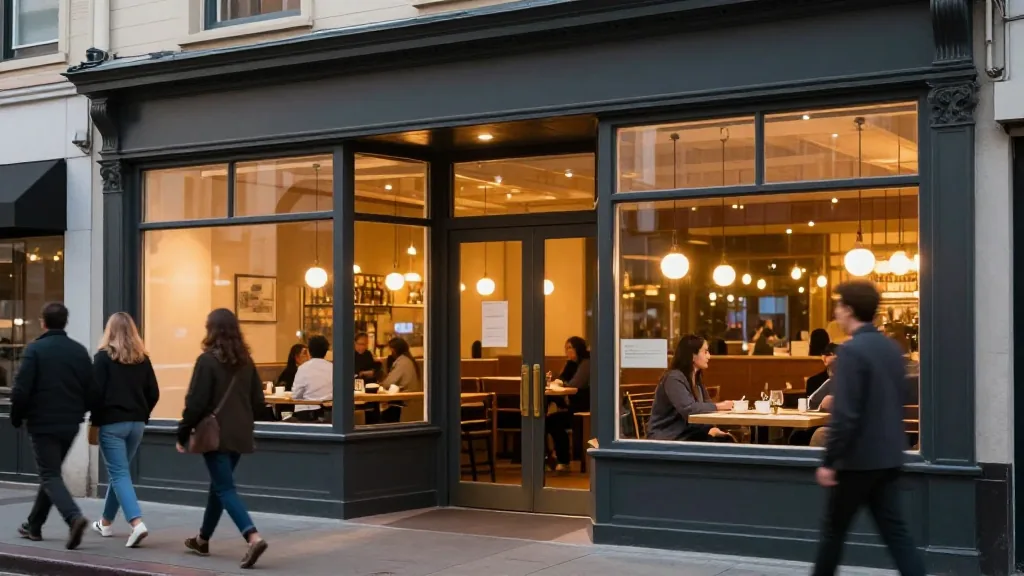
That is the San Francisco restaurant phone problem—and it has a specific texture here that generic answering solutions don't address. This guide explains how AI phone answering for restaurants in San Francisco actually works, what separates a system that completes the order from one that just transcribes it, and what to verify before you sign anything.
The San Francisco Phone Problem That Costs You Every Night
San Francisco puts specific pressure on restaurant operators that amplifies the cost of every missed call. Labor here is expensive—California's minimum wage already sits above the national floor, and San Francisco's own floor goes higher still. That means a host dedicated to answering phones is one of the more expensive staffing choices available, and during a busy service that host is almost always pulled away from the phone to do something else.
Rent is the other side of the equation. The fixed overhead in most SF neighborhoods leaves a thin margin on every cover, so a lost takeout order isn't rounding error—it's a meaningful gap. When you calculate how many rush-hour calls go unanswered across a week of service, the cumulative loss becomes significant on a cost structure that doesn't have much slack.
Then there's the after-hours gap. San Francisco draws visitors from across the Pacific Rim and Latin America, many of whom are operating in different time zones. A tourist in a Union Square hotel calling at 10 p.m. to ask about tomorrow's brunch reservation gets voicemail at best. A family in the Richmond calling in Cantonese at 9:30 p.m. to book a weekend dinner gets voicemail in English. These are calls with intent—people who are ready to spend money—landing in a black hole that nobody checks until after close.
The no-show problem compounds everything. A verbal reservation—the caller asked, someone wrote it down—has no automated reminder, no confirmation text, and no clean paper trail. When a table of six doesn't appear on a packed Saturday night, the cost is immediate and there is no recovery.
What AI Phone Answering Actually Is—and the Question That Separates Real from Demo
AI phone answering is a voice assistant that answers your restaurant's phone, understands natural speech, and completes the caller's request—taking an order, booking a table, answering a question about parking or allergens—without tying up any staff. A well-built system works 24 hours a day, handles several callers simultaneously, and speaks multiple languages without requiring the caller to ask.
That description covers a wide range of quality. The question that quickly sorts the field is: what happens after the caller hangs up?
If the answer is "the system sends your staff a transcript" or "it creates a ticket someone has to confirm," that is a sophisticated voicemail, not an AI front desk. Your staff still re-keys every order, manually books every reservation, and chases every callback. The conversation was automated. The work was not.
Rule of thumb: a phone bot that cannot reach your POS is a fancy answering machine. The value is in the task getting done—an order fired to the kitchen line, a reservation seated in your floor plan, not a note waiting for someone's attention.
The systems worth evaluating are the ones that complete the task directly in your point-of-sale. KwickPhone is built as part of KwickOS, which means it places orders natively, and it also bolts onto Square, Clover, Loyverse, Epos Now, and Revel as an open service for restaurants already on those platforms. You can see which connectors are currently available and what credentials each integration requires at the integrations directory. When a caller's order lands on the kitchen line without any staff member touching it, that is the actual product. Everything before it is conversation.
San Francisco Speaks More Than English
San Francisco's linguistic diversity is not a footnote—it shapes who calls your restaurant and what they need from the first ring. The Richmond and the Sunset have large communities where Mandarin and Cantonese are the dominant first languages. The Mission, the Tenderloin, and the Excelsior have significant Spanish-speaking populations. And across the whole city, international visitors arrive regularly without strong English, particularly from across the Pacific and from Latin America.
Mandarin, Cantonese, and the Richmond caller
A caller in the Richmond who reaches an English-only phone system faces an immediate service gap—not because they can't place an order, but because the friction of doing so in a second language raises the chance they hang up and try somewhere they know will understand them. The Chinese restaurant community in San Francisco has long served these customers with multilingual staff; an AI front desk should do the same automatically.
Spanish and the Mission caller
The same logic applies in the Mission and the Excelsior. A Spanish-first caller who hears a confident, fluent Spanish-language host is more likely to complete the order, more likely to book the reservation, and more likely to call again. The service quality doesn't depend on who's working that shift.
KwickPhone detects the caller's language automatically within the first sentence and handles the full interaction in that language—menu items, modifiers, quoted pickup times, confirmation messages. The kitchen ticket is identical regardless of the language the order was placed in. For a full breakdown of how KwickPhone handles restaurant use cases across neighborhoods like these, see the restaurant use-case hub—or browse all supported verticals at the trade hub.
Every Task a Real AI Front Desk Handles
The useful surface area goes well beyond answering whether you're open:
- Takeout and pickup orders — placed into the POS natively, fired to the kitchen, with an accurate pickup time based on current order volume.
- Reservations and waitlist — booked into the floor plan with party size, time, and special requests captured, plus a confirmation text sent to the caller automatically.
- FAQs — parking ("is there a garage on Fillmore?"), allergens, outdoor seating, corkage fees, dog-friendly policy, catering availability—answered from your real policies, not a generic script.
- Hours and directions — including holiday hours and "are you open right now?"
- Loyalty programs — looking up a member, enrolling a new caller, applying a reward to the current order.
- Gift cards — checking a balance or selling a card over the phone.
- Payment by SMS — texting a secure payment link so the caller pays before pickup, with a confirmation message when the payment processes.
- Reservation reminders — outbound texts the morning of or a few hours before the booking, which reduce no-shows by keeping the reservation top of mind.
For the specific mechanics behind taking takeout orders by phone, or to understand how KwickPhone works end to end, those pages go deeper than this overview can.
| Caller's request | Voicemail / no answer | AI front desk with POS access |
|---|---|---|
| "I'd like to order pickup" | Call goes unanswered or lands in voicemail; staff call back later | Order placed in POS, ticket fired to kitchen, pickup time quoted |
| "Table for six Saturday at 7?" | No response until someone checks messages | Booked into floor plan, confirmation text sent to caller |
| "¿Hablan español?" | English recording plays; caller often hangs up | System switches to Spanish automatically, full order taken |
| "Do you have a kids' menu?" | Generic recording, often outdated or absent | Answers from your real menu and policies |
| "Check my gift-card balance" | Not possible by voicemail | Looks it up and reads the balance |
| Three calls at once during rush | Two go to voicemail, one maybe answered | All three answered simultaneously |
Rush-Hour Concurrency and Prank Protection
A human host answers one call at a time. An AI front desk answers as many as ring simultaneously—which means the third and fourth caller during a Friday dinner rush get a response instead of voicemail. This is often where the most recoverable revenue is hiding: not in any single call but in the calls that overflow the staff's capacity at the exact moment demand is highest.
San Francisco restaurants also field their share of prank orders—a long-running problem that wastes kitchen prep and clogs the board with fake tickets. A well-built system recognizes call patterns consistent with abuse, declines to process orders it flags, and surfaces repeat numbers for your review. It should never dutifully fire a string of bogus tickets to the kitchen line.
When the AI transfers to a human
Staying in its lane is a feature. The system should transfer to a person when:
- The caller asks for a human—this always overrides everything else, no exceptions.
- The order is unusually large, a catering inquiry, or from a known VIP who deserves personal attention.
- The request is outside what the AI can safely complete.
The design goal is that your team handles the calls that need human judgment while the AI absorbs the volume of routine orders, reservations, and questions that would otherwise tie up staff or go unanswered during service.
Owner Controls Built for Operators, Not Developers
The best platforms put the restaurant owner in control without requiring any technical skill:
- Voice management by voice. Spoken commands to update hours for a holiday closure, mark an item as 86'd, or pause ordering during a private event—useful when you're on the floor without access to a screen.
- Per-merchant Playbooks. Rules that encode how your restaurant actually runs: always offer the weekend special as an upsell, never quote under 30 minutes on a Friday night, enroll every caller in the loyalty program, transfer any catering request to the manager immediately. Playbooks keep the AI behaving like a trained host—your trained host—not a generic one.
- Voice and persona selection. A library of 20+ voices and personas so the assistant sounds like your brand—a warm neighborhood trattoria host, a crisp SoMa fine-dining greeter, a friendly dim-sum counter voice. The caller experience should fit the restaurant.
You can hear what a live call actually sounds like before committing to anything. KwickPhone's live demo lines are at /#try—real calls, not canned recordings.
Setup: You Keep Your San Francisco Number
You don't change your number. You keep your existing line and forward calls to the AI. On a traditional landline, this is usually a forwarding code—commonly *72 followed by the forwarding number to activate and *73 to deactivate—though codes vary by carrier, so confirm with yours. On VoIP (common among SF operators already on hosted PBX platforms), you update the forwarding destination in your provider's dashboard.
You can forward all calls, only the ones your staff don't pick up within a set number of rings, or only calls that arrive outside your stated business hours. Many SF operators start with the last option—the AI becomes the overnight and late-night host while the team handles the floor during service—then expand coverage once they've seen how it performs. For a look at how the pricing scales with coverage level, see the pricing page. More guides on the restaurant phone category are in the KwickPhone blog.
A Realistic San Francisco Before and After
Before. It's 7:18 on a Friday in Hayes Valley. The kitchen has 18 tickets on the board. Your host is mid-seating a party. Both servers are running food. The phone rings at 7:18, then 7:19, then 7:21. Three separate callers. One wanted a $90 pickup order. One wanted a birthday-dinner reservation for six. One wanted to know whether the patio is dog-friendly. All three hear voicemail. The caller who wanted the reservation books elsewhere. The pickup order goes down the street. The patio question goes unanswered until someone checks messages after midnight. The host never knew the calls came in.
After. The same 7:18 call is answered on the first ring by an AI host that already knows the menu. The $90 pickup order is placed and fired to the kitchen in under two minutes, with a payment link texted and a pickup time quoted. The birthday dinner for six is booked into the floor plan with a confirmation text sent immediately. The patio question is answered correctly in under five seconds, and the caller says they'll come in tomorrow. The host never looked up from the floor—and three calls that would have been lost turned into revenue on the books.
See AI phone answering built for San Francisco restaurants
KwickPhone answers every call in English, Spanish, and Chinese—and places the order or reservation directly into your POS. Want to hear how it sounds on a real call? Try the live demo lines at /#try.
Book a demoFrequently Asked Questions
What makes AI phone answering different for San Francisco restaurants?
San Francisco combines elevated labor costs, a highly diverse caller pool—English, Spanish, Mandarin, Cantonese—and around-the-clock tourist traffic across time zones. A system built for this market answers in all three languages automatically, handles concurrent calls during the rush, and covers the after-hours window when SF's international visitors are still calling.
Can KwickPhone handle callers in Chinese or Spanish?
Yes. KwickPhone answers in English, Spanish, and Chinese, detecting the caller's language automatically within the first sentence and completing the full conversation—menu items, modifiers, confirmations—in that language. The kitchen ticket is identical regardless of which language the order was placed in.
Does the AI place the order into my POS, or does it just take a message?
KwickPhone completes the task. It places orders natively into KwickOS, and integrates with Square, Clover, Loyverse, Epos Now, and Revel for restaurants already on those platforms. The order lands on the kitchen line without any staff re-keying it. A system that only sends a transcript is a sophisticated voicemail—your staff still has to do the work.
What happens when a caller wants to talk to a real person?
The AI transfers immediately. Caller preference for a human overrides everything else, no questions asked. The system also transfers for unusually large orders, catering inquiries, known VIPs, and any request outside what it can safely handle. The goal is to absorb the high volume of routine calls so your staff can focus on the ones that need a person.
Do I have to change my restaurant's existing phone number?
No. You keep your number and forward calls to the AI line—usually *72 on a landline (codes vary by carrier, so confirm with yours) or a setting in your VoIP dashboard. You can forward all calls, only the ones that go unanswered, or only calls outside business hours.
Related: the complete guide to AI phone answering for restaurants and the best AI phone answering services for restaurants in 2026 compared side by side.