The Call Portland Restaurants Keep Missing — And What to Do About It
At 7:03 on a Friday, a Portland restaurant's phone rings. The host is seating a party of six, both servers are running food, and the bartender has four tickets up. Nobody can reach the phone. It rings eight times, tips to voicemail, and the couple on the other end — who were going to book a table and spend an evening — tap back to search results and pick the next place down on the list. The restaurant never knew the call came in. Voicemail does not show you what you lost; it only shows you that someone tried.
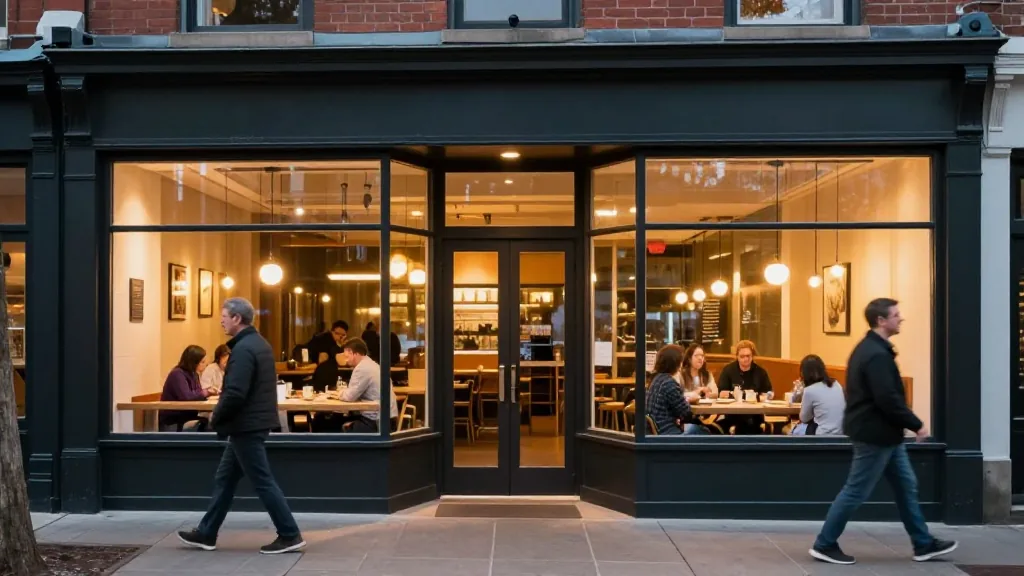
This is not a staffing failure. It is a systems problem. And the specific shape of that problem — how often it happens, when it peaks, and how it compounds in Portland's restaurant market — is worth understanding before you buy any technology to fix it.
Why Portland's restaurant phone problem hits differently
AI phone answering for restaurants in Portland has a higher ceiling than in most mid-sized cities, because Portland diners are unusually call-intensive. Division Street, Alberta, Mississippi Avenue, the Pearl District, and the inner Southeast all have dense restaurant corridors where guests decide same-day. They frequently call the venue directly rather than booking through an aggregator — because the spot they want isn't on every platform, or because they want to confirm something before committing. That caller is not browsing. They are deciding right now. A missed call is a closed door, not a delayed one.
The problem compounds in several ways specific to this market:
- The dinner window is short and the competition is literal steps away. A diner who can't reach you at 6:50 for a 7:30 table has three other options within two blocks and can book one in under a minute.
- Late-night and after-hours calls go unanswered by design. Portland's food culture runs late, and so do the people planning around it. Catering inquiries, next-day reservation requests, and "are you open tomorrow?" questions arrive well after your last server has clocked out — and go unanswered until morning, which is often too late.
- East Portland, Beaverton, and parts of the inner east side are multilingual. A meaningful portion of your potential market speaks Spanish or Chinese as a first language. A phone system that only operates in English isn't neutral — it is a service gap.
- No-shows are expensive, and most phone systems don't help. A reservation taken by a distracted host without a confirmation text is a reservation that may simply not appear. When a party of four doesn't show on a Saturday and you turned away a walk-in for that table, there is no quiet loss — it is just a loss, and there is no mechanism for accountability.
The voicemail black hole
Voicemail is where phone business goes to stall. In a restaurant context, it creates a cascade: the caller leaves a message, a staff member eventually retrieves it, writes down the order on paper or types it into a notes app, keys it manually into the POS, and somehow has to reach the caller back if there are questions about modifiers or timing. Each handoff in that chain is a chance for an error or a delay that loses the sale. A caller who wanted pickup in 30 minutes is not going to wait three hours for a callback — they have already eaten.
The gap is worst at exactly the moments when your restaurant is making the most money: the dinner rush, the weekend brunch wave, the holiday booking sprint. Those are also the moments when your staff has the least capacity to pick up a phone. The very conditions that make answering hard are the ones that make each call the most valuable.
The voicemail-check-at-close ritual is a symptom, not a solution. By the time staff reviews those messages, most of the callers have already eaten somewhere else — and you have no way of knowing how many.
What "AI phone answering" actually means — and what it does not
An AI phone answering system is a voice assistant that answers your restaurant's phone line, understands what the caller wants in natural speech, and completes the task — placing the order, booking the reservation, answering the question about parking or allergens or the corkage fee — without your staff having to intervene. Unlike a "press 1 for hours" phone tree, it holds a real conversation. Unlike a human host, it is never busy, never on another line, and never clocks out.
What a capable system can handle:
- Takeout and pickup orders, placed directly into the POS and fired to the kitchen
- Reservations, booked into your floor plan with party size, time, and special requests captured
- FAQs — allergens, parking, patio availability, dog-friendly, "do you cater?"
- Hours and directions, including live holiday hours and "are you open right now?"
- Loyalty program lookups, new enrollments, and reward redemptions
- Gift card balance checks and over-the-phone purchases
- Payment by SMS — a secure link texted to the caller so they pay before pickup
- Order-ready texts and reservation reminders that reduce no-shows
- Prank and abuse detection — the system recognizes obvious bad-faith calls, declines to act on them, and flags repeat offenders rather than dutifully sending bogus orders to your kitchen
To see how KwickPhone approaches the restaurant vertical — including the specific mechanics of each call type — visit the restaurant use-case hub. For a broader look at how KwickOS integrates with your existing technology stack, the integrations directory lists each connector's status and required credentials so you know exactly what you're wiring together before you commit.
The one question that separates useful from expensive voicemail
Many phone bots can hold a convincing conversation. Far fewer can actually complete the task — meaning the order lands on the kitchen line, the reservation appears in the floor plan, the payment is collected — because most voice AI products live outside the system that runs your restaurant.
When a bot cannot reach your POS, your staff still has to re-key everything it collected. You have automated the talking but not the work. The transcript sits in a third-party dashboard while your kitchen waits, and nothing has actually changed downstream of the call.
Ask every vendor you evaluate a direct question: What happens in your system the moment after the caller hangs up? If the answer involves a transcript, a ticket, a notification that requires staff confirmation, or a promised callback — that is manual re-entry wearing a smarter coat. The systems worth paying for either run natively on the same platform as your POS, or integrate directly with the ones Portland restaurants actually use: Square, Clover, Epos Now, Loyverse, and Revel. You can verify those integrations and see exactly what credentials each connector requires in the integrations directory before signing anything.
A Portland Friday rush, handled: what the difference actually looks like
| Scenario (Friday, 7 PM) | Voicemail / no answer | AI front desk |
|---|---|---|
| Pickup order, caller wants 30 min | Rings out; caller orders from competitor | Order placed in POS, ticket fires to kitchen, pickup time confirmed by text |
| "Table for four at 7:30?" | No one answers; reservation never made | Booked into floor plan; confirmation text sent instantly |
| "¿Tienen mesas disponibles esta noche?" | English voicemail only | Switches to Spanish automatically; reservation completed |
| Three calls arrive simultaneously | Two go to voicemail | All three answered concurrently; no call waits |
| Catering inquiry at 10:45 PM after close | Message sits until morning | Inquiry logged, next steps given; transfer triggered if warranted |
| Large VIP order, complex customization | Already missed | Recognized as high-value; transferred to staff for personal handling |
| Caller says "can I talk to someone?" | Already in voicemail | Transferred to a human immediately — caller preference always wins |
Multilingual Portland: English, Spanish, and Chinese on every call
The neighborhoods that make Portland's food scene interesting are also the ones where English is not the only language at the table. A system that can only serve callers in English is leaving a portion of its market unanswered. KwickPhone detects the caller's language within the first sentence and switches automatically — English, Spanish, and Chinese — with the same menu and modifier grounding active in each language. A Spanish-speaking caller's pickup order maps to exactly the same kitchen ticket an English-speaking caller's would. No script changes, no manual translation, no additional staffing cost.
For Portland restaurants in East Portland, Beaverton, and neighborhoods with multilingual communities, this capability is not an edge case — it is part of serving your actual customer base. A language barrier on the phone is not a minor friction point; it is a complete failure to complete the transaction.
After-hours: where Portland's bookings hide
Some of the most valuable calls a Portland restaurant receives arrive after close. Someone getting out of a show, finishing a late work call, or planning a birthday dinner for the coming weekend doesn't call at noon on a Tuesday — they call when the thought occurs to them, which is often 10:30 at night. Under a traditional setup, that call goes to voicemail and the message sits until opening. Under AI phone answering, that caller gets a full-service host who can book the reservation, answer the menu question, capture the dietary note, and confirm the party size — at 11 PM on a Thursday — while you are asleep.
This is where "24/7, never busy" matters most. The AI is not available "after hours" as a degraded fallback — it is the same system, with the same full capability, at the same speed, whenever the phone rings. That is not a message service that takes a name and number and promises a callback. It is the call completed, right then, with no morning re-keying required.
Owner controls: change it from the floor, not a help ticket
The best implementations do not require a developer or a support call to update. Portland owners who are on the floor during service need changes to happen at the speed of service — an 86'd item, adjusted hours for a private event, a seasonal menu addition that went live tonight. A capable system gives you:
- Voice management by spoken command. Flip a sold-out item, update today's hours, or pause phone ordering without leaving the floor or opening a laptop.
- Per-merchant Playbooks. Rules that encode how your restaurant specifically runs: always upsell the house cocktail, never quote under 35 minutes on a Saturday, route any catering inquiry above a certain size to the owner, offer loyalty enrollment to first-time callers, transfer a regular who's a known VIP.
- 20+ voices and persona choices. The assistant should sound like a fit for your brand — the warm neighborhood spot on Alberta or the precise upscale host in the Pearl — not a generic automated menu.
For context on what the system looks like once it's running and how the setup process works, how KwickPhone works walks through it step by step. Pricing is transparent and scales with call volume rather than a flat seat fee.
Setup: keep your existing number
You do not change your restaurant's phone number. You keep your existing line and forward calls to KwickPhone. On a traditional landline this is usually a call-forwarding code — commonly *72 followed by the forwarding number to activate, and *73 to deactivate — though the exact codes vary by carrier, so confirm with yours before you start. On VoIP, you update the forwarding destination in your provider's dashboard, which typically takes under two minutes. You can forward all calls, only the calls that go unanswered after a set number of rings, or only calls outside your business hours. The after-hours-only configuration is a common starting point: your team handles the floor during service, and KwickPhone takes over the moment you are closed.
How to evaluate vendors without getting lost in slide decks
Pitches for AI phone systems sound similar at the summary level. The differences surface in specifics, and those specifics are straightforward to test:
- Ask exactly what happens after the caller hangs up. A transcript? A notification? Or a live ticket in your POS? The answer tells you everything about whether you have automated the work or just the conversation.
- Confirm which POS integrations are live and what credentials they require. The integrations directory documents this for KwickPhone; ask any competitor for equivalent documentation before the demo, not after the contract.
- Ask about concurrency. How many simultaneous calls can it handle? "Unlimited" and "up to three" are very different realities on a Friday night when your phone rings constantly for forty minutes.
- Test it in Spanish. If any portion of your neighborhood speaks Spanish, run the evaluation in that language. See whether the system switches without a prompt and whether the order logic — modifiers, pricing, timing — still works correctly.
- Ask how you 86 an item mid-service. If the answer is "submit a request and we'll update it," keep looking. Menus change faster than support queues move.
- Hear it before you decide. KwickPhone runs live demo lines — real calls, not canned recordings — that you can reach at /#try. Call it yourself from your own phone and hear what your guests would hear.
The by-trade hub also covers how AI phone answering applies across specific restaurant types — from fast-casual counter service to full-service dining to hybrid pickup-and-dine setups — if you want to map the tool's capabilities against your specific operational model before you schedule a demo.
AI phone answering built for Portland restaurants
KwickPhone answers every call, completes the order or reservation in your POS, and speaks English, Spanish, and Chinese. It bolts onto Square, Clover, Loyverse, Epos Now, and Revel — or runs natively on KwickOS. Hear it for yourself at /#try — real lines, not a recording.
Book a demoFrequently asked questions
Does KwickPhone work with the POS systems Portland restaurants already use?
Yes. KwickPhone is native to KwickOS and also integrates with Square, Clover, Loyverse, Epos Now, and Revel as an open service — so orders and reservations land directly in the system your kitchen and floor already use, with no re-keying by staff. The integrations directory shows each connector's current status and required credentials.
Can it handle the volume of calls during a busy Portland dinner rush?
Yes. Unlike a person, the AI handles multiple concurrent calls — so the third or fourth caller during peak hours gets a live answer instead of voicemail. Concurrency is one of the biggest operational gains for high-volume Friday and Saturday nights, when every caller who reaches voicemail is a potential lost sale.
What languages does it speak? Is Spanish covered?
KwickPhone handles English, Spanish, and Chinese, detecting the caller's language within the first sentence and switching automatically. For Portland's multilingual neighborhoods — East Portland, Beaverton, and others — every caller gets a fluent host without additional multilingual staffing on your end.
Do I have to change my existing phone number?
No. You keep your current number and forward calls to KwickPhone. On a traditional landline the code is commonly *72 followed by the forwarding number — though codes vary by carrier, so confirm with yours. On VoIP, you update the setting in your provider's dashboard. You can forward all calls, only unanswered ones, or only after-hours calls depending on how you want to deploy it.
What happens when a caller wants to speak to a real person?
Caller preference always wins. KwickPhone transfers to a human whenever the caller asks, whenever an order is unusually large or from a known VIP who deserves a personal touch, or whenever the request falls outside what it can safely complete on its own. The goal is to catch routine, high-volume calls so your team can give full attention to the ones that genuinely need a person — not to wall callers off from your staff.
Related: the complete guide to AI phone answering for restaurants and the best AI phone answering services for restaurants in 2026. You can also call our live demos at /#try — real lines, not canned recordings — to hear exactly what your Portland guests would hear.