AI Phone Answering for Pet Grooming Shops (2026)
The call comes in at 11:14 on a Tuesday. Both groomers are elbow-deep in a standard poodle's bath, scissors in one hand and a squirming dog in the other. The front desk — if there even is one — is managing the morning check-in rush. The phone rings four times and rolls to voicemail. The caller, a new pet owner who just moved to the neighborhood and found the shop on a search, doesn't leave a message. They call the next shop on the list.
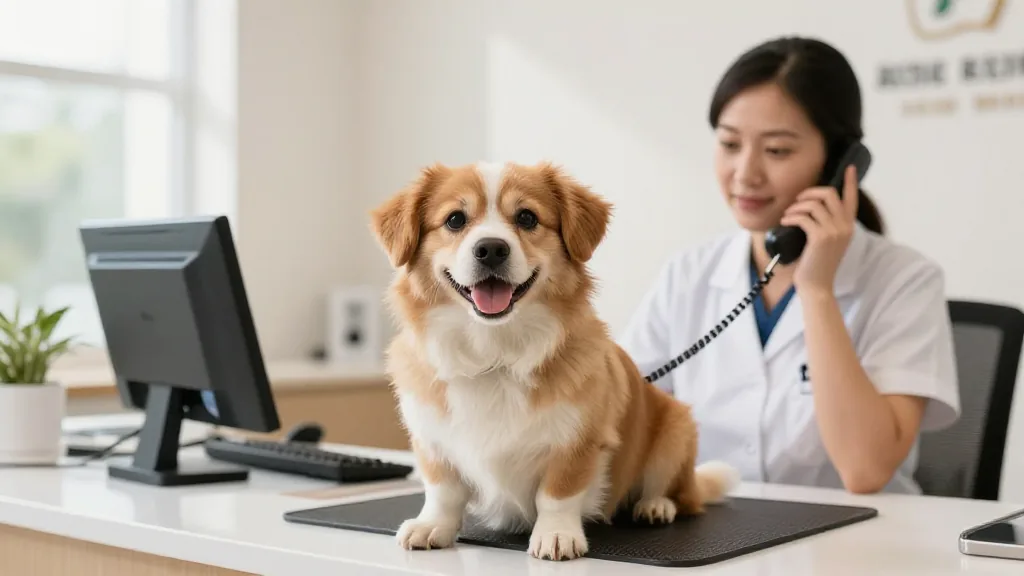
This guide is for grooming shop owners who recognize that scene — because it plays out multiple times a day in shops that depend on the phone for new bookings. It explains what AI phone answering for pet grooming shops is, why the category exists at all, what separates genuinely useful systems from glorified voicemail, and what to verify before you commit to any of them. No inflated promises; just a clear look at how the technology actually works and what questions cut through a vendor pitch.
The Wet-Hands Problem: Why Pet Grooming Shops Miss More Calls Than Almost Anyone
Most service businesses miss calls when they're slammed. Pet grooming shops miss calls in a specific, nearly unavoidable way: the physical act of grooming makes it impossible to pick up. A groomer mid-bath cannot put down a 60-pound golden retriever to answer the phone. A groomer mid-cut cannot step away without risking a nick. Even shops with a dedicated front-desk role find that check-in and checkout during the morning drop-off window keeps that person occupied — or the "front desk" is the same groomer doing everything.
Layer on top of that a timing mismatch that never resolves itself: most pet owners call to book grooming during their free time — before 9 a.m. on the way to work, after 6 p.m. at home, on Saturday and Sunday. Those are exactly the hours the shop is either closed or running at full capacity with no one free to answer. The result is a persistent gap between when customers want to reach you and when anyone can pick up — and every call that falls into that gap is a booking that almost certainly goes to a competitor.
The Voicemail Black Hole — and Why It Doesn't Actually Help
Voicemail feels like a safety net. In practice, for appointment-based businesses like grooming, it functions more like a dead end. The cycle tends to go like this: a caller leaves a message, or more often doesn't bother. If they do leave one, staff retrieves it during a lull, calls back — often reaching that caller's voicemail — and the tag plays out over hours or days. By the time a real conversation happens, the caller has frequently already booked elsewhere, or simply moved on and forgotten about it.
Re-keying compounds the problem. When an appointment is captured by voicemail and transcribed manually into the booking system, small errors accumulate — a wrong date, a misheard dog name, a time that was never actually available. Without an immediate confirmation text sent at the moment of booking, no-show rates climb. And every no-show is a grooming slot that sat empty and cannot be recovered. The phone system isn't broken; the path from "caller rings" to "appointment confirmed in the book" is just too slow and too manual.
What AI Phone Answering for Pet Grooming Shops Actually Is
AI phone answering is a voice assistant that answers your shop's phone, understands what the caller wants in plain conversational language, and completes the task — booking the appointment, answering questions about services or pricing, confirming a pickup time — without tying up any of your staff. Unlike a basic IVR ("press 1 for hours, press 2 to leave a message"), it holds a natural conversation. A caller who says "I need to bring my shih tzu in for a full groom, can you do Thursday afternoon?" gets a real response — the AI checks your live calendar, offers an open slot, and books it.
The category is sometimes marketed as an "AI receptionist" or "AI front desk." The label matters less than the practical test: does it write the appointment directly into your scheduling system, or does it just transcribe what the caller said and leave the rest to you? You can see the full trade-by-trade breakdown of how KwickPhone applies across different businesses at the KwickPhone by-trade hub, or get a technical walkthrough on the how it works page.
How It Works: Three Steps That Happen Before You Blink
1. Hearing and understanding the caller
The system picks up instantly and converts speech to text in real time, then interprets the meaning in context. Good voice AI handles natural, messy speech — a caller with background noise, someone spelling out their dog's name, mid-sentence corrections, hesitations. It tracks the thread of a conversation: if a caller says "actually, can we do Saturday instead?" the system knows what they're moving and adjusts accordingly. It also recognizes multiple languages — KwickPhone answers in English, Spanish, and Chinese, detecting the caller's language within the first few seconds and switching automatically.
2. Grounding on your real services and live calendar
This is the step lightweight bots skip, and it's the one that separates a useful tool from a liability. The assistant must be grounded on your actual service menu — which breeds you work with, which services you offer, any add-ons, and your live availability — rather than a generic script. Without grounding, the AI invents answers and books time slots that don't exist. With it, the caller gets accurate information and the appointment lands in a real opening on your calendar, tied to the right groomer and the right service.
3. Completing the booking — not just taking a message
This is where the real value either exists or doesn't. The system writes the appointment into your scheduling or point-of-sale software, sends a confirmation text to the pet owner, and captures any notes the groomer needs — breed, coat condition, any special handling request. Everything before this step is conversation. This is the work. A system that ends with "I've noted your request and someone will follow up" is still leaving the most error-prone step to your staff.
Quick test for any vendor you're evaluating: ask exactly what happens after the caller hangs up. If the answer is "it creates a ticket for your staff to confirm" or "it sends a transcript," that's manual re-entry wearing a smarter coat.
Everything a Real AI Front Desk Can Handle
A capable system does more than field new bookings. The full range of tasks it can cover includes:
- New appointment booking — any service, any breed, confirmed into your live calendar in real time.
- Rescheduling and cancellations — a caller who needs to move their appointment gets it handled without a callback loop.
- Pricing and service questions — "what does a full groom cost for a doodle?" answered from your real service menu, not a generic estimate.
- Boarding & daycare bookings — if your shop also boards, see how KwickPhone handles phone bookings for boarding & kennels the same way.
- Pickup-status calls — "is my dog ready yet?" handled without pulling a groomer off the table mid-cut.
- Hours, directions, and policies — including holiday hours and "are you taking new clients right now?"
- After-hours booking — capturing the 9 p.m. caller who wants to book for next Saturday while you're closed.
- New-client intake — dog's name, breed, age, vaccination status, any known handling notes, collected on the first call.
- Appointment reminders — outbound confirmation texts that go out automatically and reduce no-shows without anyone on staff lifting a finger.
| Caller's request | Basic voicemail | Real AI front desk |
|---|---|---|
| "Book Bella for a bath and trim Saturday" | Takes a message; staff call back later | Checks live calendar, books the slot, texts confirmation |
| "Is 3 pm tomorrow open for a small dog?" | No response until staff are free | Checks live availability, books it on the spot |
| "What does a full groom cost for a lab?" | Generic recording, often outdated | Answers from your real service menu |
| "Is my dog ready for pickup?" | Rings through to a busy groomer | Checks status, relays ETA or texts when ready |
| "¿Cuánto cuesta el baño para un perro mediano?" | English only | Switches to Spanish, answers from your real prices |
| Three booking calls during morning drop-off | Two go to voicemail | All three answered and booked simultaneously |
Multilingual Service Without a Multilingual Hire
Many grooming shops serve neighborhoods where Spanish, Chinese, or another language is the first language for a meaningful share of customers. Hiring bilingual front-desk staff for every shift isn't always feasible, and callers who sense hesitation on the other end often hang up and call a shop where they feel understood. Modern voice AI changes that equation. KwickPhone answers in English, Spanish, and Chinese, detecting the caller's language within the opening sentence and switching automatically — no separate line, no extra configuration per call.
A Spanish-speaking caller who wants to book a bath for their chihuahua gets the same fluent, patient experience an English-speaking caller would, with the booking landing in the same calendar under the same system. This matters most at the edges of the day — the early caller before the front desk is staffed, or the evening caller who might abandon English and dial elsewhere if there's any friction.
Concurrency: The Morning Rush Problem, Solved
A human can answer one call at a time. An AI front desk answers as many calls as come in simultaneously — which is exactly where pet grooming shops feel the sharpest pain. The morning drop-off window is when three regulars are all trying to book next week's appointment at the same time. The same window is also when your staff has the least bandwidth to answer. Every call that used to overflow into voicemail during that window instead gets answered immediately, and — if the system is built right — lands as a confirmed booking rather than a missed opportunity.
KwickPhone integrates with the booking and point-of-sale platforms most grooming shops already run — Square, Clover, Loyverse, Epos Now, and Revel. The integrations directory shows each connector's current status and the credentials required to set it up. If you're already on one of those platforms, the AI front desk writes appointments directly into the system your groomers already check — no parallel list to reconcile, no re-keying.
The system also handles the edge cases a junior receptionist would struggle with: a caller who changes their mind mid-booking, someone who calls twice in a row about the same slot, or the occasional bad-faith call. Well-built AI detects prank or abusive behavior and declines to act on it rather than dutifully blocking out your calendar under a fake dog name.
When the AI Should Step Aside — and How Good Systems Know When
The right AI front desk is not trying to handle everything. It's trying to handle the routine, high-volume calls so that when a genuinely human situation arises, your staff can give it their full attention. A well-built system transfers to a person:
- When the caller explicitly asks to speak with a groomer or manager — caller preference always wins, no exceptions.
- When a dog has a complex medical history, a known aggression flag, or special handling requirements that need a groomer's judgment before the booking is confirmed.
- When a long-standing client or large booking deserves a personal conversation rather than an automated flow.
- When a request falls genuinely outside what the system can safely handle — an unusual service inquiry, a complaint, anything that doesn't fit the standard booking path.
A system that traps callers in a bot with no clear way to reach a person is a worse experience than the missed call it was meant to replace. The goal is a clean, graceful handoff — not a wall between the caller and your team.
Owner Controls: Your Shop, Your Voice, Your Rules
The best AI front desk platforms put the owner in control without requiring a developer or a support ticket every time something changes. Look for:
- Voice and persona selection. A library of 20 or more voices and personas so the assistant sounds like a fit for your shop — warm and playful for a neighborhood boutique groomer, calm and professional for a veterinary-adjacent salon.
- Per-shop Playbooks. Rules that encode how your business runs: always ask new clients about vaccination status before confirming, offer the premium de-shed treatment for double-coated breeds, transfer any boarding inquiry to the owner. These aren't generic scripts — they're your operating logic, taught to the AI once and applied on every call.
- Voice management commands. Secure spoken commands to update hours, mark a groomer as unavailable, or pause new bookings for a day — useful when you're on the floor with a dog in your arms and not at a keyboard.
Plan options and what's included at each tier are detailed on the KwickPhone pricing page. The blog also covers specific verticals and use cases in depth if you want to compare how the approach varies across different shop types before deciding.
Setup: Keep Your Existing Number
You do not change your business phone number. You keep your existing line and forward calls to the AI. On a traditional landline this is usually a call-forwarding code — commonly *72 followed by the forwarding number to enable, and *73 to cancel — though exact codes vary by carrier, so confirm the right sequence with yours before switching. On VoIP, you update the forwarding target in your provider's dashboard in under a minute. The forwarding can be configured to catch all calls, only the calls your staff don't answer in time, or only calls outside your posted business hours — so the AI acts as your after-hours desk while your team handles the floor and the grooming table during the day.
What to Ask Any Vendor Before You Commit
Cut through the pitch deck with a short, practical checklist:
- Does it write the appointment into my scheduling system, or does it create a message that someone re-keys? Ask exactly what happens after the caller hangs up.
- Is it grounded on my real services and live calendar, or a generic flow that can quote times that don't exist?
- How many calls can it handle at once? Concurrency is where morning-rush revenue lives.
- What languages, and does it detect and switch automatically?
- When and how does it transfer to a person? There must be a clean, caller-controlled path to your team.
- Can I update hours and staff availability myself, instantly, without filing a support ticket?
- Can I call a live demo before I decide? A real conversation beats a recorded product clip.
See AI phone answering built for appointment-based shops
KwickPhone answers every call and writes the booking directly into your scheduling software — or bolts onto Square, Clover, Loyverse, Epos Now, or Revel if that's what you already run. Want to hear how it actually sounds? Call the live demos at /#try — real conversations, not canned recordings.
Book a demoFrequently Asked Questions
What is AI phone answering for pet grooming shops?
A voice assistant that answers every call to your shop, understands the caller in plain language, and completes the task — new bookings, rescheduling, pricing questions, pickup status — 24/7, with no caller put on hold and multiple calls handled at the same time.
Does it book appointments into my scheduling software?
The best systems do. A bot that only takes a message still leaves your staff to re-key every booking manually. Systems worth using write the appointment directly into your scheduling or POS platform — Square, Clover, Loyverse, Epos Now, or Revel — so nothing gets lost between the call and the calendar.
Can it handle after-hours calls?
Yes. Many pet owners call to book in the evenings or on weekends, when your shop is closed or fully booked. An AI front desk answers those calls and converts them into confirmed appointments around the clock — without anyone on your payroll picking up the phone.
When does it transfer a call to a human groomer?
When the caller asks to speak with a person, when a dog has special medical or handling considerations that need a groomer's judgment, when a long-standing client deserves a personal conversation, or when a request is outside what the system can safely handle. The AI catches routine volume; the transfer to a human is always one request away.
Do I have to change my business phone number?
No. You keep your existing number and forward calls to the AI line — usually a code like *72 on a traditional landline (codes vary by carrier) or a setting in your VoIP dashboard. You choose whether to forward all calls, only unanswered ones, or only calls outside business hours.
Related: the complete guide to AI phone answering for restaurants and best AI phone answering services for restaurants in 2026.