AI Phone Answering for Medical Clinics (2026)
The phone starts ringing at 8:01 AM — one minute after the front desk opens. Before the receptionist has finished checking in the first patient of the morning, three more calls have stacked up. One rolls to voicemail. The caller, a new patient trying to book an initial visit, gives up after fifteen seconds and searches for another provider. This scene replays dozens of times each week in clinics of every size, and the losses stay invisible because nobody is counting the calls that never came back.
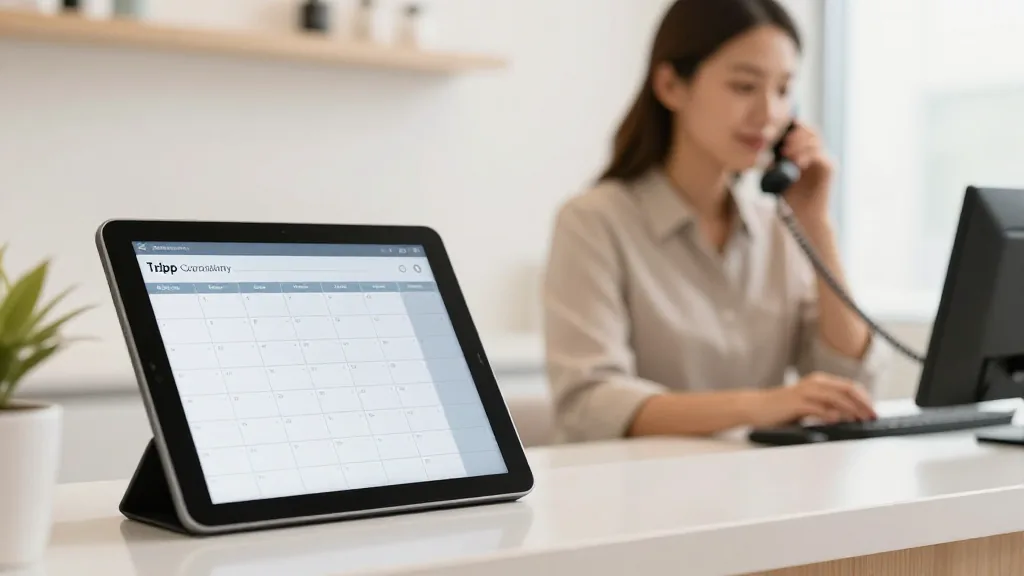
AI phone answering for medical clinics is the technology designed to stop that leak. A voice assistant that picks up every inbound call, understands what the caller needs — whether that is scheduling an appointment, learning if you accept their insurance, or getting an after-hours message to the right staff member — and handles it 24/7 without pulling a nurse or front desk coordinator off a patient. This guide explains how it works, where the real value is, and what to ask before you commit to a system.
Why the front desk phone is a bigger problem than it looks
Medical clinic phones carry a uniquely mixed bag of call types: appointment requests, prescription refill notifications, referral follow-ups, billing questions, insurance verifications, lab-result inquiries, and urgent after-hours messages. Each has a different urgency and a different workflow. When call volume spikes — during flu season, a Monday morning after a long weekend, or the 4:55 PM rush before close — a single human receptionist creates a bottleneck that costs the practice in several directions at once.
The voicemail black hole
Callers sent to voicemail for routine scheduling rarely wait for a callback. If the task feels simple enough to hand off — booking an appointment, asking about walk-in hours — they will try the next practice that answers. The loss is silent: there is no missed-call ticket, no revenue report, just a patient who quietly went elsewhere.
No-shows that were avoidable
Many no-shows trace directly to a reminder loop that never closed. The patient meant to cancel but couldn't get through during office hours, so they simply didn't show. Each unfilled slot is revenue gone and a care gap that widens. An AI front desk that takes cancellation and rescheduling calls at any hour — and, if configured, sends confirmation texts — shrinks that gap before it opens.
After-hours blindness
Most medical clinics answer phones roughly eight hours a day, five days a week. That leaves the rest of each week — evenings, weekends, and holidays — when a caller either gets nothing or reaches an after-hours service that can only take a message. The patients most likely to call after hours are often the ones who are working during your open hours: working adults, caregivers, people juggling two jobs.
Re-keying and the errors it creates
When staff do recover voicemails, they re-enter the information by hand into the scheduling system — a second point where transposition errors, missed details, and wrong callbacks occur. A system that completes the booking or logs the request at the moment of the call removes this loop entirely.
Language barriers at the first touchpoint
A caller who can't communicate clearly with the front desk often disengages before they ever become a patient. In multilingual communities, this is a consistent and addressable gap — one that AI phone answering handles without requiring multilingual staff on every shift.
What AI phone answering for medical clinics actually does
An AI phone answering system for a medical clinic is a voice assistant that answers your practice's inbound line, converses naturally with the caller, and takes action — scheduling an appointment, answering an FAQ about accepted insurance, routing an urgent message to the right staff member, or confirming that a prescription refill request has been logged. The best systems run 24/7, handle multiple concurrent callers so a surge doesn't overflow the line, and require no change to your existing phone number.
The category is sometimes labeled "AI medical receptionist" or "AI front desk for healthcare." What matters more than the label is one practical test: does it complete the task, or does it take a message that someone has to act on later?
How the technology works
Three layers work together on every call.
1. Speech understanding
The system answers immediately and converts speech to text in real time, then interprets the intent behind the words. Good voice AI handles natural, imprecise speech — "yeah, I need to get in sometime this week if possible, I think I need a referral?" — across accents, background noise, and the slightly anxious phrasing that many medical callers use. Context carries through the conversation, so "actually, make it Thursday instead" doesn't lose the thread of what was being scheduled.
2. Grounding in your schedule and policies
Rather than running from a generic script, the system is grounded against your actual availability: open appointment slots, provider schedules, accepted insurances, hours, location information, and any clinic-specific rules. This is what prevents the AI from booking into a slot that doesn't exist or quoting an insurance panel you stopped accepting. The more precisely your policies are encoded, the more accurately the system enforces them.
3. Completing the action
This is where the value lives: the system acts inside whatever scheduling platform you use. It creates the appointment, logs the refill request, routes the message to the on-call provider, or confirms the callback — so staff come back to a clean, actionable queue rather than a raw list of voicemails to sort through manually. For a deeper look at how this pipeline runs end-to-end, see how KwickPhone works.
The no-show problem — and what an AI front desk does about it
A notable share of appointment no-shows happen not because patients forgot or stopped caring, but because the cancellation process was inconvenient. The patient tried to call at 7 PM, heard a generic voicemail, and never called back. The slot sat empty.
An AI front desk changes this in two directions. It accepts after-hours cancellations and can immediately offer a rescheduled time — filling the vacancy before the calendar has even registered the gap. And it can be configured to send appointment confirmations or reminders by text, giving patients a low-friction way to confirm or cancel well before the day of. Fewer "I forgot" no-shows and more lead-time cancellations mean higher utilization of every provider's calendar without adding overhead.
After-hours calls: the gap most clinics never close
Think about when your patients are most available to call. Many are working the same hours your front desk is open, which means the most convenient window for scheduling — evenings, lunch breaks, weekends — falls outside office hours. An AI answering system running 24/7 closes that window without requiring on-call reception staff.
You configure the behavior precisely: schedule normally after hours, answer routine questions while holding scheduling for the next business day, or route clinical questions to the on-call line while handling everything administrative autonomously. Your protocols stay in force at 10 PM as reliably as they do at 10 AM.
Most call-handling gaps in medical practices aren't a staffing problem — they're a coverage problem. Two-thirds of every week falls outside standard office hours. Closing that window doesn't require more headcount; it requires a system that runs when your team isn't.
Multilingual care starts with the first word
A caller who reaches a front desk in their own language is more likely to book, more likely to describe their need accurately, and more likely to return. KwickPhone handles calls in English, Spanish, and Chinese, detecting the caller's preferred language within the opening exchange and responding accordingly — with the same grounding against your actual schedule and policies that English calls receive.
In diverse communities, this isn't a niche feature; it's a baseline for effective access. And it removes a consistent source of dropped calls that never shows up in any report, because the caller who couldn't communicate simply didn't call back.
What the comparison looks like in practice
| Caller situation | After-hours voicemail | AI phone answering |
|---|---|---|
| "I need to schedule an appointment" | Message waits until morning; caller may not wait | Appointment booked immediately, any hour |
| "Do you take my insurance?" | No answer until staff return | Answered from your accepted-insurance list |
| Three calls at once during flu season | Two go to voicemail | All three handled simultaneously |
| "¿Hablan español?" | English only | Switches language automatically |
| Patient calling at 9 PM to cancel | Slot goes unfilled | Slot released, rescheduling offered on the spot |
| Urgent after-hours clinical message | Generic voicemail | Routed to on-call line per your protocol |
When to hand the call to a human
A well-built AI front desk knows what it should not handle. It transfers to a staff member when:
- The caller explicitly asks to speak with a person — that preference is always honored immediately.
- The call involves a clinical question or a patient who sounds distressed — voice AI is not a triage provider.
- The request is complex, unusual, or outside the system's configured scope.
- A referring physician or other high-priority caller is on the line and warrants a personal touch.
The goal is to absorb routine, high-volume calls — scheduling, FAQs, after-hours routing — so staff can give full attention to the calls that genuinely need them. A system with no clear escape hatch to a human is a worse experience than the missed call it replaced.
Controls and customization
KwickPhone puts the practice in charge without requiring IT involvement. Per-clinic Playbooks encode how your practice runs: always offer the next available slot before offering a waitlist, never schedule same-day without provider approval, route all refill requests to the clinical inbox, transfer any clinical question to the nurse line. You can choose from 20-plus voices and personas — warm and conversational for a family practice, crisp and efficient for a specialty clinic. Updates to hours, policies, or schedules take effect immediately, without a support ticket.
KwickPhone runs natively within KwickOS and also connects as an open service to Square, Clover, Loyverse, Epos Now, and Revel. You can review every available connector, its current status, and the credentials required at the integrations directory. For a broader view of which clinic types and service businesses KwickPhone fits, the by-trade hub at /for/ has a full breakdown.
Setup: keep your existing number
You do not get a new phone number. You keep the number your patients already have stored in their contacts and forward calls to the AI line. On a traditional landline, this is typically a call-forwarding code — commonly *72 followed by the forwarding number to activate, and *73 to deactivate — though exact codes vary by carrier, so confirm with yours. On VoIP, you update a single setting in your provider's dashboard. You can forward all calls, only the ones your staff don't answer in time, or only calls outside business hours — so the AI becomes your after-hours desk while your team handles the front during clinic hours.
Questions about what the setup involves or what features are available at different levels are answered on the pricing page, and you can walk through the flow in detail on the blog before committing to anything.
What to ask before you commit
Cut through any vendor's pitch with a short, honest checklist:
- Does it complete the action — book the appointment, log the request, route the message — or just transcribe a voicemail? Ask exactly what happens after the caller hangs up.
- Is it grounded on your real schedule and policies, or a generic script that can invent available slots that don't exist?
- How many calls can it handle at once? Concurrency is where surge capacity lives.
- What languages, and does it detect and switch automatically?
- When and how does it transfer to a human, and is the escape path obvious to the caller?
- Can you hear a live demo before signing anything? KwickPhone's demo lines at /#try are real calls — not recordings, not a polished studio clip.
See AI phone answering built for clinics
KwickPhone answers every call, handles scheduling and after-hours routing, and speaks English, Spanish, and Chinese. Call our live demos at /#try to hear it for yourself — then book time with the team to see it grounded on your actual setup.
Book a demoFrequently asked questions
What is AI phone answering for medical clinics?
A voice assistant that answers your practice's inbound calls 24/7, understands the caller's need, and takes action — scheduling appointments, answering FAQs, routing urgent messages — without requiring a staff member to pick up the line.
Can it actually book appointments, or does it just take a message?
The best systems complete the task — creating the appointment in your scheduling platform — rather than leaving a voicemail for staff to action. Ask every vendor exactly what happens after the caller hangs up; if the answer involves a human confirming or re-entering anything, that's manual work in disguise.
What happens to calls that come in after hours?
The AI answers them based on the rules you configure: schedule normally, hold scheduling for the next business day while answering routine questions, or route clinical messages to an on-call provider. Your protocols, running 24/7 without an on-call receptionist.
Does it handle multiple calls at once?
Yes. Unlike a human receptionist, an AI system handles several simultaneous callers — critical during flu season, Monday-morning surges, or the pre-close rush when call volume spikes and a queue of voicemails would otherwise build.
Do I need to change my phone number?
No. You keep your existing number and forward calls to the AI line — typically a code like *72 on a landline (codes vary by carrier) or a setting in your VoIP dashboard. Forward all calls, only unanswered ones, or only after-hours calls — whichever fits your workflow.
Related: the complete guide to AI phone answering for restaurants and the best AI phone answering services for restaurants in 2026.